Table of Contents
Quick summary
Medical spas offer a range of different services and treatments that you should know about if you’re considering establishing a successful practice. Knowing what to include on your service menu, how to price offerings, and how to structure them for patient retention and operational efficiency can help support long-term growth.
Why is it important to have a structured service menu?
A medical spa’s services menu is a guide for customers and a means of conversion. However, if your service menus are characterized by technical terms, jargon, and vague pricing, it will confuse patients and slow down potential conversions.
When your service relies on terms describing itsbenefits rather than technical terms, patients will gain more clarity, which will make your operations run more smoothly. Also, clients prefer transparent service pricing rather than vague phrases such as “price starts at” or “consult for price,” which further makes them hesitate. Over time, the lack of structure leads to inconsistent pricing, high bounce rates, and low conversions.
A well-designed med spa menu should be curated, easy to understand, and strategically organized to convert interest into bookings. Unsure of what your med-spa menu should look like? This guide provides a complete overview of how to structure your menus.
Why listen to us
At PatientNow, we’ve spent over 20 years helping aesthetic and wellness practices improve how they operate with software and consulting support. By working closely with medical spas and aesthetics providers, we understand how services change over time, what engages patients, and how better organization can reduce admin work. As more clinics use integrated technology to grow and run efficiently, we’ve seen how well-structured service menus support those goals. Our insight is based on practical experience helping practices scale and succeed.

What makes up a modern medical spa’s services menu
Most medical spas nowadays are layered, offering a mix of clinical treatments and wellness services. Your med-spa menu, therefore, has to be a curated high-tech blend of aesthetic medicine with a clear structure that helps patients understand what’s available and what they need. Here’s what typically makes up a modern medical spa menu:
1. Core treatments vs add-ons
You’d often find the medical spa services menu divided into two parts – core treatments and add-ons. Core treatments are main and intensive procedures, like Botox, fillers, and microneedling. These services are often booked as standalone appointments, and they require more time.
While add-ons are designed to support the core treatment and improve the value of the appointment. These include dermal planning, LED light therapy, and more. Add-ons are typically presented as optional. But they should still be clearly connected to the benefits of the main treatment so patients understand their value and relevance.
2. One-time services vs ongoing programs
Some treatments are one-time procedures, like Botox, facials, or dermal fillers. Others are most effective as programs requiring a series of sessions, such as chemical peels, weight-loss management, or IV therapy. You should categorize these or clearly state them in your menu so your clients have a clear idea of how long their treatment will take.
3. Clinical services vs wellness services
Clinical services are medical-grade aesthetic treatments that typically require specialized training and equipment, such as advanced facials, body contouring, and other procedures performed by trained professionals. On the other hand, wellness services are health-focused and include rejuvenating procedures such as massage therapy and body treatments. Your menu must include clear labeling to ensure compliance with these services and to help your client make informed choices.
27 common medical spa services (with pricing examples)
Here is a complete list of 27 common medical services with their pricing examples, grouped into logical categories. Note that the pricing will vary widely by region, your expertise, and the technology you use:
Injectables
Injection services are among the most sought-after medical spa treatments, often because they are quick and non-invasive. Here are a few examples:
1. Botulinum toxin injection
What it treats: Commonly called “Botox”, it is designed for the rejuvenation of dynamic wrinkles.
Pricing logic: You may use two models: pricing per unit (most common) or pricing per area.
Typical pricing range: $10-$18 per unit (a pricing-per-area model might be more expensive for patients who need fewer units).
Frequency: Every 3-4 months.
2. Dermal fillers (hyaluronic acid)
What it treats: It is used to restore volume and enhance facial contours.
Pricing logic: Pricing is per syringe and varies by treatment area, product technology, and location.
Typical pricing range: $600-$900 per syringe.
Frequency: Every 6-18 months.
3. Biostimulatory fillers
What it treats: It helps with collagen loss and supports elastin production.
Pricing logic: It may be priced per vial, per syringe, or in series packages. Pricing will also depend on its longevity and your skill.
Typical pricing range: $700-$1200 per vial, and $650-$1000+ per syringe.
Frequency: Series with maintenance.
4. PRP/PRF Injections
What it treats: It is fully called Platelet-Rich Plasma (PRP) and Platelet-Rich Fibrin (PRF) thatworks for skin rejuvenation and hair thinning.
Pricing logic: It is typically priced per tube, and the preparation method and clinical time often also affect pricing.
Typical pricing range: $600-$1200.
Frequency: Series-based.
5. Kybella
What it treats: It is used to destroy fat cells, especially submental fat (double chin).
Pricing logic: You may price per vial or per session. The permanence of the procedure and treatment area can also influence pricing.
Typical pricing range: $600-$800 per vial and $1200-$2400 per session.
Frequency: Usually multiple sessions.
Skin Treatments
Medical spas usually structure skin treatments as a series of sessions rather than single procedures, often to support long-term skin health. Here are the types of skin treatment packages they offer:
6. Medical-grade facials
What it treats: It involves using pharmaceutical-grade ingredients to cure acne, dryness, and dullness in the skin.
Pricing logic: You can price as a “base + add-on model”, then pay “Ã la carte” for boosters like lymphatic drainage.
Typical pricing range: $150-$350.
Frequency: Monthly.
7. Chemical peels
What it treats: It is used to treat pigmentation and texture.
Pricing logic: It is usually priced by depth, and other factors, such as post-care kits and customization, may affect pricing.
Typical pricing range: $150-$800.
Frequency: Series or quarterly.
8. Microneedling
What it treats: Improves skin texture, reduces acne scars, fine lines, and stretch marks, and boosts collagen production for smoother, firmer skin.
Pricing logic: Pricing will depend on the pen used, your skill, and the depth of the treatment.
Typical pricing range: $300-$1200+.
Frequency: Series of 3-6.
9. RF microneedling
What it treats: Combines microneedling with radiofrequency energy to tighten skin, improve laxity, reduce wrinkles and scars, and stimulate deeper collagen remodeling for firmer, smoother skin.
Pricing logic: Pricing usually depends on the treatment area and the products used.
Typical pricing range: $400-$1800.
Frequency: Series-based.
10. Hydrafacial
What it treats: It is designed to treat congestion and hydration.
Pricing logic: Pricing differs per business and duration.
Typical pricing range: $175-$500.
Frequency: Monthly.
Body contouring
This procedure involves using non-surgical methods to remove fat, tighten loose skin, and reshape the body. Here are the types of body contouring packages:
11. CoolSculpting
What it treats: It freezes and eliminates stubborn fat cells.
Pricing logic: Pricing depends on the cycle, treatment areas, and applicator sizes.
Typical pricing range: $600-$1500+.
Frequency: Per cycle.
12. Emsculpt
What it treats: It tones the muscles and burns fat.
Pricing logic: Pricing may be per session or per treatment area (e.g., abdomen or buttocks).
Typical pricing range: $750-$1250 per session.
Frequency: 4 sessions.
13. Radiofrequency body tightening
What it treats: Reduces skin laxity, smooths cellulite, and firms and tones the body by stimulating collagen and tightening underlying tissues.
Pricing logic: Pricing is based on the device used and the number of sessions required for the procedure.
Typical pricing range: $2500-$4500 for a single high-energy session with premium devices like Thermage® FLX and $300-$600 per session for lower intensity devices like Exilis.
Frequency: 1-6 sessions, depending on treatment area.
Laser services
They are non-invasive light-based medical-grade treatments for skin rejuvenation, hair removal, and specific cosmetic enhancements. Here are the laser services packages med spas offer:
14. Laser hair removal
What it treats: It removes hair by destroying hair follicles using concentrated light.
Pricing logic: Often tied to the area you want to treat. Smaller areas like the upper lip and underarms usually cost less.
Typical pricing range: $100-$800+ per session.
15. IPL photofacial
What it treats: Intense pulsed light, used to treat sun damage, age spots, and redness.
Pricing logic: The cost depends on the size of the part being treated.
Typical pricing range: $200-$600.
Frequency: 3-5 sessions.
16. Fractional laser resurfacing
What it treats: It helps with skin rejuvenation, treating such things as wrinkles and scars.
Pricing logic: This depends on the type of laser used (non-ablative and ablative) and procedure performed.
Typical pricing range: $500-$2500+.
17. Laser tattoo removal
What it treats: It removes unwanted tattoos.
Pricing logic: The primary pricing factor is usually the size and kind of tattoo to be removed.
Typical pricing range: $200-$500 per session.
Frequency: 6-10 sessions.
IV therapy and wellness
IV therapy is a wellness treatment that helps deliver vitamins, minerals, and hydration into the bloodstream. Here are the types of IV therapy packages med spas offer:
18. Hydration IV therapy
What it treats: It treats dehydration and fatigue.
Pricing logic: It is often priced as a base + booster model in some spas.
Typical pricing range: $150-250.
Frequency: One-time session.
19. Vitamin infusion therapy
What it treats: Often used interchangeably with IV hydration, it provides energy and immune support.
Pricing logic: Most med-spas offer pricing for pre-formulated drips.
Typical pricing range: $175-$500.
20. Vitamin injections
What it treats: Fast-acting and lower cost alternative to IV therapy, that helps with energy and metabolism support.
Pricing logic: Pricing is based on the cost of the nutrient and product used.
Typical pricing range: $30-$80.
Weight loss and hormone therapy
These procedures involve using medically supervised weight management and hormone optimization for weight loss. Here are the weight loss and hormone therapy packages that med spas offer:
21. Medical weight loss programs
What it treats: It helps to reduce obesity and increase metabolic health.
Pricing logic: Pricing will usually depend on the care cycle, medications, and plans.
Typical pricing range: $400-$1400 per month.
Frequency: Depending on the cycle.
22. Hormone replacement therapy
What it treats: It treats hormonal imbalance by optimizing testosterone, estrogen, and progesterone levels.
Pricing logic: Pricing may be per insertion procedure or a flat monthly fee.
Typical pricing range: $150-$300 monthly.
Frequency: Monthly.
23. Peptide therapy
What it treats: It helps in burning fat, healing tissue, and metabolic support.
Pricing logic: It is usually charged monthly. Also, patients will need to conduct a “good faith exam” and bloodwork, which will cost additional.
Typical pricing range: The treatment may cost $300-$800 monthly.
Frequency: Monthly.
24. Thyroid optimization
What it treats: Supports thyroid health by addressing hormone imbalances, improving metabolism, energy levels, and overall wellness.
Pricing logic: The pricing is composed of consultation fees and monthly management/subscription fees.
Typical pricing range: $150-$400.
Supporting services
Med-spas will usually offer supporting services that address care continuity and patient outcomes, in addition to the main treatments, which may be included in the pricing. These include:
25. Skincare consultations
What it treats: Provides medical-grade assessments of skin health, identifies concerns like acne, pigmentation, and aging, and guides personalized treatment and product recommendations.
Pricing logic: The pricing usually depends on the skin issue involved and the professional.
Typical pricing range: $50-$150.
26. Acne management programs
What it treats: It is a combination of professional treatments (facials, peels, lasers) for acne.
Pricing logic: The cost varies based on the intensity of the treatment.
Typical pricing range: $200-$300.
27. Post-procedure recovery treatments
What it treats: These are designed to accelerate healing, and minimize downtime after aesthetic procedures.
Pricing logic: The price usually depends on the procedure undergone.
Typical pricing range: Uncertain, as it can have a wide range depending on the treatment and procedure.
How med spas customize services for different patients
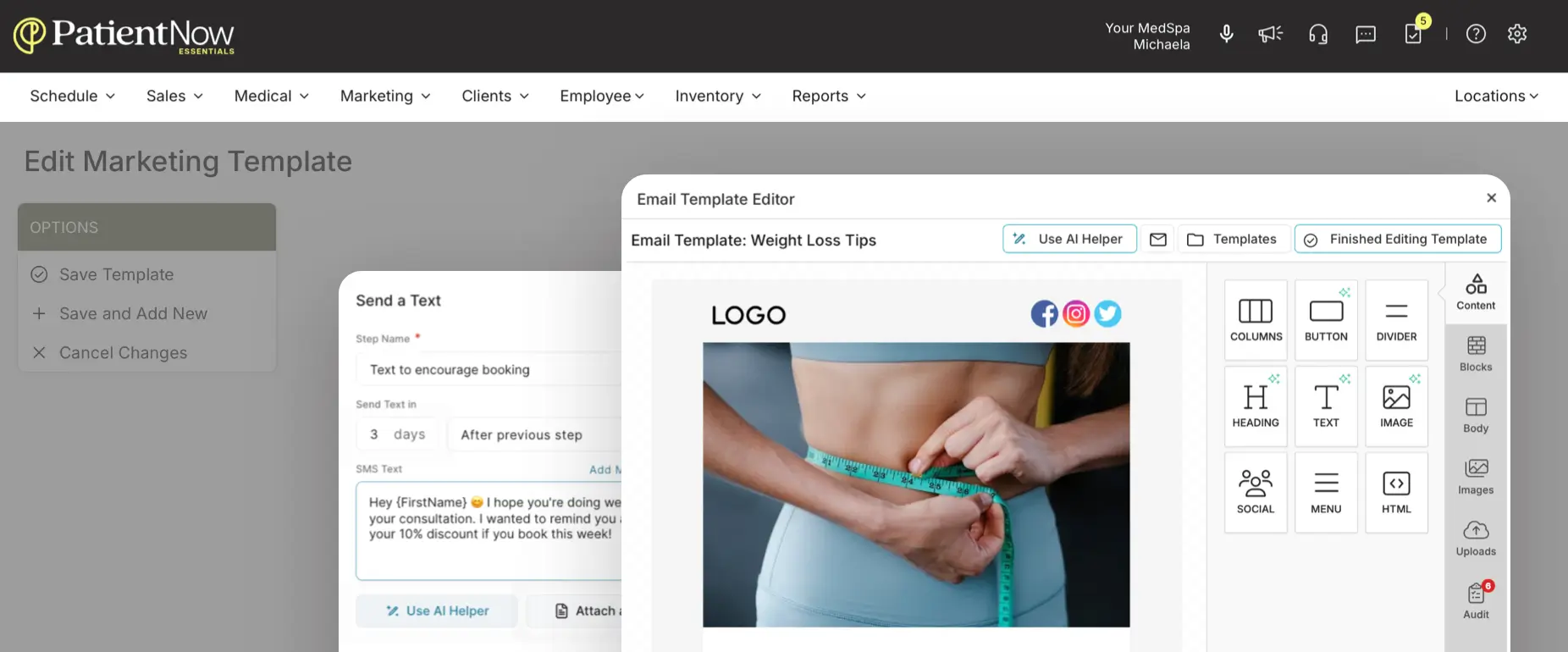
Most med spas provide many different services, so it’s important to organize your menu clearly. A well-structured menu helps clients understand the value of each treatment and supports a strong, profitable business model for your med spa. Software platforms like PatientNow can additionally help structure these services through tailored patient engagement and communication, and centralizing scheduling. To make the most of this software, med spas can use customization strategies, such as:
- Tiered options: You can create tiered versions of the same service, such as standard, advanced, and premium tiers, each with different treatment features and goals. Your clients will then be able to choose based on their goals and budget.
- Add-ons and upgrades: Med-spas usually offer upgrade and add-on options that provide additional services that don’t alter the primary treatment.
- Seasonal or promotional offerings: Your menus should also be customized to include seasonal needs and temporary services.
- In-depth consultation sessions: To further help customization for each customer, you should provide in-depth consultation sessions to understand the client’s history, concerns, and goals. Med-spas collect this information by including essential questions in intake forms, such as medical history and health concerns.
- Data-driven personalization: Modern med-spas are increasingly recognizing the importance of AI-powered skin mapping and digital assessments to analyze aesthetic factors and provide the best recommendations.Â
You should also ensure your menus are diverse, considering factors such as aging and innovative treatments.
Pricing strategies med spas actually use
How you price your services is just as important as how you structure them. The strategies below show how med spas set prices to reflect value, encourage treatment completion, and build long-term patient relationships:
Value-based pricing
One of the most common pricing strategies is value-based. The prices arebased on the expertise you offer, the outcomes you deliver, and safety rather than the duration of a treatment.
Bundles vs individual services
The therapy may also be priced as a bundle or as an individual service. But pricing by bundles encourages clients to complete treatment plans and simplifies payment and billing.
Membership pricing logic
Membership pricing is best for retaining patients and encouraging them to come back. It canhelp build a relationship with the patients while ensuring a premium care pattern.
How PatientNow supports service setup and management
The first green flag for your medical spa business with clients is having a structured service system that helps them understand the value you offer. When you structure your services thoughtfully in your menus and set fair, transparent pricing, it not only helps your clients but also makes your workflow more consistent.
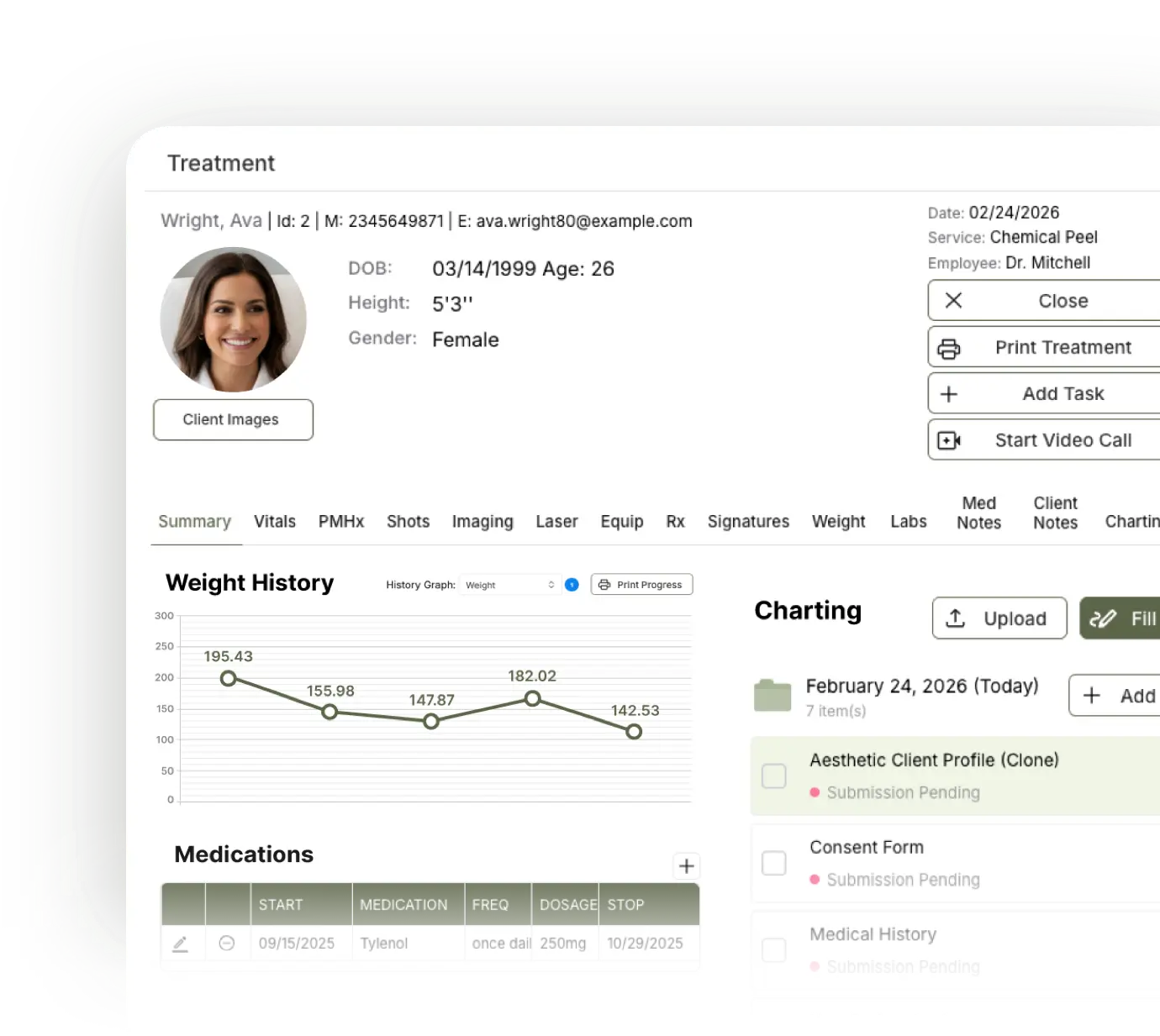
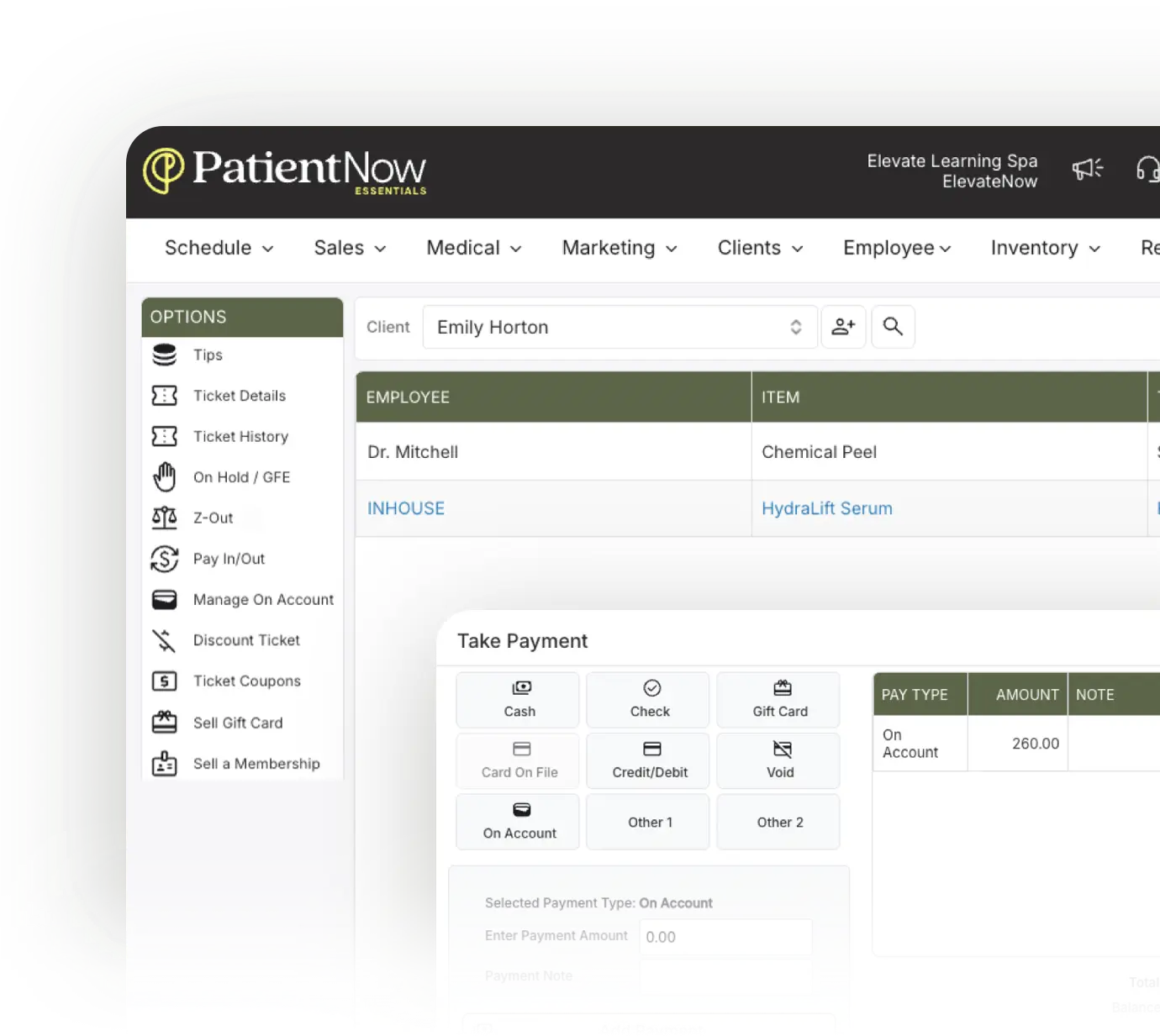
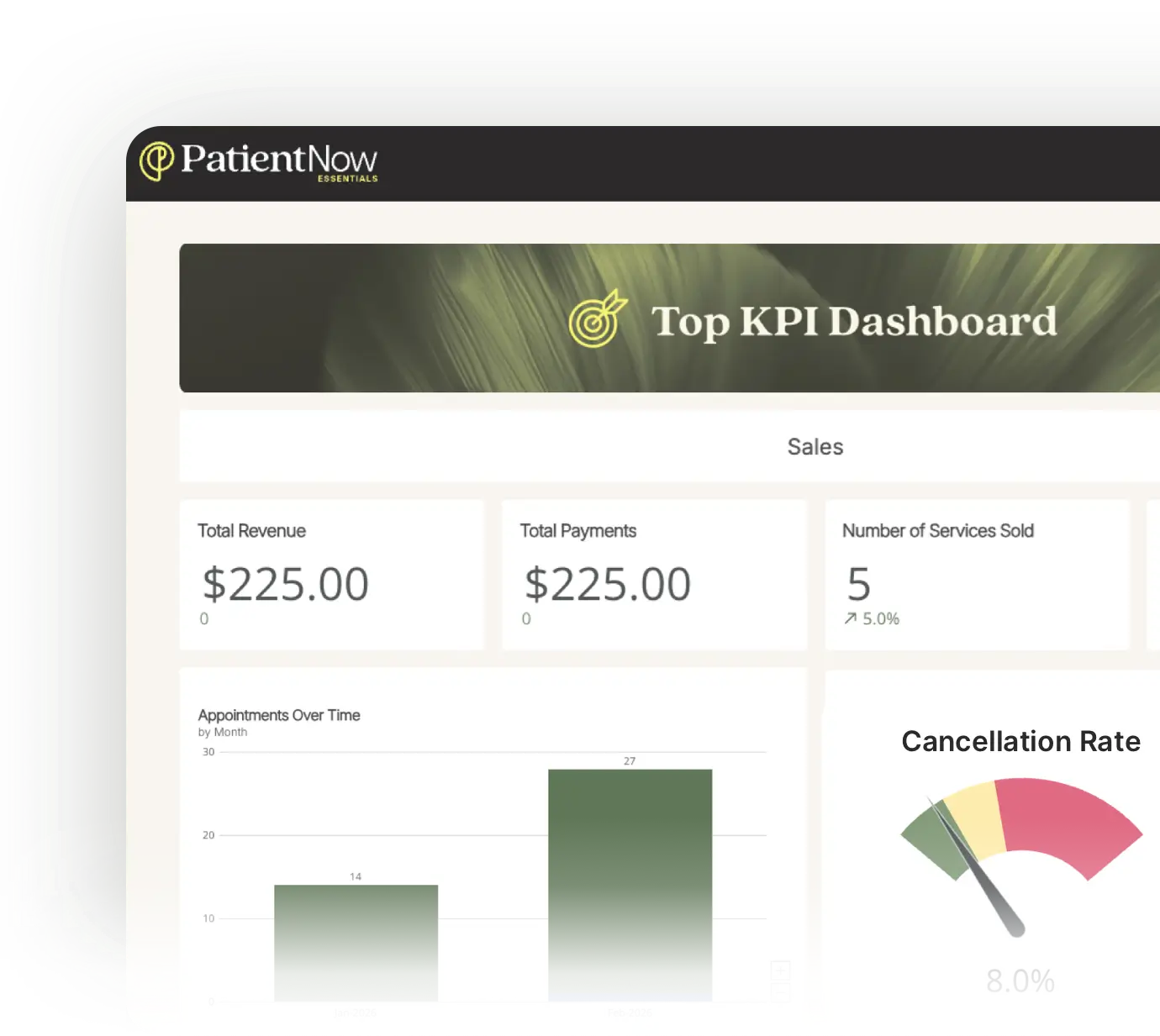
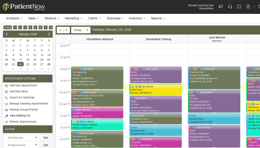
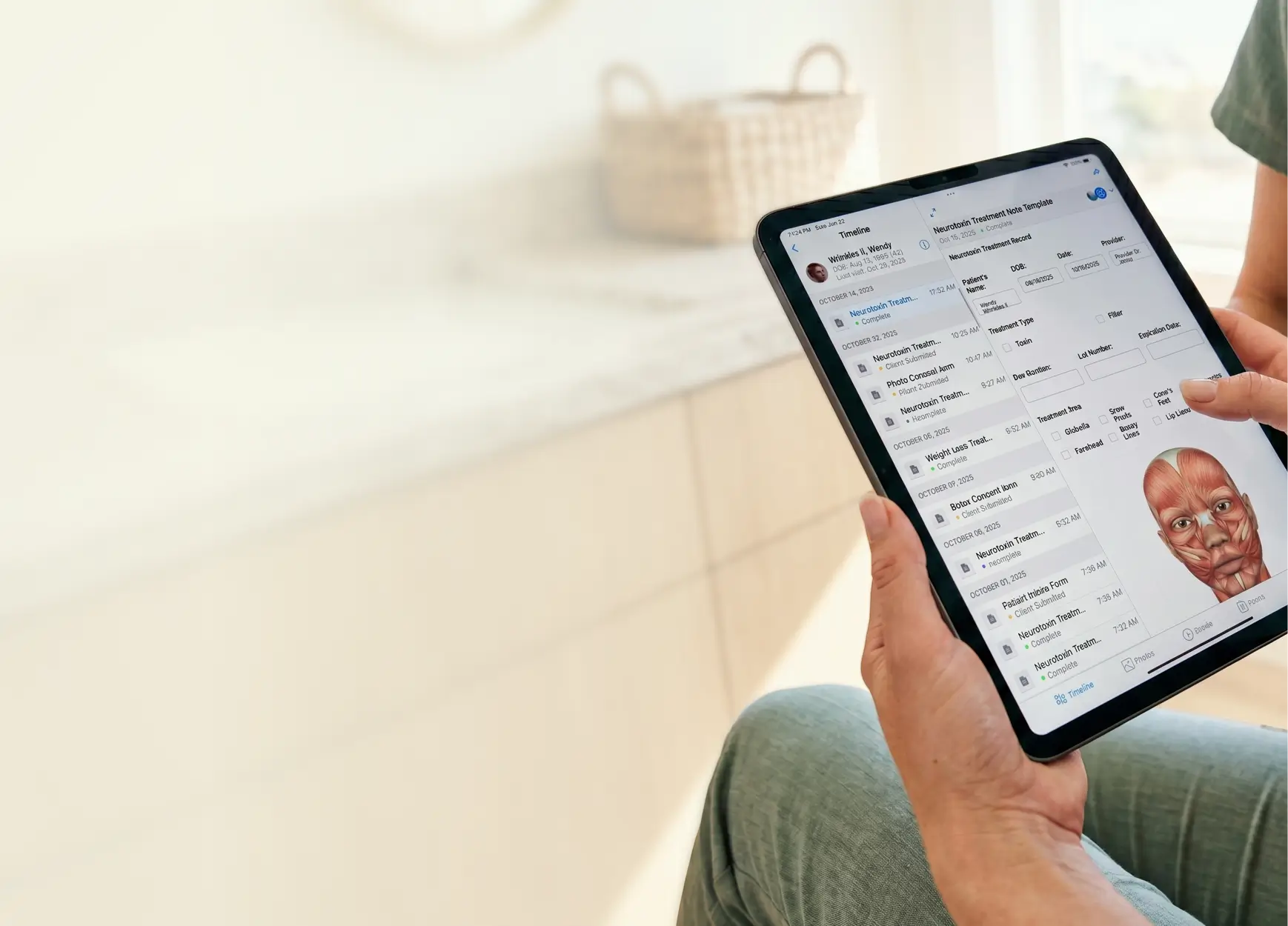
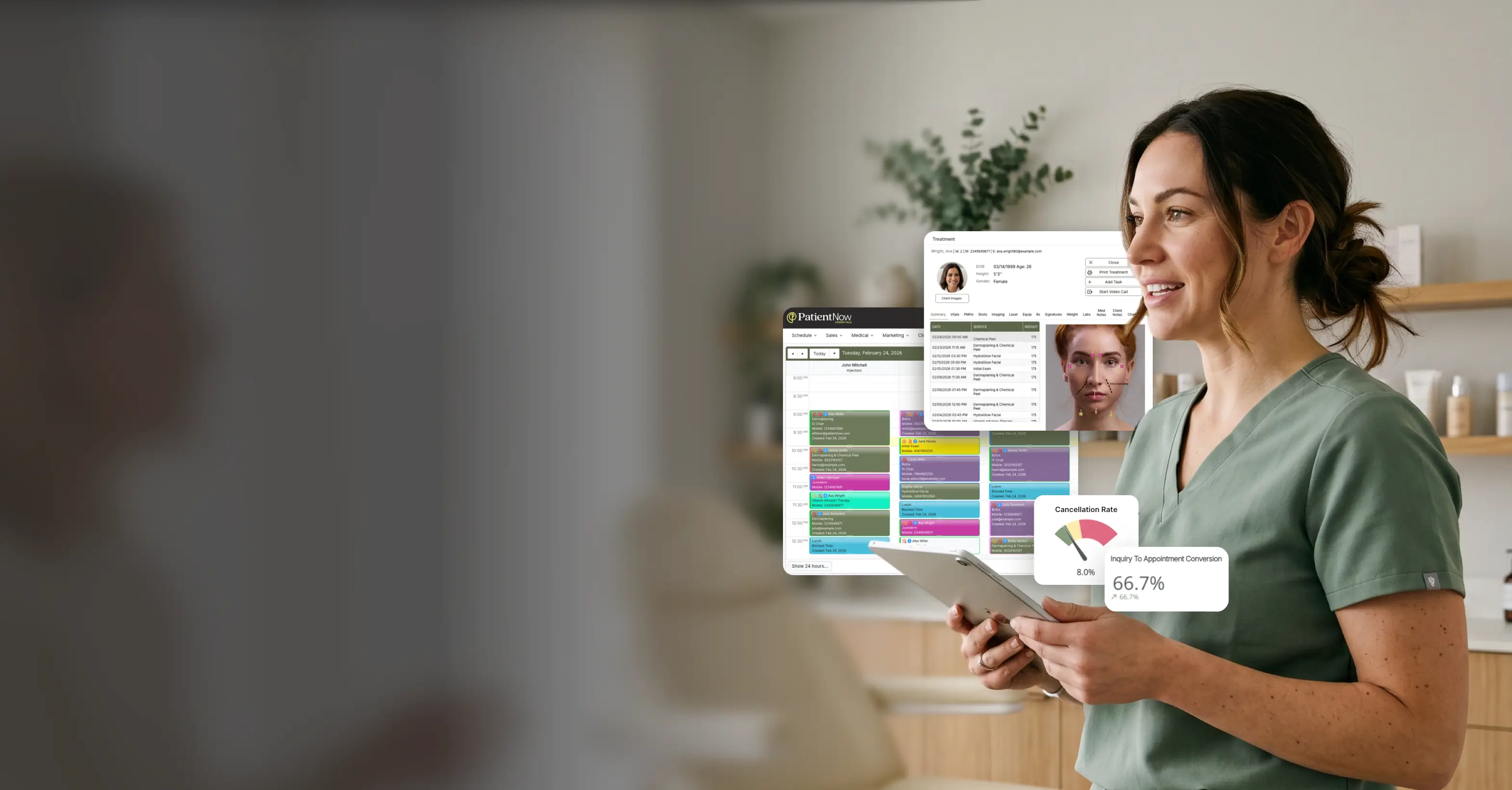
Once your services are clearly defined and your menu is structured, the next step is using a system that supports efficiency, consistency, and patient engagement. PatientNow is built specifically for aesthetic practices, offering clinical-grade tools for medical aesthetics that go beyond salon-first platforms.
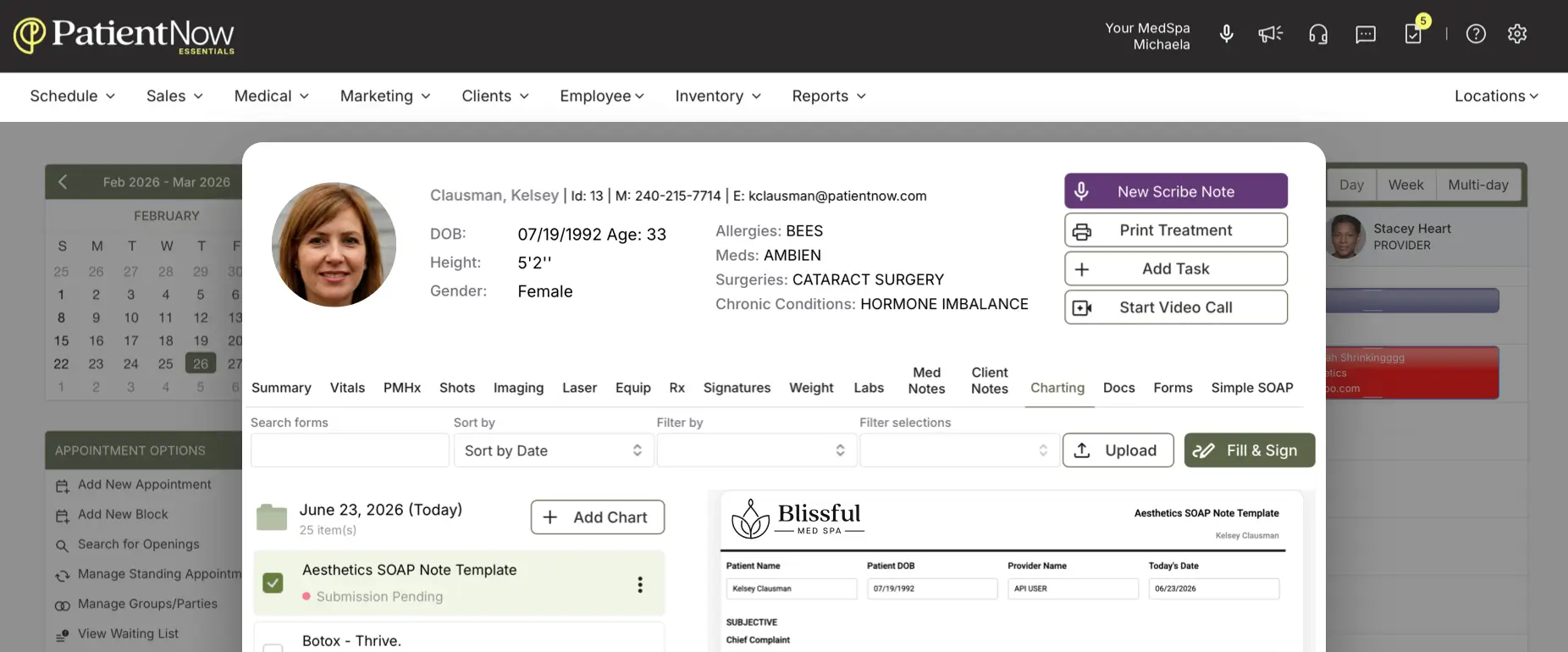
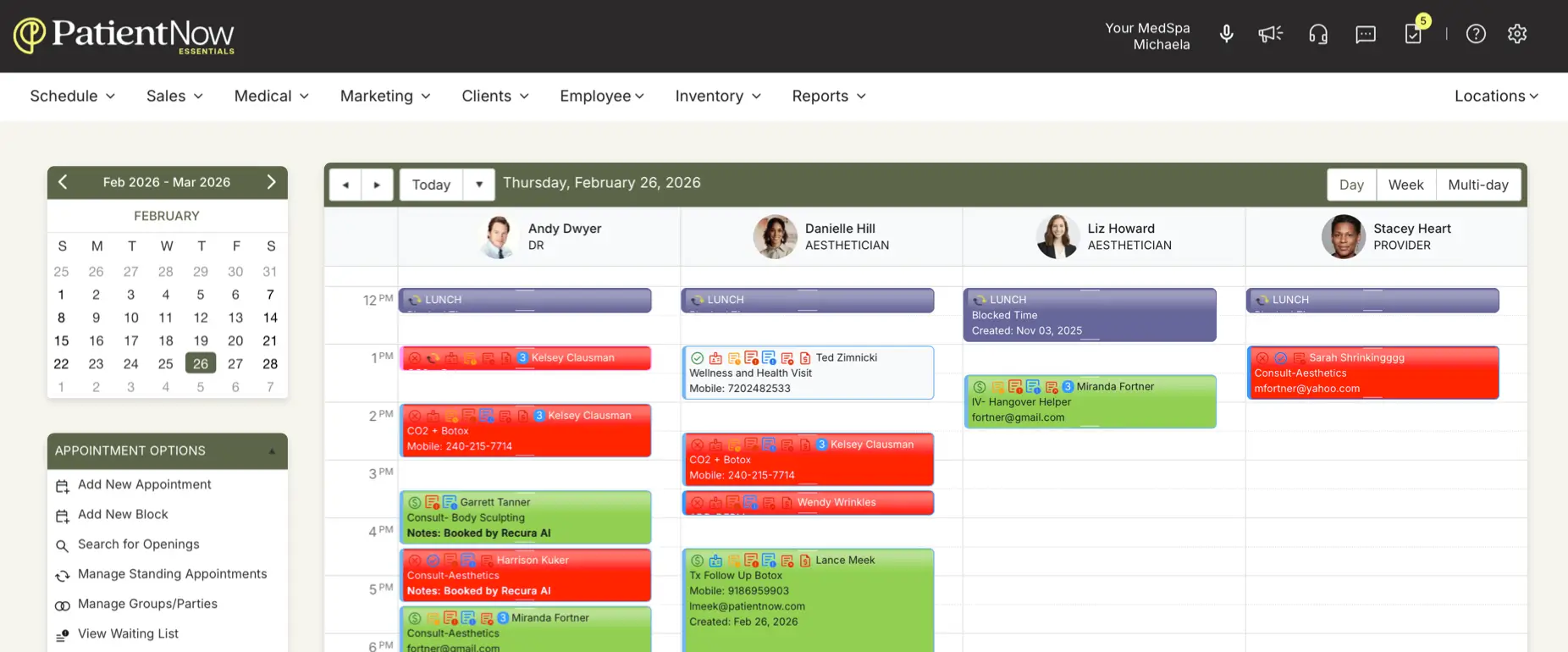
This all-in-one platform allows you to configure and manage services flawlessly, integrating scheduling, ERM, patient records, and practice management to simplify workflows and maintain accuracy. With PatientNow, you can set up tiered services, add-ons, and bundled treatments. You can also customize offerings based on patient needs, and maintain clear workflows that guide patients through their journey, from booking to follow-up.
Start by scheduling a demo to see how PatientNow helps organize, optimize, and grow your med spa services while supporting both clinical and business success.