
How AI Helps Med Spas Solve Their Biggest Growth Challenges
For growing practices, those problems are familiar: missed calls, slow lead response, inconsistent follow-up, documentation burden, unclear reporting, and consultation workflows that depend too much on manual effort. Left unchecked, these challenges cost time, revenue, and patient trust.
Used well, AI can help med spas solve practical growth and efficiency problems without replacing the human relationships that make aesthetic care work.
Challenge 1: Missed calls and leads that never get a callback
Many med spas do not have a lead problem. They have a response-time problem.
A patient who calls, submits a form, starts a web chat, or texts your practice is often ready to take the next step. But if that inquiry comes in after hours, during a busy clinic day, or while the front desk is helping patients in person, the opportunity can disappear quickly.
AI can help by responding in moments, answering common questions, capturing intent, and moving patients toward scheduling. These tools help practices answer calls, text back leads, support web chat, and follow up automatically so fewer high-intent patients are lost to voicemail, slow response times, or inconsistent outreach.

PatientNow Practice Insight: Recura, part of the PatientNow family, helps practices answer calls, text back leads , support web chat, and follow up automatically. For busy med spas, that means fewer missed calls, fewer stalled inquiries, and more high-intent patients moving toward booked consultations. Just how much revenue can be hiding in missed or delayed follow-up? One customer noted Recura generated $175,100 from hot lead campaigns and 500 past inquiries re-engaged.
Challenge 2: Follow-up that stops after the first message
Growth in aesthetics rarely happens from one interaction. New leads often need several touchpoints before they book. Existing patients need reminders for maintenance treatments, follow-ups, memberships, or complementary services. Past patients may simply need the right reason to re-engage.
But manual follow-up is difficult to sustain. Lists get stale. Staff get busy. No-shows and cold leads fall out of view.
AI can help practices build a more consistent follow-up engine. Automated, personalized outreach can keep conversations moving without requiring the team to manually chase every patient. The result is more reactivation, stronger retention, and fewer missed opportunities hiding in the database.
PatientNow Practice Insight: Recura, supports automated re-engagement for new inquiries, no-shows, cold leads, and past patients. ItsAI Sales Director is designed to follow up quickly, qualify interest, answer common questions, and nurture leads until they book.
Challenge 3: Charting that takes hours after the practice closes
Providers want to focus on patients, not rebuild the visit after it ends. But documentation is essential, and incomplete or delayed notes create risk, stress, and operational drag.
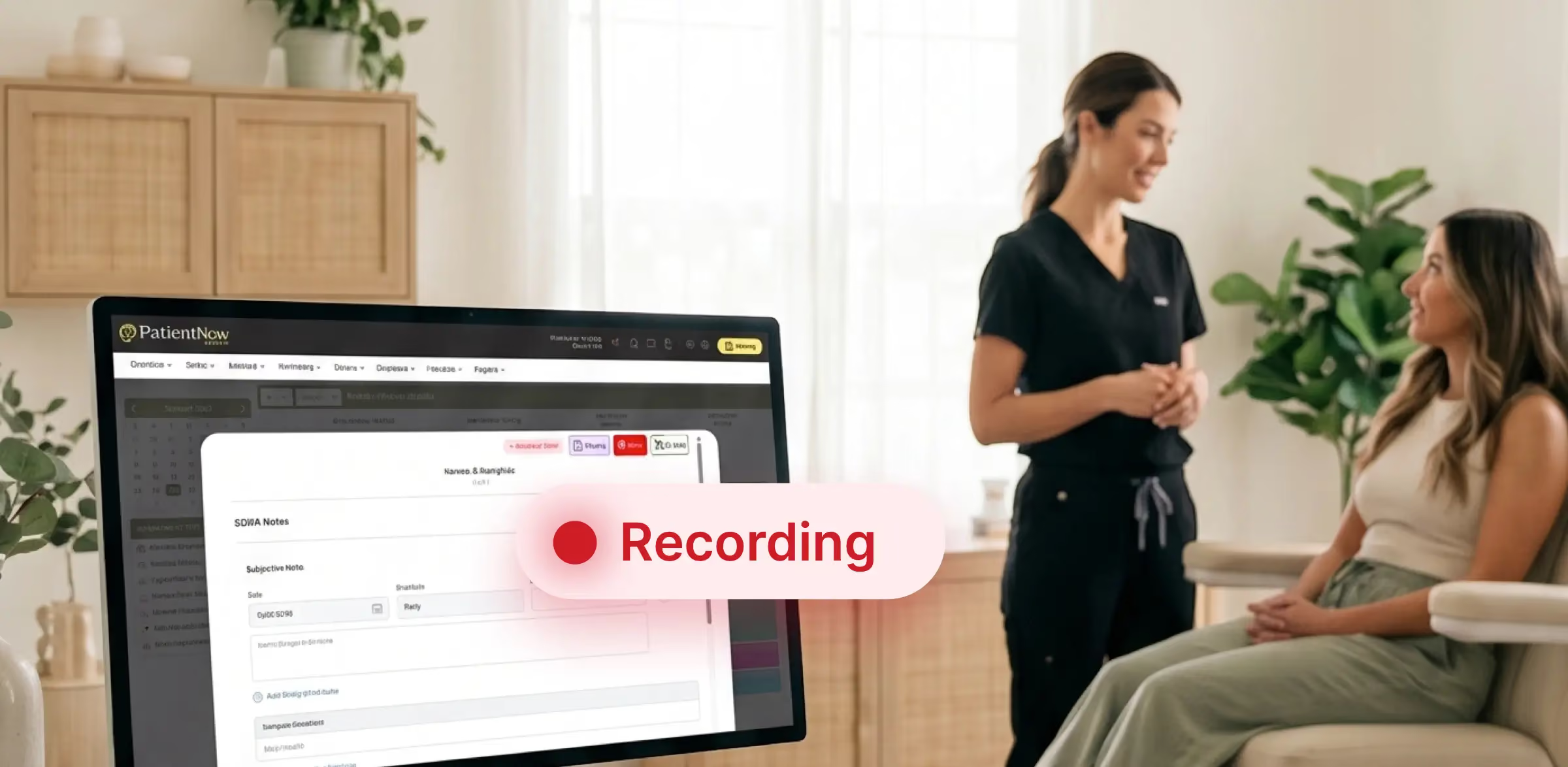
AI scribe tools can help turn a natural patient conversation into a structured clinical note for provider review and sign-off. Instead of starting from a blank screen, providers can review, edit, and finalize a draft.
This can reduce after-hours charting, help providers stay closer to schedule, and give the team more confidence that records are complete and connected.
PatientNow Practice Insight: PatientNow AI Scribe is built into the EMR workflow to draft visit notes for quick provider review and sign-off. AI Scribe can save up to 25% of documentation time, helping providers reduce after-hours charting and keep the day moving.
Challenge 4: Plenty of data, no clear answer on what is driving growth
Most med spas have plenty of data. The hard part is knowing what it means.
Revenue, retention, provider performance, treatment trends, booking patterns, and patient history all contain valuable signals. But when that information is buried in reports or disconnected systems, owners and operators can miss important opportunities.
AI analytics can help practices ask plain-language questions and surface trends faster. Which patients are due for follow-up? Which treatments are driving repeat visits? Where are schedule gaps hurting revenue? Which providers are converting consultations?
When AI helps turn practice data into clear next steps, leaders can make faster, more confident decisions.
PatientNow Practice Insight: PatientNow's Insights Hub and AI analyticshelp practices track revenue, retention, provider performance, treatment trends, and growth opportunities in one place. Instead of exporting spreadsheets or guessing what is working, owners can use practice data to spot patients due for follow-up, understand what drives revenue, and make faster decisions.
Challenge 5: Before-and-after photos scattered across different systems
Aesthetic care is visual. Patients want to understand progress, compare results, and feel confident before moving forward. According to a PatientNow consumer study, 74.8% of consumers won’t consider a practice without a before-and-after gallery. If before-and-after photos are inconsistent, hard to find, or stored across multiple systems, consultations can lose momentum.
Standardized visual documentation helps solve that challenge. RxPhoto supports consistent before-and-after photography, organized timelines, side-by-side comparisons, ghosting overlays, forms, notes, and controlled gallery sharing.
This strengthens the consultation experience by helping providers show progress clearly, support patient confidence, and connect visual results to the broader patient record.
PatientNow Practice Insight: RxPhoto part of the PatientNow family, helps aesthetic practices capture consistent, HIPAA-compliant before-and-after photos with guided capture, ghosting overlays, organized timelines, side-by-side comparisons, forms, notes, and controlled gallery sharing. Mendell Bell from Touch MedSpa shared that their consultation close rate increased from 45% to over 90% after using RxPhoto.
Challenge 6: Disconnected workflows that slow the team down
Even strong tools can create friction if they do not work together. A lead follow-up tool, charting system, photo platform, payment workflow, and reporting dashboard all touch the patient journey. If those systems stay disconnected, staff spend more time switching platforms and chasing details.
AI works best when it fits into the practice’s daily workflow. The goal is not to add more complexity. It is to help scheduling, intake, charting, photos, follow-up, marketing, and reporting work together so the team can move faster with less manual effort.
PatientNow Practice Insight: PatientNow brings EMR, scheduling, payments, marketing, photo documentation, analytics, and AI together in one connected platform for aesthetic practices. Recura supports the front end of the patient journey through calls, texts, web chat, and follow-up. RxPhoto supports the visual consultation and documentation workflow. Together, the PatientNow family helps practices connect growth, care, and operations instead of managing them in separate systems.
AI should support the team, not replace it
In aesthetics, trust drives growth. Patients choose practices based on expertise, communication, outcomes, and confidence in the care team.
AI should support those strengths. Providers still make clinical decisions. Staff still guide the patient relationship. Practice leaders still decide which opportunities make sense for the business. AI simply helps reduce repetitive work, organize information, and keep more important tasks from slipping through the cracks.
The best AI in aesthetic medicine is practical. It helps teams answer faster, document faster, follow up more consistently, and see the business more clearly.
What med spa leaders should look for
As AI becomes more common in aesthetic practice software, med spa leaders should evaluate it through an operational lens.
Look for AI that helps solve real problems:
- Missed calls and slow lead response
- Inconsistent follow-up
- After-hours documentation
- Unclear reporting
- Missed rebooking opportunities
- Disconnected patient records
- Inefficient consultation workflows
The right tools should help your team move faster, stay organized, and create a better patient experience without forcing you to rebuild the way your practice works.
The future of AI in aesthetics is practical
The future of AI in the aesthetic space will not be defined by hype. It will be defined by usefulness.
For med spas, AI can help capture more demand, improve follow-up, reduce documentation time, surface growth opportunities, and keep the practice moving with less manual effort. Paired with strong visual documentation and connected operations, it can help teams run more efficiently and grow with more confidence.
AI will not replace the patient relationship. It will help practices protect it by giving providers and staff more time, better information, and a clearer next move.
FAQ
How can AI help med spas capture more leads?
AI can help med spas respond faster to calls, texts, website chats, and form fills. Faster response times help reduce missed bookings, especially after hours or when the front desk is busy with in-person patients.
Can AI help med spas follow up with past patients?
Yes. AI-powered follow-up can help practices re-engage past patients, no-shows, cold leads, and patients who may be due for maintenance treatments. Tools like Recura support automated outreach so more conversations keep moving toward booking.
How does AI reduce documentation time for aesthetic providers?
AI scribe tools can help turn patient conversations into structured draft notes for provider review and sign-off. PatientNow AI Scribe is designed to support faster documentation inside the EMR workflow, helping providers spend less time starting notes from scratch.
How can AI analytics help a med spa grow?
AI analytics can help practice leaders understand revenue trends, retention, provider performance, treatment demand, and follow-up opportunities. PatientNow’s Insights Hub and AI analytics help turn practice data into clearer next steps for growth.
Does AI replace med spa staff?
No. AI should support med spa teams, not replace them. It is most useful for reducing repetitive tasks, organizing information, improving follow-up, and helping staff respond faster so they can focus on higher-value patient interactions.
Why are before-and-after photos important for med spa growth?
Before-and-after photos help patients see progress, understand treatment value, and feel more confident moving forward. RxPhoto supports standardized before-and-after photography, organized comparisons, and controlled gallery sharing to strengthen consultations and approved marketing use.
What med spa challenges can AI help solve?
AI can help med spas address lost leads, missed calls, inconsistent follow-up, documentation burden, unclear reporting, and disconnected workflows. When connected to the right systems, AI can improve efficiency across the full patient journey.
What should med spas look for in AI tools?
Med spas should look for AI tools that fit their daily workflows, protect patient information, support provider review, improve response times, and make practice data easier to act on. The best tools help the team move faster without adding complexity.
Explore this post
Book a demo to see PatientNow in action