Why do no-shows hurt your wellness business
A no-show wastes provider time, staff effort, and marketing spend while leaving revenue unrecovered. For wellness centers, where the appointment is the product, a missed massage, IV therapy session or hormone consultation cannot be replaced once the time has passed.
AppointmentReminder’s no-show statistics guide puts no-show rates for salons and spas at 25% to 30%, with specialty care close behind at 25%. Some specialties run even higher when reminders and confirmation workflows aren’t in place. This article outlines why clients miss appointments, and the financial impact of no-shows. We’ve also shared twelve proven strategies, including automated reminders and AI-powered rebooking, to reduce them.
What do no-shows really cost a wellness center
No-shows cost wellness centers far more than the missed service fee. Lost revenue adds up quickly. A center with an average ticket of $150 and five no-shows a week loses about $39,000 a year in missed service revenue alone. At five a day, on roughly 250 working days, the same practice loses closer to $187,500. This is before factoring in retail sales, membership upgrades, or package renewals that never happen. The impact extends across the practice:
1. Lower provider utilization
Wellness centers schedule staff based on booked appointments, not walk-ins. No-shows and last-minute cancellations can leave providers with unused appointment slots, reducing overall utilization and revenue. An empty treatment room still represents a fixed labor cost with zero revenue.
2. Increased front desk workload
Staff spend valuable time confirming appointments, filling last-minute gaps, and following up with unresponsive clients instead of focusing on intake, sales, and client experience.
3. Wasted marketing spend
Every no-show from paid social, SEO, or referral campaigns represents an acquisition cost that produced no return. This is especially damaging for med spas and plastic surgery practices, where consultations are often among the most expensive leads.
4. Disrupted patient outcomes
In clinical wellness services such as weight-loss programs, IV therapy, physical recovery, and dermatology, missed visits disrupt treatment plans and increase the likelihood of future drop-offs.
5. Lost scheduling opportunities
Without real-time rebooking systems, no-shows prevent waitlisted clients from taking available slots, turning potential revenue into permanent losses.
As these costs rarely appear as a single P&L line item, many centers underestimate their impact. Instead, they appear as declining revenue, higher staff pressure, and inefficient operations until the numbers are calculated.
Why do clients miss wellness appointments
Clients rarely miss appointments because they are simply careless. Understanding the reasons behind no-shows helps wellness centers choose solutions that address the actual problem. Frequent causes include:
- The appointment feels less urgent: A booking made weeks in advance can lose priority as daily responsibilities take over unless clients receive timely reminders about its value.
- Low commitment at booking: When appointments require no deposit, confirmation, or personal interaction, clients can book impulsively and forget more easily.
- Weak reminder systems: A single booking email or generic reminder is rarely enough. Effective reminders should make it easy to confirm, cancel, or reschedule.
- Communication gaps: Confusing locations, unclear prep instructions, or changes in provider details can lead to preventable missed visits.
- Lack of rebooking momentum: Med spa marketing agency SocialDoc reports that clients who rebook only once have a 37% cancellation rate. Those who rebook two or more times in sequence cancel at a rate closer to 4%.
- Real-life conflicts: Illness, work, childcare, and transportation issues happen. Clients are more likely to return when outreach is supportive rather than punitive.
- Financial hesitation: For elective wellness services, some clients avoid canceling because discussing affordability feels uncomfortable.
In the end, no-shows are often a systems problem, not a client problem. Reducing them requires better scheduling workflows, stronger communication, light commitment points, and automated follow-up that keeps clients engaged.
12 ways to reduce client no-shows
Reducing no-shows requires a complete strategy that addresses booking friction, client commitment, communication gaps, and follow-up. The following 12 approaches help wellness centers build a more reliable appointment system, improve client engagement, and recover revenue that would otherwise be lost:
1. Layered, multi-touch reminder sequences
A single reminder is often missed or too late for rescheduling. A multi-step sequence, such as booking confirmation, advance reminder, and final day-before or same-day reminder, keeps appointments top of mind. AppointmentReminder's data puts the reduction from automated SMS and email reminder systems at 30 to 60 percent, and automating the sequence means the improvement does not cost front-desk hours.
2. Two-way texting instead of one-way alerts
One-way reminders make clients call to confirm, cancel, or reschedule, creating extra friction. Two-way SMS lets clients reply directly to confirm or change appointments, with simple options like “Reply C to confirm” or “R to reschedule.” Integrated texting tools can automatically update schedules and trigger rebooking or waitlist workflows to prevent empty slots.
3. Frictionless online booking
Phone-only booking creates unnecessary barriers and limits scheduling to business hours. A self-service online booking system with real-time availability lets clients book, cancel, or reschedule at any time. Simple booking flows that sync with the main calendar reduce friction and prevent double bookings.
4. Digital intake forms sent before the visit
Paper forms completed at arrival don’t prevent no-shows or build commitment. Sending digital intake and consent forms in advance reinforces the appointment while giving clients a convenient way to prepare. Integrated intake tools can automatically update client records and reduce manual work.
5. Deposits or card-on-file for high-value appointments
Free, no-commitment bookings are easier to skip. For high-value or high-demand services, requiring a small deposit or card on file adds commitment and reduces no-shows. Use this selectively for higher-risk appointments and integrate payments directly into the booking process for a smoother experience.
6. AI webchat and virtual front desk coverage
Many booking and rescheduling requests occur outside business hours, leading to client drop-offs. AI-powered chat tools can answer questions, confirm details, and manage bookings 24/7. When connected to live scheduling systems, they convert conversations into confirmed appointments and enable staff to handle more complex needs.
7. Personalized, behavior-based reminder timing
A one-size-fits-all reminder schedule ignores client behavior. Use client history to adjust reminder frequency, such as more touchpoints for first-time or high-risk clients and fewer for reliable regulars. CRM tools with client-level tracking help automate personalized reminder strategies.
8. A real rebooking workflow
A cancellation or no-show shouldn’t become a lost client. Clients who miss an appointment are far more likely to rebook when they are contacted quickly and without friction, and the ones who are never contacted tend to drift away. Automated same-day or next-day outreach with easy rescheduling options helps recover missed appointments and retain clients.
9. Waitlist automation to fill last-minute openings
A cancellation one or two days before an appointment often goes unfilled because manual outreach requires staff to contact clients one by one. A digital waitlist can automatically notify interested clients when openings occur. Segmentation by service or provider, along with short response windows, also helps fill slots more quickly via text or app notifications.
10. Clear, upfront no-show and cancellation policies
Clients are less likely to prioritize appointments when policies are unclear. Clearly communicate no-show and cancellation policies at booking and reinforce them in reminders, not as a threat, but as a standard practice. Pair policies with easy self-service rescheduling options, and use booking platforms that require acknowledgment before confirming appointments.
11. Visual or outcome-based pre-commitment for consults
Consults feel easier to skip when clients are booking a meeting instead of a clear outcome. Use treatment previews, personalized plans, or relevant before-and-after examples to create commitment before the visit. CRM-connected visualization tools help link these experiences directly to the client record.
12. Recall and re-engagement campaigns
Dormant clients are more likely to disengage or miss future appointments. Automated recall campaigns can proactively reconnect with lapsed clients through personalized messages tailored to service history and time since their last visit. CRM tools help segment clients and automatically trigger outreach.
How does wellness practice management software reduce no-shows
Managing 12 no-show reduction strategies manually is unrealistic for most wellness centers. The biggest impact comes from integrating scheduling, reminders, intake, CRM, payments, and marketing automation into a single system rather than relying on disconnected tools.
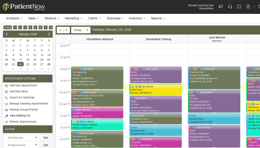
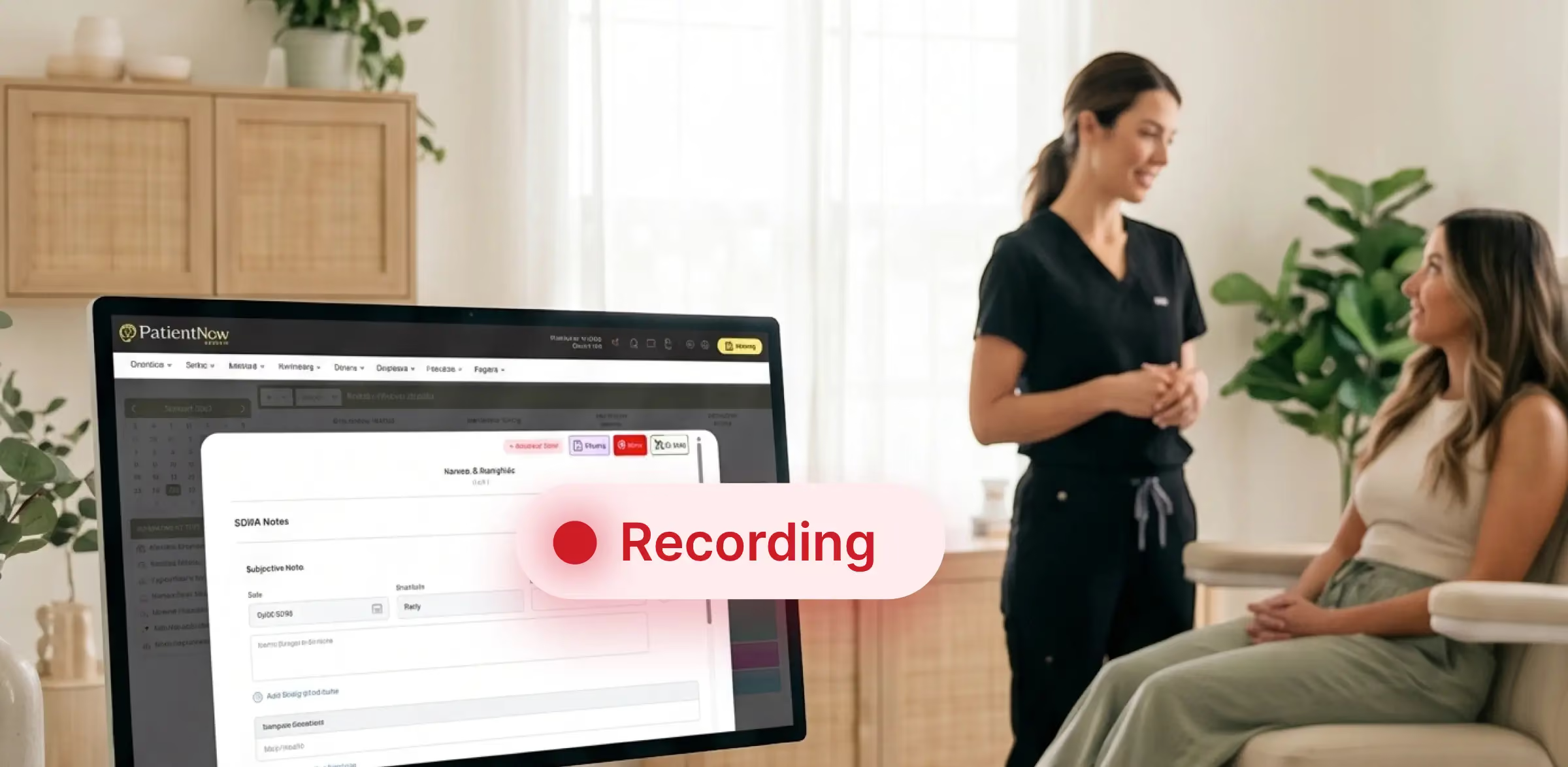
PatientNow is a practice engagement platform designed to bring these workflows together for med spas and wellness practices. It combines EMR, CRM, scheduling, marketing automation, payments, and AI-powered tools into a single platform. The platform helps reduce no-shows by:
- Automating reminders: Appointment confirmations and reminder sequences are triggered automatically after booking, keeping visits top of mind without adding to front-desk workload.
- Simplifying intake: Digital forms update client records directly, eliminating manual data entry and creating another point of commitment before the appointment.
- Recovering missed appointments: No-shows and cancellations can automatically trigger rebooking workflows instead of becoming lost revenue opportunities.
- Providing 24/7 scheduling support: AI-powered booking and outreach tools help manage appointments, rescheduling, lead follow-up, and engagement with dormant clients, even outside business hours.
- Creating consistency across locations: Multi-location wellness groups can maintain consistent no-show prevention processes across all practices rather than relying on individual staff follow-up.
By replacing multiple disconnected systems with one connected platform, PatientNow helps practices reduce administrative work and improve patient engagement. It allows your staff to focus more time on delivering quality care while supporting stronger retention, efficiency, and revenue growth.
What is a reasonable no-show rate for a wellness center
Most centers should be aiming for single digits on established clients and can expect higher rates on first visits and on appointments booked more than three weeks out.
The number matters less than the trend and the segment. Track no-shows by service, by provider and by lead time, because a 15% overall rate usually turns out to be a small number of high-risk slots rather than an even spread. Fixing those slots is far cheaper than applying a blanket deposit policy to everyone.
Should a wellness center charge deposits to reduce no-shows
Selectively, not universally. Deposits work where the appointment is long, high value, or repeatedly missed. Applied across the board they irritate reliable regulars and can cost more in lost bookings than they recover.
The practical approach is to require a card on file or a small deposit for first-time clients, high-value treatments and any client with a no-show history, while leaving established clients on straightforward booking.
How do you fill an appointment canceled at short notice
With an automated waitlist rather than phone calls. A cancellation one or two days out usually goes unfilled because filling it manually means someone working through a list during clinic hours.
A digital waitlist notifies interested clients the moment a slot opens, segmented by service and provider so the offer is relevant. Short response windows work better than open-ended ones, because the first person to reply takes the slot.
This is also where med spa practices see the fastest recovery, and the same mechanics are covered in more depth in our guide to handling no-show patients and cancellations at med spas.
What common mistakes increase no-shows
Even well-intentioned practices can unintentionally create more missed appointments by:
- Using only one reminder: A single message reaches only clients who were already likely to attend.
- Making cancellations difficult: If rescheduling requires a phone call during business hours, some clients will simply not show.
- Applying deposits everywhere: Blanket deposit policies can frustrate loyal clients while failing to address high-risk bookings.
- Ignoring rebooking opportunities: Many missed appointments can be recovered with timely, friendly follow-up.
- Missing after-hours demand: Without 24/7 booking and rescheduling options, client intent can disappear.
- Using punitive messaging: Strict or threatening policies can push hesitant clients to avoid communication.
- Failing to track risk: Without client-level no-show history, practices cannot personalize reminders or prioritize high-risk appointments.
Wellness center no-show reduction checklist
Use this checklist to evaluate your current no-show prevention process and identify areas where your practice can improve:
- Multi-touch reminders: booking confirmation, advance reminder, and final reminder.
- Two-way texting for confirmations, cancellations, and rescheduling.
- 24/7 online booking synced with live availability.
- Digital intake forms sent before visits.
- Deposits or card-on-file for high-risk or high-value appointments.
- AI webchat or virtual front desk for after-hours support.
- Reminder timing based on client no-show history.
- Automated rebooking for no-shows and late cancellations.
- Digital waitlist alerts for open appointment slots.
- Clear cancellation and no-show policies at booking.
- Recall campaigns for inactive clients.
- Monthly review of no-show trends by service, provider, and time slot.
Reduce no-shows with a smarter, connected wellness practice system
No-shows are rarely caused by one issue. They result from gaps in reminders, booking, follow-up, and communication. Reducing them requires a connected system, not one-off fixes. The most effective approach combines automated reminders, frictionless booking, proactive follow-up, and smarter client engagement. For practices managing these tasks manually, maintaining consistency can be difficult.
A platform like PatientNow brings scheduling, intake, CRM, and AI-powered outreach together in one system built for aesthetic and wellness practices. It offers features like automated text and email reminders, online booking, digital intake, waitlist management, recall campaigns, and AI-driven booking support. This helps practices reduce missed appointments while improving the entire client journey.
Ready to see how PatientNow can help your practice reduce no-shows and simplify operations? Book a demo today and check out the platform with the PatientNow team.
Explore this post
Book a demo to see PatientNow in action