
Table of Contents
Quick summary
As medical spas grow, documentation, workflows, and compliance become harder to manage with salon-first systems. But modern EMR solutions support documentation, workflows, and compliance as practices grow. Some solutions, like PatientNow, also serve as a benchmark for unified practice management.
Shortlist of the Top 3 Tools
| # | Tool | Key Features | Good For |
| 1 | PatientNow | Secure medical charting, automated patient follow-up, unified practice management | Med spas of all sizes that need EMR and practice management in one system |
| 2 | OptiMantra | Customized charting, Native telehealth support | Solo providers and small clinics |
| 3 | Daysmart | Functional performance dashboards, Appointment-focused scheduling | Appointment-led spa operations |
Growing medical spas need more than salon software
Many medical spas reach a point where basic booking and payment tools can no longer support daily operations. With diversifying med spa services, increasing patient volume, and tightening compliance requirements, small gaps begin to surface. Documentation becomes inconsistent, workflows vary by provider, and operational workarounds replace structure.
But salon-first systems are not designed for medical environments. They often lack structured charting, audit trails, and continuity across repeat treatments, forcing teams to manage care across disconnected tools.
However, medical spa EMR addresses these challenges by centralizing clinical records, so practices can deliver consistent care as they grow. This article explains what medical spa EMR software is, why adoption is increasing, and reviews the 12 best EMR for medical spa clinics used to support stable, scalable operations.
Why listen to us
At PatientNow, we have supported aesthetic, wellness, and medical spa practices for over 20 years with EMR and practice management software built for real operational demands. . Used by more than 5,000 practices worldwide, our platform combines clinical-grade documentation, scheduling, marketing, and revenue tools in one system. So clinics can balance patient care, compliance, and business management seamlessly.

What is a medical spa EMR?
A medical spa EMR centralizes clinical documentation, so patient care remains consistent across visits, providers, and treatments. It stores treatment notes, consent forms, clinical history, photos, and outcomes in one secure record, ensuring proactive communication and transparency between clinics and patients.
Unlike scheduling or CRM tools that are mainly used to manage appointments and communication, an EMR supports the continuity of patient care itself. In the medical spa industry, where treatments are often layered over time, EMRs ensure patient information remains accurate and consistent throughout their whole treatment journey.
Why EMRs are essential for medical spas
As medical spa services expand and patient volume grows, maintaining consistent documentation and operational control becomes harder without a clinical system in place. Here are three ways you can improve your health wellness clinics with EMRs:
- Standardize clinical documentation: An EMR uses treatment-specific templates, secure records, and audit trails to accurately document each step of patient care, for every patient, every time.
- Support care across repeat treatments: Medical spa services are often layered over time. An EMR system stores a patient’s treatment history, photos, and outcomes in a single system. This contextualizes each patient visit, helping you protect your practice and drive loyalty.
- Simplify daily operations as you scale: Many EMR systems include tools such as inventory management, batch tracking, appointment reminders, and post-visit follow-ups. These tools help streamline operations as you grow.
Without a proper EMR, practices risk inconsistent records, compliance gaps, and operational strain as volume and complexity increase.
12 best EMR for medical spa clinics in 2026
Below are the 12 best EMR for medical spa clinic providers to manage clinical records and improve operations:
| # | Tool | Key Features | Good For | Compliance | Charting | Multi-location readiness |
| 1 | PatientNow | Secure medical charting, automated patient follow-up, unified practice management | Med spas of all sizes that need EMR and practice management in one system | Yes | Yes | Yes |
| 2 | OptiMantra | Customized charting, native telehealth support | Solo providers and small clinics | Yes | Yes | Limited |
| 3 | Daysmart | Functional performance dashboards, appointment-focused scheduling | Appointment-led spa operations | No | No | Limited |
| 4 | Consentz | Client record management, structured treatment notes | Aesthetic clinics focused on consent workflows | Yes | Limited | No |
| 5 | MindBody | Patient discovery marketplace, AI-guided revenue insights | Wellness studios | No | No | Yes |
| 6 | Mangomint | HIPAA-Compliant records, visual treatment charting | Modern medical spa clinics | Yes | Yes | Yes |
| 7 | Pabau | Paperless client records, automated patient care | Growing med spas | Yes | Yes | Yes |
| 8 | AdvancedMD | Centralized dashboard, integrated practice management | Medium to large med spa practices | Yes | Yes | Yes |
| 9 | Remedly | Custom charting, visual documentation tools | Aesthetic med spas | Yes | Yes | Yes |
| 10 | OpenEMR | Structured appointment scheduling, standardized documentation | Budget-conscious clinics | Limited | Yes | Yes |
| 11 | Practice Fusion | Compliance dashboards, intuitive charting | Small practices | Yes | Yes | Limited |
| 12 | DrChrono | Clinical charting, online patient scheduling | Small and mid-sized med spa clinics | Yes | Yes | Yes |
1. PatientNow
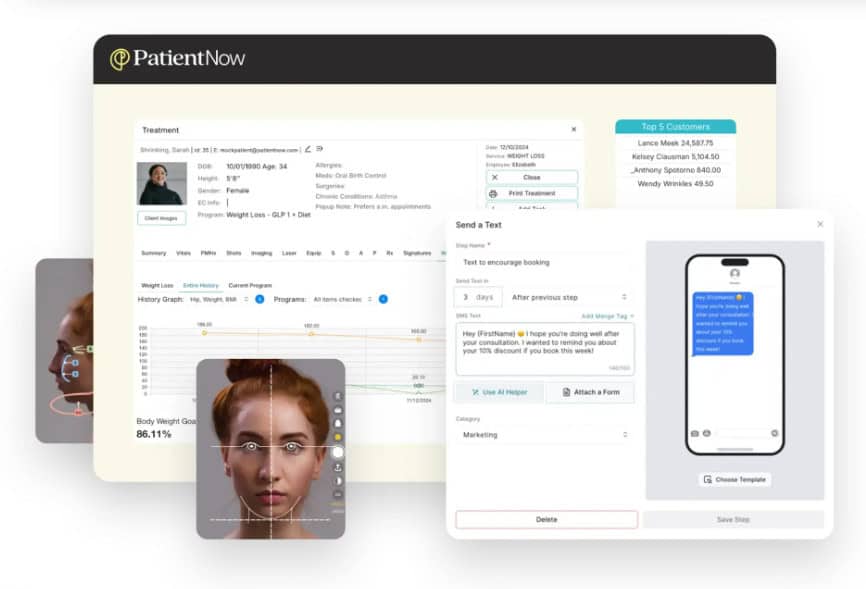
First on our list is PatientNow. It is a clinical-grade EMR designed specifically for medical spa workflows, bringing documentation, patient communication, and practice operations into one unified system. Instead of managing separate tools, practices can use a single platform to manage care, simplify operations, and attract new patients without juggling multiple tools.
PatientNow’s electronic medical records system is HIPAA-compliant with fully encrypted patient records. When paired with its built-in CRM tools, it helps practitioners maintain consistent communication, manage follow-ups reliably, and support long-term patient relationships without adding complexity to clinical workflows.
Key features
- Secure Medical Charting: PatientNow records consultations, injections, weight loss progress, labs, and treatment notes in a single, HIPAA-compliant record.
- Automated Patient Follow-Up: Sends reminders, recalls, and post-treatment messages automatically to reduce missed appointments and improve retention.
- AI-Powered Automation: Handles booking responses, rescheduling, and follow-ups automatically with Recure, its AI-powered assistant, reducing front-desk workload.
- Unified Practice Management: PatientNow combines an EMR solution with CRM, marketing, photos, scheduling, and payments into one system, replacing the need for multiple disconnected tools.
Pros
- Purpose-built for medical spas and aesthetic practices.
- Detailed charting capabilities.
- Built-in consent forms tied directly to patient records.
- Flexible packages and memberships for aesthetic medical services.
- Charts, templates, and workflows can be easily adjusted to fit how providers work.
- Centralized patient communication and internal staff notes.
Cons
- Inventory management features may require separate tracking for larger practices.
2. OptiMantra
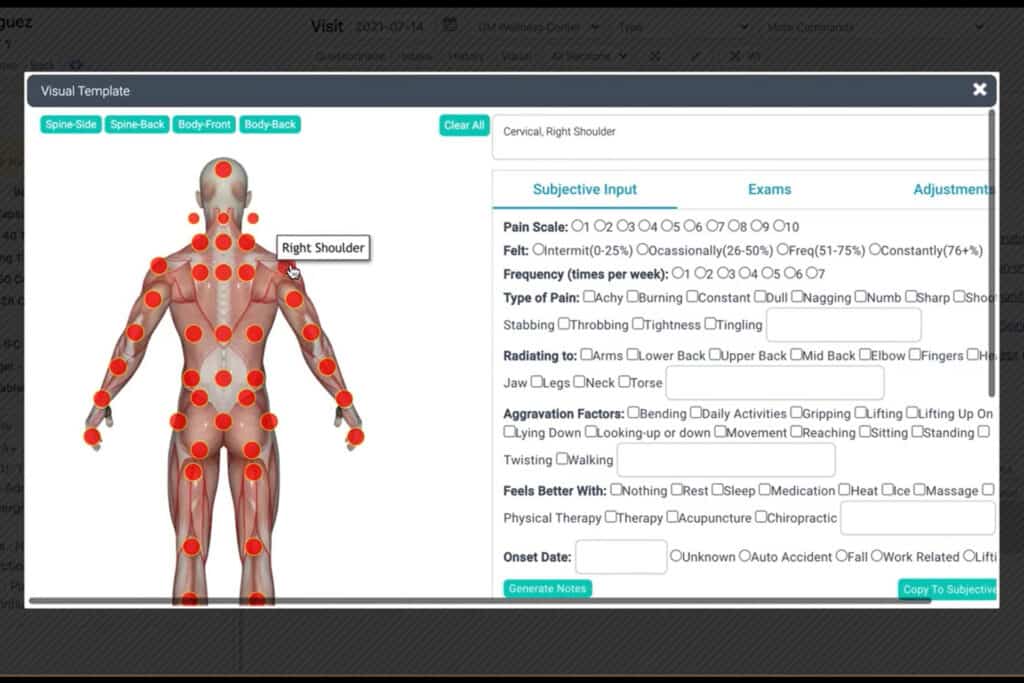
OptiMantra is an online practice management and EMR/EHR system designed for integrative medicine and wellness professionals. It helps practitioners manage charting, scheduling, billing, and clinical workflows in one place without switching between disconnected systems.
Key features
- Customized Charting: Users can modify templates, add custom fields, and reuse prior visit notes.
- Native Telehealth Support: Secure, built-in video visits allow clinicians to meet with patients remotely via HIPAA- and PHIPA-compliant links sent via email.
- Integrated Billing & Scheduling: Patient records, claims, invoicing, and calendars function together to improve administrative workflows.
Pros
- Highly customizable charting and intake workflows.
- Comprehensive solution with all-in-one general clinic management capabilities.
- Support for telehealth, billing, and scheduling.
- Easy-to-use interface.
Cons
- May be difficult for new users to navigate.
- Mobile and iPad experiences are not fully optimized.
- Limited precision in aesthetic-specific tools like face mapping.
- Reporting and analytics depth are basic.
3. DaySmart spa
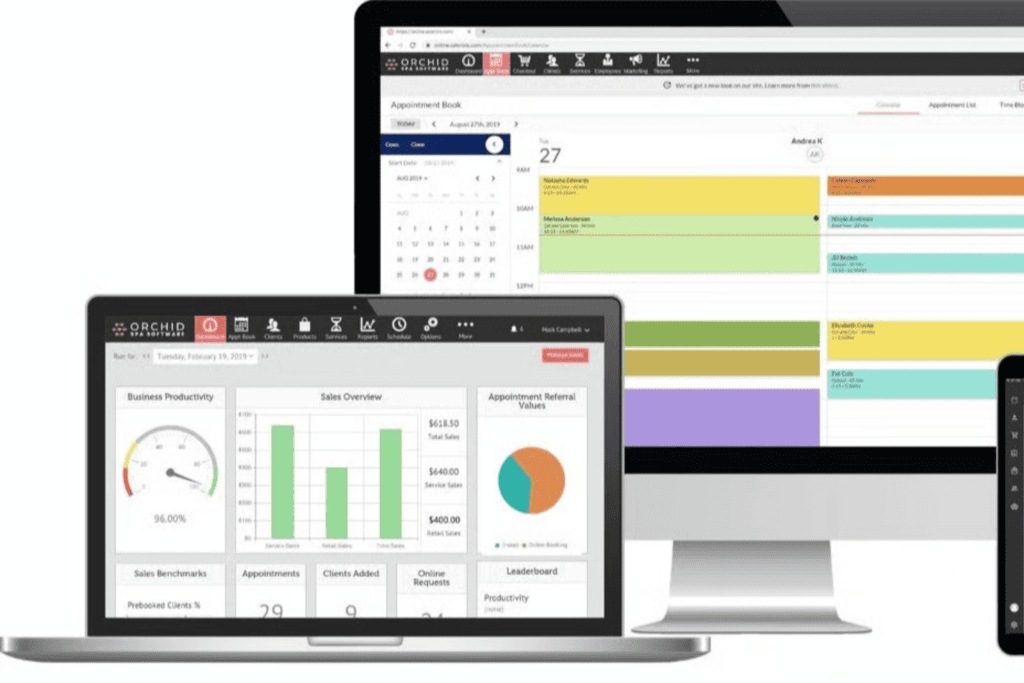
DaySmart Spa is a business management solution that features online appointment scheduling, marketing tools, and EMR software features that aid the client experience. It includes tools for online booking, staff tracking, and marketing promotions.
Key features
- Functional Performance Dashboards: Helps spa owners track appointments and daily operations using at-a-glance dashboards.
- Appointment-Focused Scheduling: Manages online booking, reminders, and recurring appointments using a color-coded, drag-and-drop calendar.
- Marketing & Client Tools: Built‑in promotions, email/SMS marketing, and client engagement features.
Pros
- Good reporting and analytics.
- Easy staff onboarding and training.
- Built-in marketing and promotion tools.
- Supports payroll, commissions, and staff tracking.
Cons
- Lacks strong CRM and clinical documentation features.
- There may be syncing and lag problems
- Cluttered and dated interface.
4. Consentz
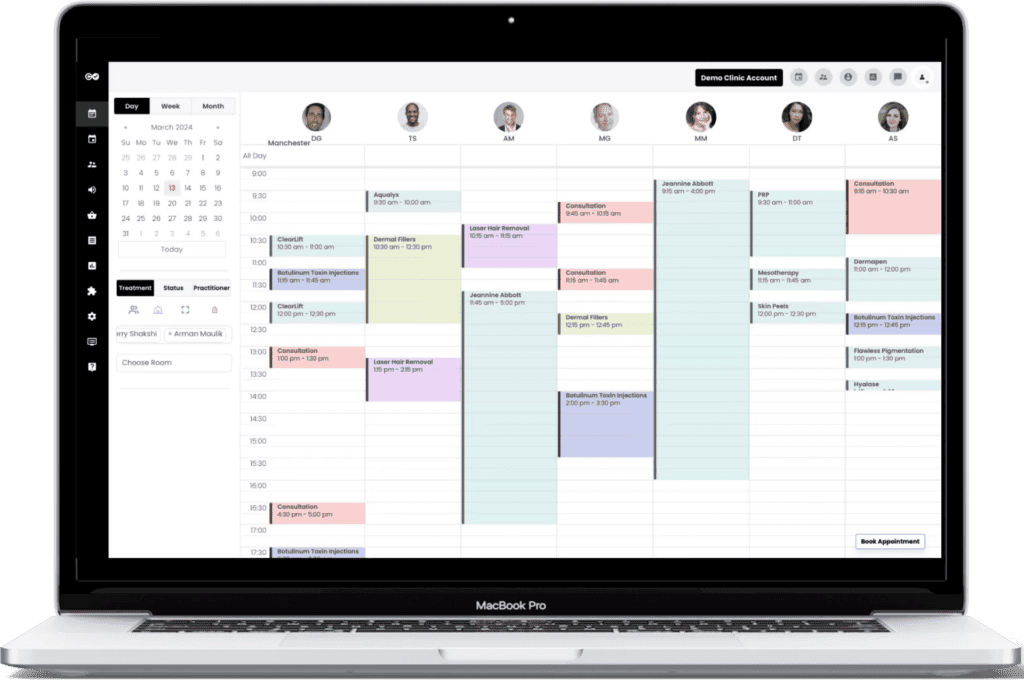
Consentz is a comprehensive suite of tools designed to help aesthetic clinics attract more patients. It manages patient records, photos, consents, consultations, and marketing, simplifying documentation and follow-ups.
Key Features
- Clinical Record Management: Captures, stores, and organizes all visual documentation, including before-and-after treatment photos, consultation notes, and consent records, and ties it to the patient record.
- Structured Treatment Notes: Uses predefined, editable templates to ensure consultation and treatment notes are documented consistently across visits.
- Patient Engagement & Marketing Modules: Includes clinic branding, automated reminders, SEO-optimized booking, and campaign tools to support growth.
Pros
- Digitally collects and stores patient consent forms.
- Possesses customizable consent templates.
- Integrated reminders and patient engagement features.
- Easy to access for patients and staff.
Cons
- Focused only on consent workflows, rather than full EMR functionality.
- Limited reporting and analytics outside consent records.
- Requires integration with other systems for scheduling or chart access.
- Navigation is confusing, and the setup process is time‑intensive.
5. MindBody
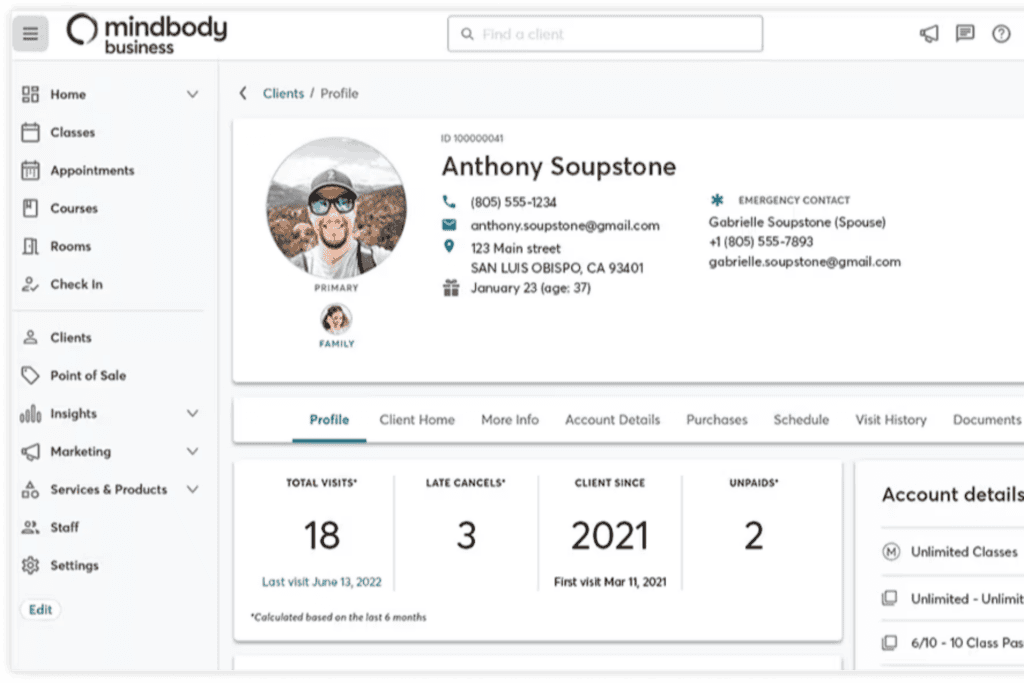
Next is MindBody, a wellness business software that connects fitness and wellness businesses with consumers. It’s a good option for scheduling, client management, and consumer engagement, offering tools that help service‑oriented businesses grow bookings and manage operations.
Key features
- Patient Discovery Marketplace: New patients can use the directory to find, book, and enter appointments into the scheduling system.
- AI-Guided Revenue Insights: Uses AI to analyze booking history, attendance patterns, and client information to present revenue opportunities related to existing data.
- Automated Reminders & Campaigns: Sends automated appointment reminders, promotions, and follow‑ups to reduce no‑shows and increase engagement.
Pros
- Strong reporting for tracking business metrics over time.
- Automated reminders and campaigns.
- Responsive, hands-on customer support.
- White-label and widget options for client-facing booking.
Cons
- Steep onboarding and learning curve for owners and admins.
- The interface can feel clunky and click-heavy.
- Limited flexibility in forms and waiver management.
- Not built as a clinical EMR, so medical spa record‑keeping workflows are limited.
6. Mangomint
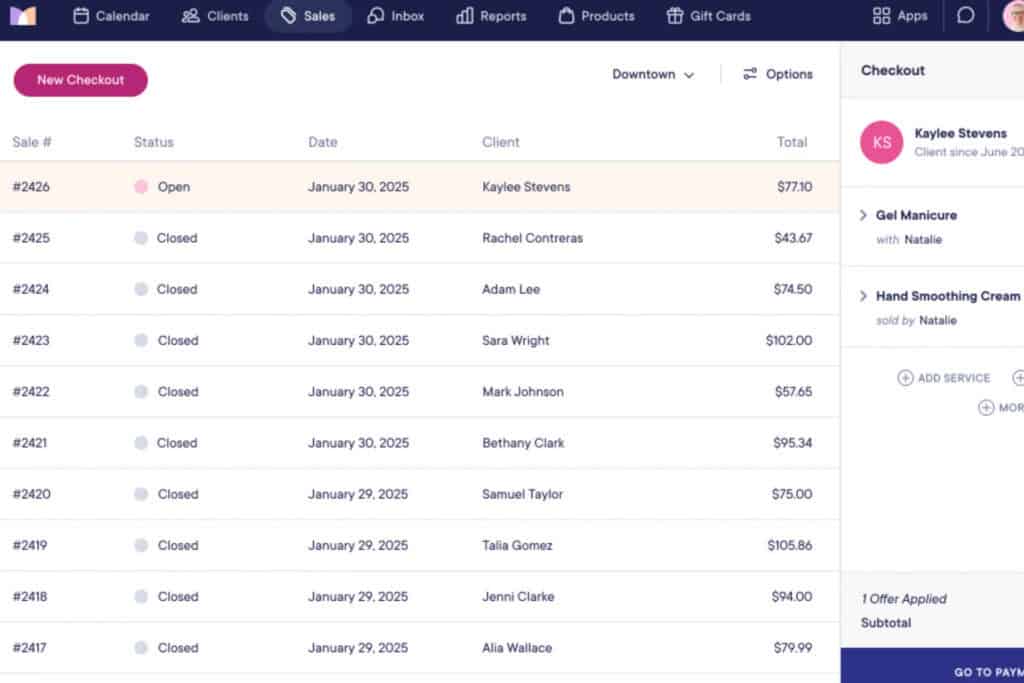
Mangomint is spa and salon management software designed to streamline scheduling, payments, and staff coordination. Teams use it to simplify the pre-appointment process and manage client records.
Key features
- Safe and Secure Record-Keeping: Keeps patient data, forms, messages, and photos stored securely in one place.
- Visual Treatment Charting: Allows providers to mark treatment areas, upload before-and-after photos, and keep visual notes alongside patient records.
Pros
- Built-in messaging for patient communication.
- Memberships and recurring payments support.
- Helpful onboarding and responsive customer support.
Cons
- Limited flexibility for multi-location setups.
- Rigid calendar behavior.
- Forms and record editing still need improvement.
- Focused on operational management rather than detailed clinical EMR documentation.
7. Pabau
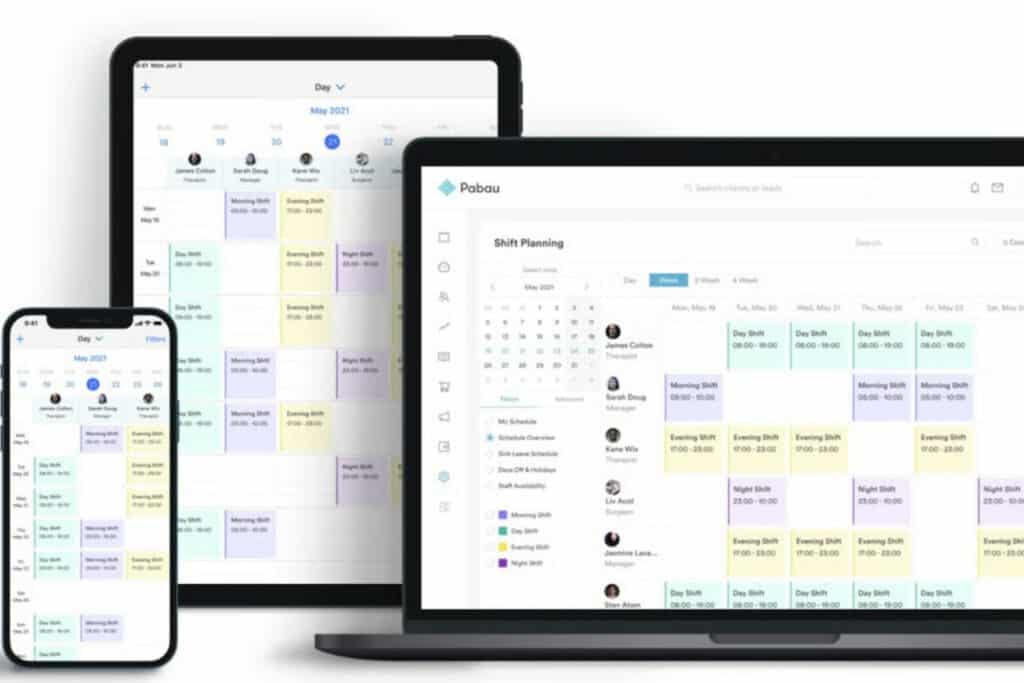
Pabau is a practice management system designed to support med spas with appointment scheduling, patient records, and clinical workflows. It helps clinics centralize operations while maintaining consistent documentation and continuity of care.
Key features
- Paperless Client Records: Users can store various types of client records, including intake forms, treatment notes, consent records, and photos, in a single, secure digital patient record.
- Automated Patient Care: Practitioners can automatically send treatment instructions before and after appointments to improve patient outcomes and reduce manual follow-ups.
Pros
- Audit-ready clinical documentation and customizable forms.
- Flexible workflows with integrations and API support.
- Reliable integrations with third-party tools.
- Online booking and the portal improve accessibility.
Cons
- Credit-based pricing can increase costs over time.
- Some features require paid add-ons.
- Slow performance during peak usage periods.
- Clinical depth is lighter than EMR-centric systems.
- Configuration requires setup time for larger clinics.
8. AdvancedMD
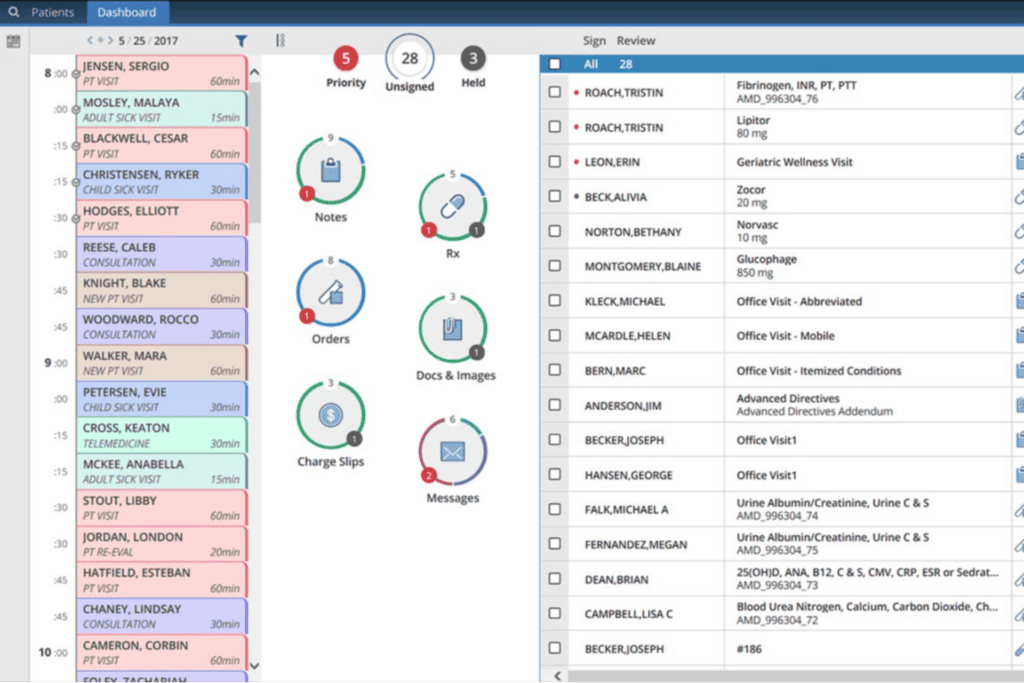
AdvancedMD is a cloud-based medical office management platform used by independent and multi-provider practices. It’s valued for its ability to connect clinical documentation with billing and administrative workflows. It’s considered a good option for its integrated workflows and solid data security.
Key features
- Centralized Dashboard: Provides a real-time view of schedules, patient rooming, task status, and priority items.
- Integrated Practice Management: Automatically syncs scheduling records, patient demographics, charges, and billing across clinical and administrative workflows.
- Revenue-Cycle Focus: Strong billing tools and reporting capabilities help track financial performance and accountability.
Pros
- Strong billing and RCM tools.
- Detailed audit trails and accountability.
- Flexible scheduling and charting options.
- Robust reporting features.
Cons
- Not tailored to aesthetic-specific documentation or workflows.
- Poor onboarding and inconsistent support.
- Interface can feel complex or overwhelming.
- Performance and stability issues.
- Training, implementation, or add-ons may increase costs.
9. Remedly
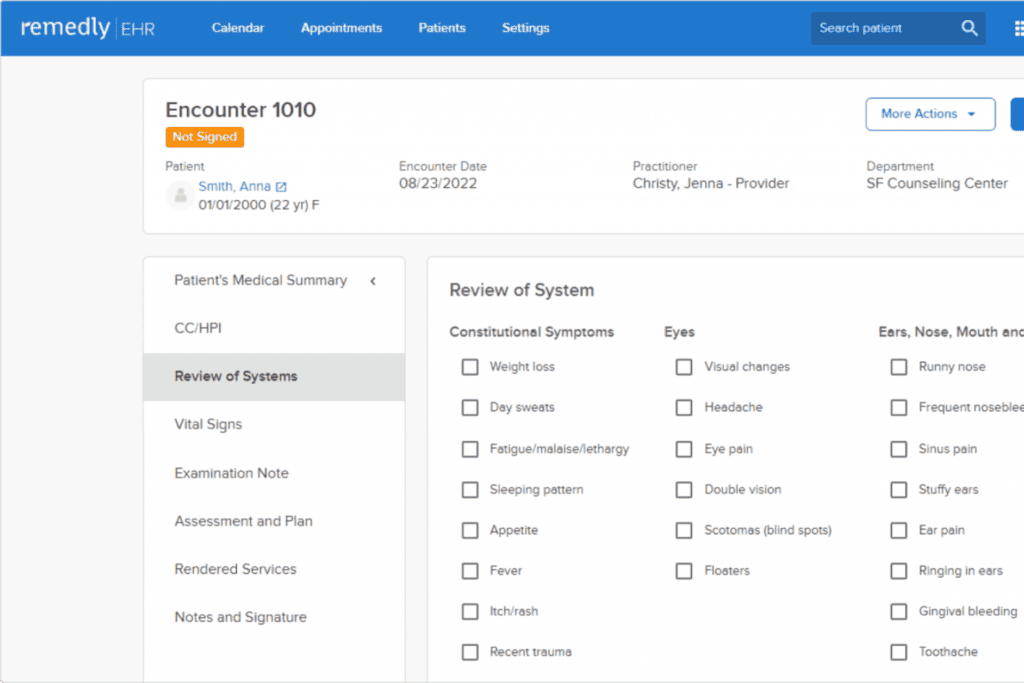
Remedly is designed to help medical practices manage both clinical and administrative tasks more efficiently. By combining EMR and practice-management tools in one system, it automates routine workflows.
Key features
- Custom Charting: Configurable templates, sketch tools, and shorthand entries support fast documentation, procedure notes, and specialty-specific charting.
- Visual Documentation Tools: Annotate patient photos and avatars, store images with visit notes, and maintain clear before-and-after documentation within the patient record.
Pros
- Unified system replacing the need for multiple clinic tools.
- Built-in telehealth and e-prescribing workflows.
- Smooth day-to-day use once fully configured.
- Hands-on support is offered during setup and troubleshooting.
Cons
- Minor bugs that interrupt workflows.
- Limited depth in reporting and analytics.
- Initial migration and configuration require effort.
- Pricing transparency is limited.
- Customization doesn’t match highly specialized aesthetic-focused platforms.
10. OpenEMR
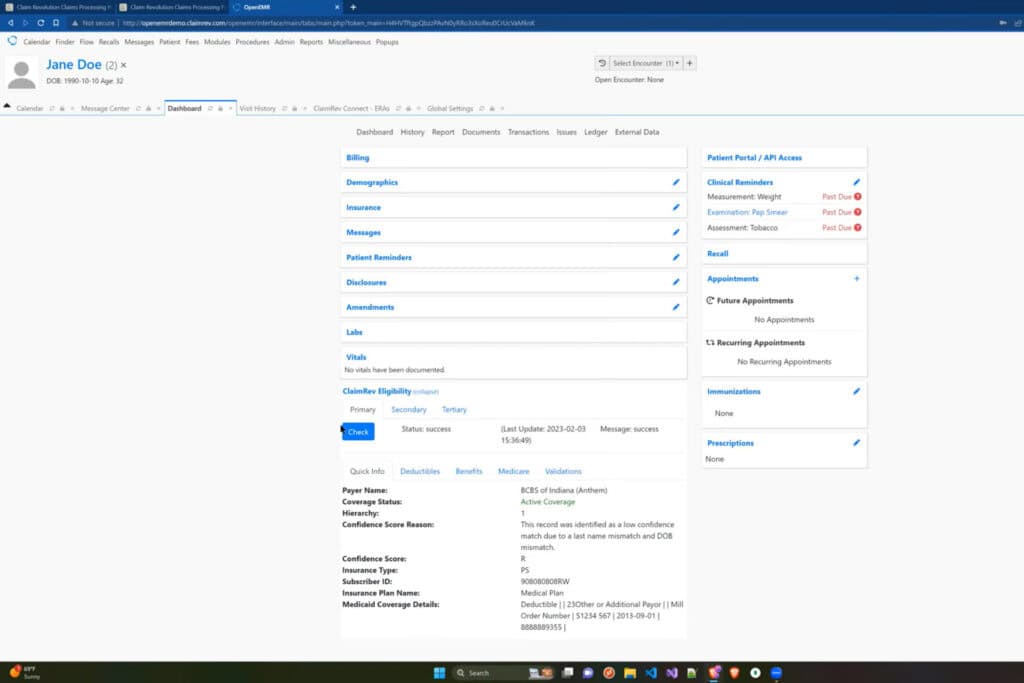
OpenEMR is an open-source electronic health records and medical practice management system chosen for its broad feature coverage and customization flexibility. It offers an integrated EHR system, scheduling, and electronic billing.
Key features
- Structured Appointment Scheduling: OpenEMR uses a compact calendar to manage patient appointments across single or multiple facilities.
- Standardized Documentation: Supports SOAP notes, vitals with growth charts, review of systems, template-driven forms, graphical charting, and customizable clinical note creation.
- Integrated Modules: Includes billing, e-prescribing, and patient portal functionality within its modular framework.
Pros
- Full customization controls.
- Broad clinical and administrative feature set.
- Low acquisition cost compared to commercial EMRs.
- Has built-in patient portal support.
Cons
- Overly complex for teams that want a quick setup.
- Dated user interface.
- Community-driven updates/support can slow issue resolution
- Not tailored to aesthetics-specific workflows or documentation.
11. Practice Fusion
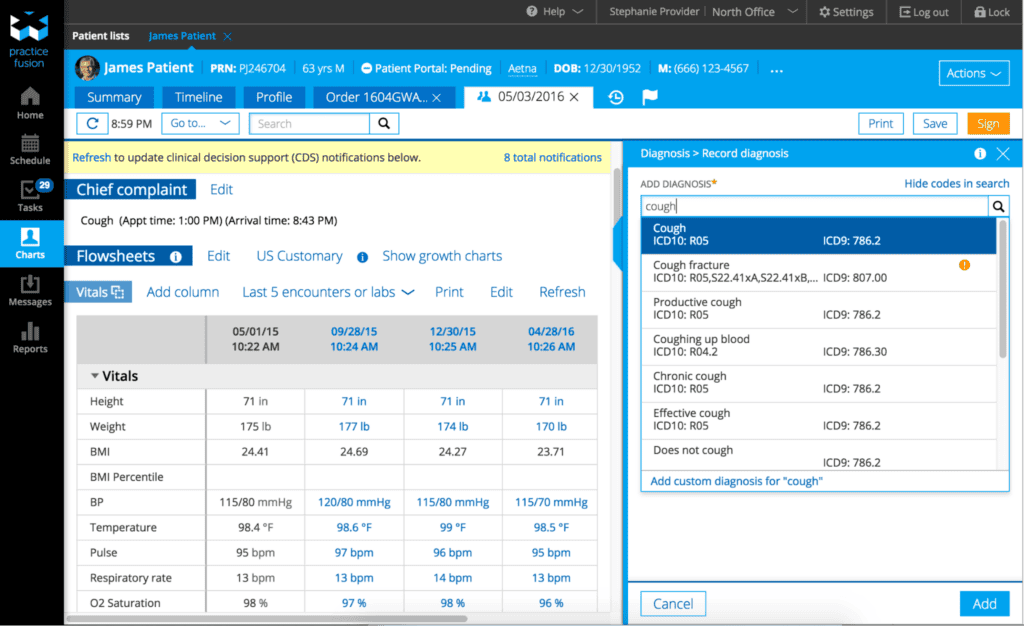
Practice Fusion is a cloud-based EHR and billing platform used by independent practices. It is used to streamline documentation, scheduling, and day-to-day clinic practice management. The platform also connects charting with compliance reporting and integrates with labs and e-prescribing services.
Key features
- Built-In Compliance Dashboards: Includes built-in MIPS, eCQM, and Meaningful Use dashboards to help practices track reporting requirements and quality measures.
- Intuitive Charting: Cloud-based records let providers access and update patient charts from any device, making it easy to chart and review information wherever care is delivered.
- Integrated connectivity: Supports links to labs, pharmacies, and clinical decision tools for routine workflows.
Pros
- Customizable chart templates.
- Automatic updates and remote access.
- Smooth performance from not needing heavy data.
- Reduced infrastructure needs due to cloud hosting.
Cons
- Ads and constant notifications disrupt usage.
- Limited internal communication tools.
- Missing full integrations with all other portals.
- Not tailored to medical aesthetics workflows.
12. DrChrono
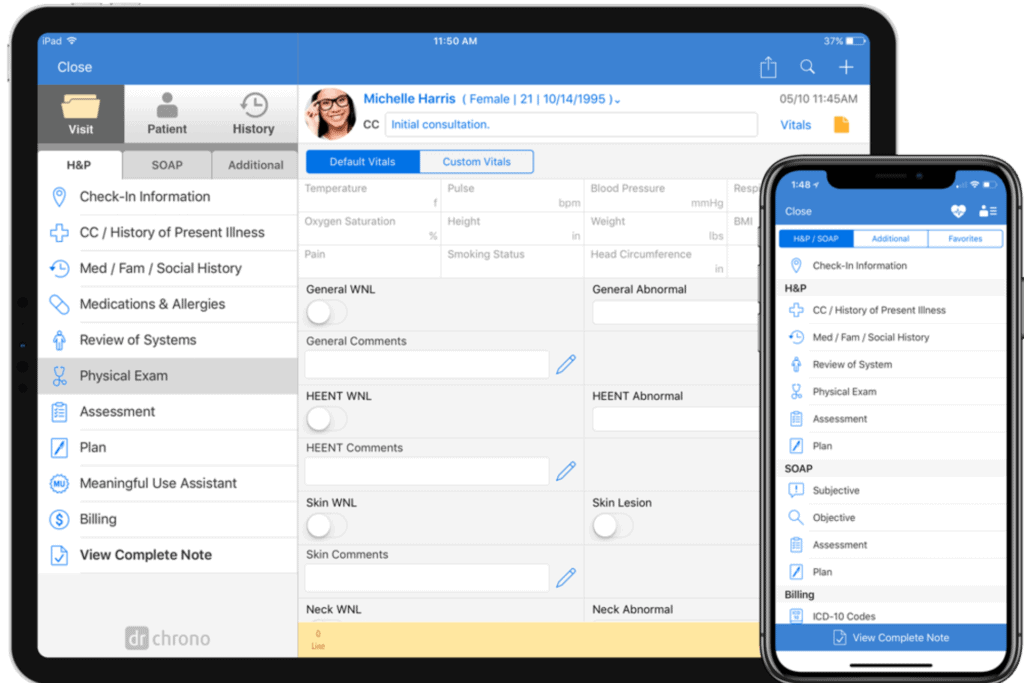
Last but not least is DrChrono, an EHR and practice-management platform that helps teams document care, schedule patients, and manage billing in one system. Some medical spas prefer the insurance-ready workflows and fully integrated system that DrChrono offers over aesthetic-specific features.
Key features
- Clinical Charting: Supports specialty-specific templates, SOAP notes, and free-text charting so providers can document care in a way that fits their workflow
- Online patient scheduling: Offers appointment scheduling with reminders and patient self-booking to reduce no-shows.
- Mobile Telehealth Capabilities: Enables video visits from mobile devices, where providers can view records, e-prescribe, and send forms during consultations.
- Integrated Platform Modules: Includes EHR, telehealth, practice management, billing, patient portal access, and app marketplace integrations within its ecosystem.
Pros
- Good core medical charting and documentation.
- Integrated billing and insurance support.
- Cloud-based access across devices.
- Suitable for medically regulated environments.
Cons
- Not purpose-built for aesthetic or cosmetic workflows.
- Limited support for before-and-after photo documentation.
- Requires additional tools for marketing and patient engagement.
- Setup complexity can be higher compared with aesthetic-focused systems.
Final takeaway: Simplify your med spa operations with PatientNow
As medical spa practices grow, managing documentation, compliance, and day-to-day workflows becomes increasingly complex. Thus, having a medical spa EMR is essential to keep practices organized. However, a purpose-built EMR does more than store records. It helps teams stay organized, simplify operations, and deliver a consistent, high-quality patient experience across every interaction.
PatientNow is built specifically for med spas and aesthetic practices, combining clinical charting, scheduling, imaging, marketing, and payments in one platform. Unlike general or salon-first EMRs, it supports both patient care and business operations, with AI-driven automation, customizable workflows, and retention tools designed for real-world med spa needs. For practices that want a single system to manage growth, simplify operations, and keep the focus on patients, PatientNow provides the foundation to do it all. You can schedule a demo to see it in action today!