

Table of Contents
Looking for the Best Medspa Software?
Most medspas lose patients not because of poor treatment, but because follow-up falls through the cracks. Someone comes in for Botox, leaves happy, and six months pass without a reminder. By the time they think about rebooking, they’ve found another provider.
The right software solves this. Automated recalls, targeted campaigns, and streamlined scheduling keep patients engaged without adding staff. This PatientNow guide covers 10 platforms that can help.
Why Listen to Us
PatientNow has served aesthetic practices for over 20 years. We’ve watched platforms come and go, and we’ve seen what actually moves the needle for medspas.
That experience informs this guide. We’ve included PatientNow in the list, but we’ve also been honest about where other platforms might be a better fit depending on your needs and budget.
What Is Medspa Software?
Medspa software is practice management software that handles clinical and business operations in one system.
On the clinical side, the software manages:
- Medical charting and SOAP notes
- Consent forms and intake documents
- HIPAA-compliant patient records
- Before-and-after photo documentation
The business side handles:
- Payment processing and POS
- Inventory tracking
- Staff scheduling and payroll
- Reporting and analytics
The best medspa software connects all of these functions so data flows between them. When a patient books a consultation, their intake forms populate automatically. When they complete treatment, follow-up reminders trigger without manual input.
This integration keeps patients engaged and coming back while staff focus on providing care.
10 Best Medspa Software
| Software | Strengths | Starting Price | Rating (Software Advice) |
| PatientNow | All-in-one with marketing automation | Custom | 3.9 ⭐ (295 reviews) |
| Pabau | Multi-location practices | $69/month | 4.7 ⭐ (596 reviews) |
| Boulevard | High-end client experience | $369/month | 4.6 ⭐ (363 reviews) |
| Zenoti | Enterprise operations | Custom | 4.5 ⭐ (1241 reviews) |
| Vagaro | Budget-conscious solo practitioners | $23.99/month | 4.68 ⭐ (3461 reviews) |
| AestheticsPro | Clinical documentation and photography | $85/month | 4.43 ⭐ (594 reviews) |
| Mangomint | Clean interface and simple workflows | $165/month | 4.9 ⭐ (277 reviews) |
| Jane | Telehealth integration | $54/month | 4.79 ⭐ (482 reviews) |
| Fresha | Marketplace exposure | $19.95/month | 4.8 ⭐ (1440 reviews) |
| Phorest | Salon-to-medspa transitions | Custom | 4.8 ⭐ (411 reviews) |
1. PatientNow
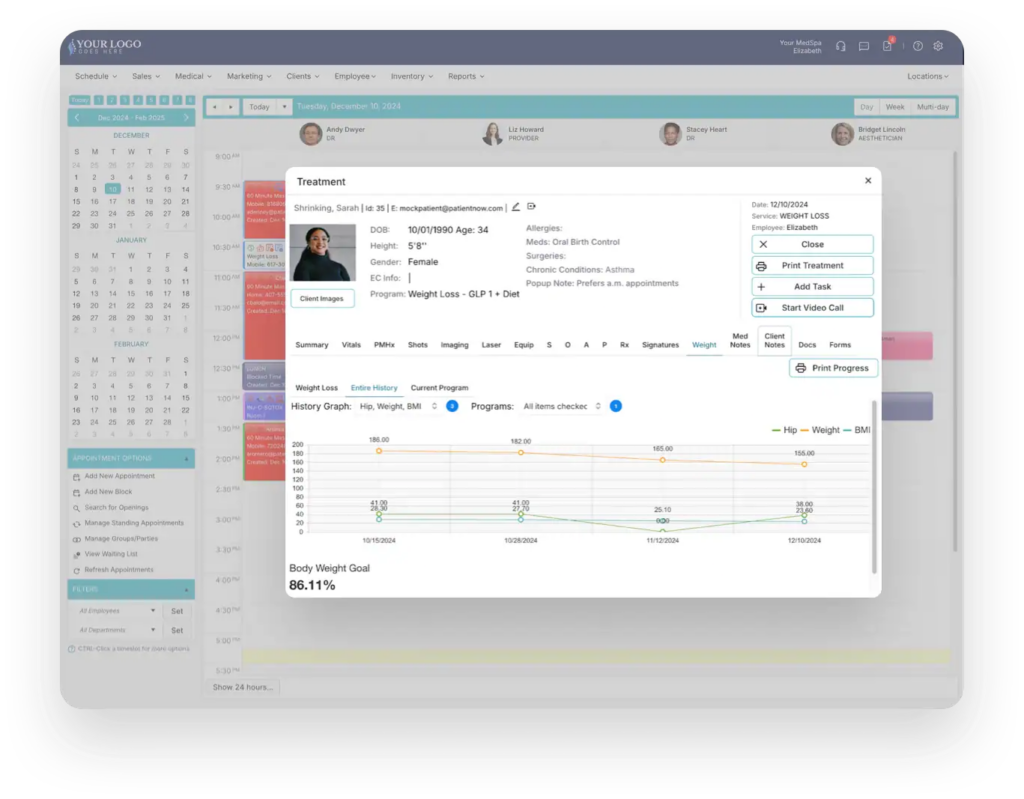
PatientNow is practice management software built exclusively for medical spas and aesthetic clinics. For over 20 years, the platform has helped practices balance clinical excellence with business growth.
Rather than juggling separate tools for scheduling, charting, marketing, and payments, PatientNow brings everything into one system. The platform includes EMR functionality, RxPhoto integration for clinical photography, and Curae AI for automated scheduling.
What sets PatientNow apart is the marketing automation. Recall campaigns, reputation management, and patient nurturing sequences run automatically based on treatment history. A patient who had Botox eight weeks ago gets a rebooking reminder without manual intervention.
Key Features
- Full EMR with treatment plans, charting, and consent forms
- RxPhoto integration with auto-labeling and social media posting
- Face and body charting with SOAP notes
- AI-powered scheduling through Curae
- Marketing automation with recall campaigns and review management
- Patient portal for appointments, records, and payments
- Multi-location support with centralized reporting
- Weight loss tracking with safety checks and allergy alerts
- ONC-ATCB certified for e-prescribing and lab integration
Pricing
Custom pricing based on practice size. Two plans available: PatientNow Essentials and PatientNow Pro. Contact us for a free demo.
Pros
- Purpose-built for aesthetics
- Strong marketing automation
- Comprehensive clinical documentation
Cons
- Learning curve due to feature depth
- Some users report occasional UI friction
2. Pabau
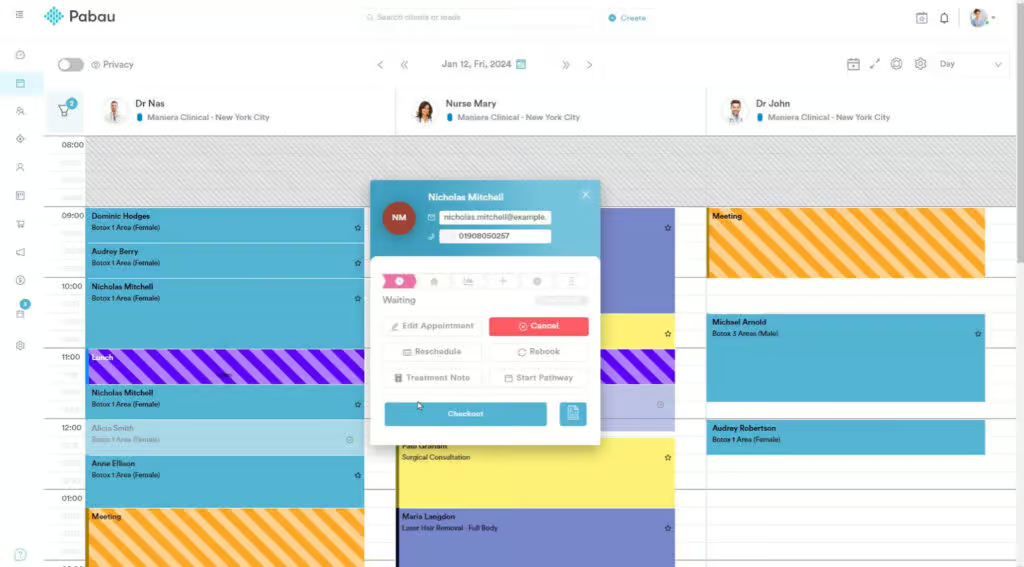
Pabau started as a newsletter tool for clinics in 2010 before evolving into full practice management. The platform now serves over 4,000 healthcare businesses with particular strength in marketing automation.
Marketing features take center stage here. The system lets you segment patients by treatment history, target those who haven’t visited in six months, and send targeted campaigns. You get 25 email templates to work with, plus a dashboard showing campaign performance. Follow-up emails can be automated based on the rules you set.
Inventory management is interconnected with treatments. The system updates stock automatically when providers use products, and it flags items approaching expiration. For multi-location practices, there’s a dashboard to monitor inventory across all sites.
Key Features
- Marketing automation with 25+ templates
- EMR with customizable forms and charting
- Before-and-after photo management
- Inventory tracking with automatic deductions
- Echo AI assistant for documentation
Pricing
Starting at $69/month for single users with up to 100 clients.
Pros
- Strong marketing and segmentation tools
- Real-time inventory updates
- Good for multi-location practices
Cons
- AI features consume credits
- No built-in waitlist management
3. Boulevard
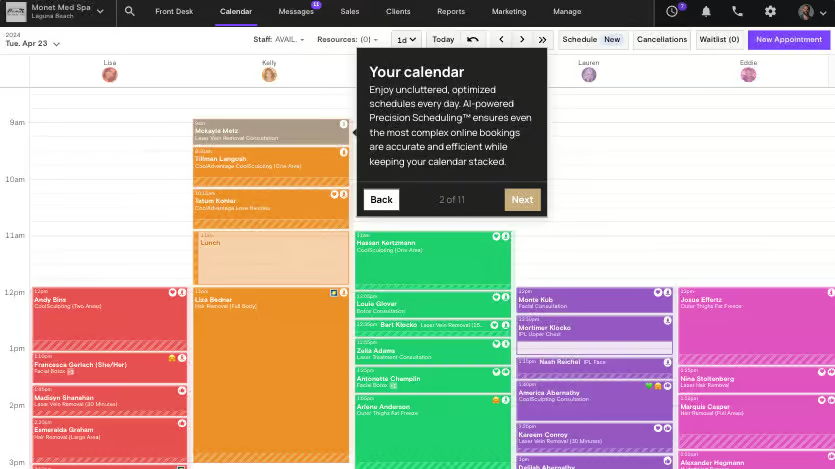
Boulevard positions itself as a client experience platform rather than just booking software. The company has invested heavily in interface design, and it shows.
One standout feature is the Reserve with Google integration. Patients can book directly from Google search results or Google Maps without visiting your website. Boulevard reports that businesses across the self-care industry have booked nearly 400,000 appointments through this feature.
The platform is HIPAA compliant and supports advanced charting where you can upload photos, mark injection sites, and document treatments. The POS system stores credit card information, enabling no-show fees, memberships with auto-renewal, and loyalty programs.
Key Features
- Modern, polished interface
- Reserve with Google integration
- Membership management with auto-renewal
- Integrated POS with stored payments
- Marketing automation tools
Pricing
Starting at $369/month per location. Standard rate is $410/month.
Pros
- Excellent user experience
- Strong booking conversion
- Good membership tools
Cons
- High price point
- SMS costs extra
4. Zenoti
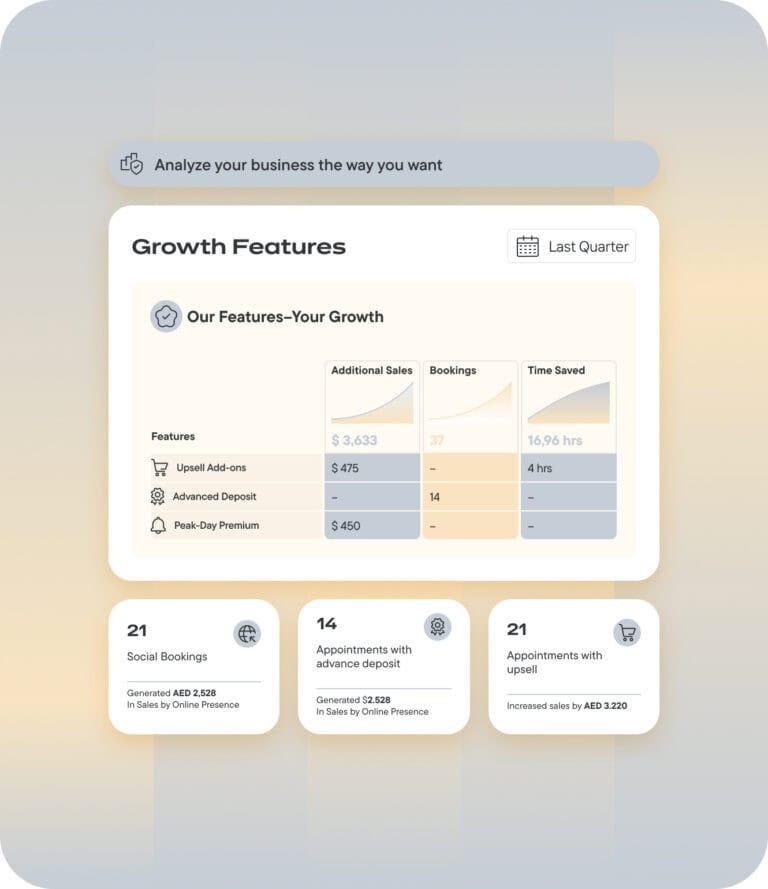
Zenoti is one of the more enterprise-focused options on this list, with features built for larger operations and multi-location management.
The charting system uses AI to generate SOAP notes and treatment summaries. “Dot phrases” automatically fill in common charting notes, saving clinicians time on documentation. Photo management is HIPAA compliant, and everything is stored in one audit-ready system.
For practices doing IV therapy or wellness treatments, Zenoti tracks drip bags, boosters, and vials by dose, batch number, and expiry date. You can set up packages where patients buy credits or series, and the system manages redemptions and renewals.
Key Features
- AI-powered SOAP notes with auto-fill shortcuts
- AI receptionist for missed call recovery
- Advanced inventory tracking by batch and expiry
- Multi-location management with centralized control
- Social booking from Instagram, Facebook, and Google
- Cart abandonment email recovery
- Package and series management
Pricing
Custom pricing based on business size.
Pros
- Built for scale
- Strong AI features
- Comprehensive reporting
Cons
- Expensive for smaller practices
- Steeper learning curve
5. Vagaro
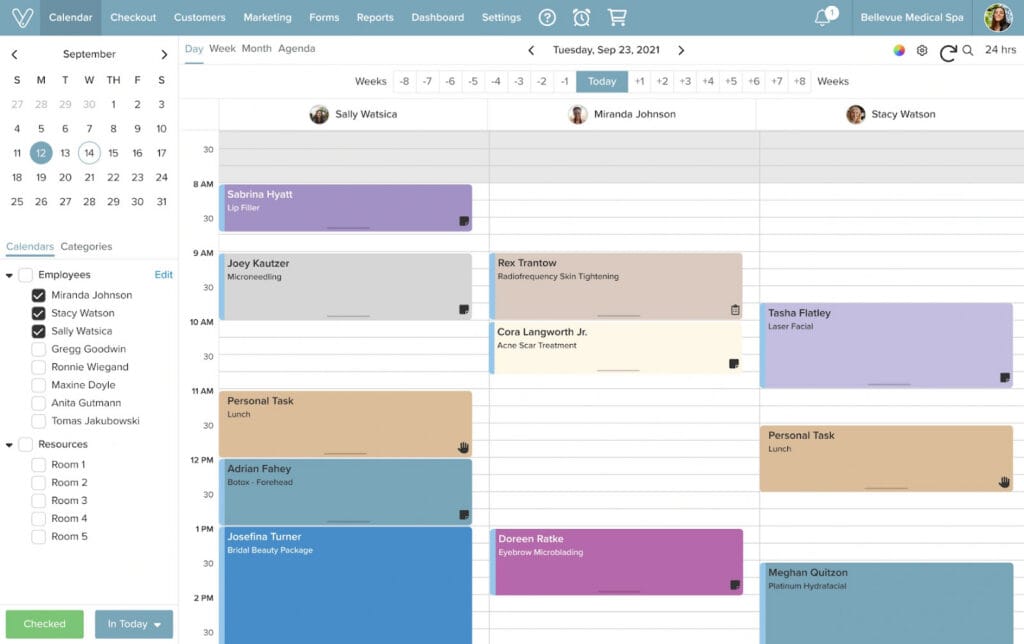
Vagaro is one of the more affordable options on this list, starting at $23.99 per month for a single bookable calendar. The platform grew out of the general wellness industry, and that origin still shows in the design.
Vagaro’s marketplace lets clients browse and discover medspas, which can reduce ad spend for new practices. Whether that generates meaningful leads depends on your market, but the feature is there.
The platform also offers Vagaro Capital, a financing fund ranging from $1,000 to $500,000 for equipment and renovations. Businesses can apply in minutes, and approved funds arrive in two business days.
The system supports face mapping and SOAP notes, though the charting isn’t as detailed as what you’d find in PatientNow or AestheticsPro. Vagaro works well for practices that want something simple without deep clinical documentation.
Key Features
- Affordable entry pricing
- Built-in marketplace for discovery
- Business financing options
- Basic charting and SOAP notes
- Inventory management
Pricing
Starting at $23.99/month. 30-day free trial available.
Pros
- Affordable
- Quick setup
- Access to capital
Cons
- Limited clinical depth
- Less sophisticated than purpose-built platforms
6. AestheticsPro
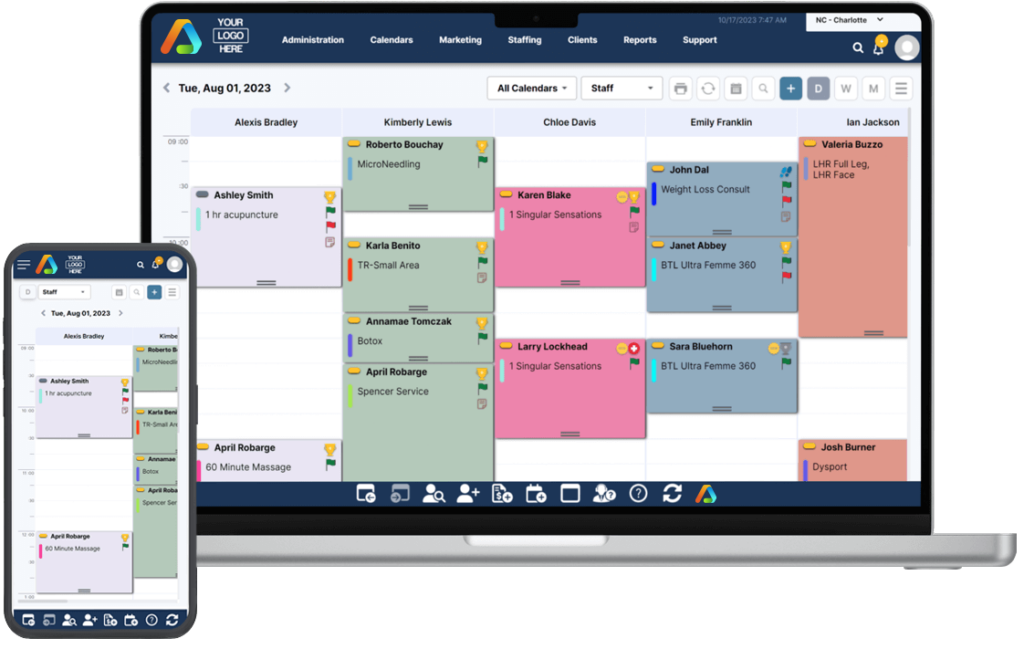
AestheticsPro has focused exclusively on aesthetic practices for over 15 years. The company claims to have perfected the software through client feedback over that time.
The platform includes a library of ready-made consent forms and intake documents, but you can also build your own from scratch or work with their developers to create custom forms. This flexibility matters for different treatment types and regulatory requirements.
Service mapping is a standout feature. When you schedule an appointment, the system automatically attaches the practitioner, room, equipment, and consent forms needed for that specific service. You don’t have to manually assign resources.
The in-app photography tool lets you track treatment progress visually with photo guides and ghosting for alignment. E-prescribing is built in, and the platform handles telehealth through telemedicine integration for virtual consultations.
Key Features
- Comprehensive form library
- Service mapping for resource assignment
- Clinical photography with alignment guides
- E-prescribing
- Dedicated Client Success Manager
Pricing
Starting at $85/month for single users.
Pros
- Deep clinical documentation
- Strong form customization
- Dedicated support
Cons
- Interface feels dated
- Mobile app has mixed reviews
7. Mangomint
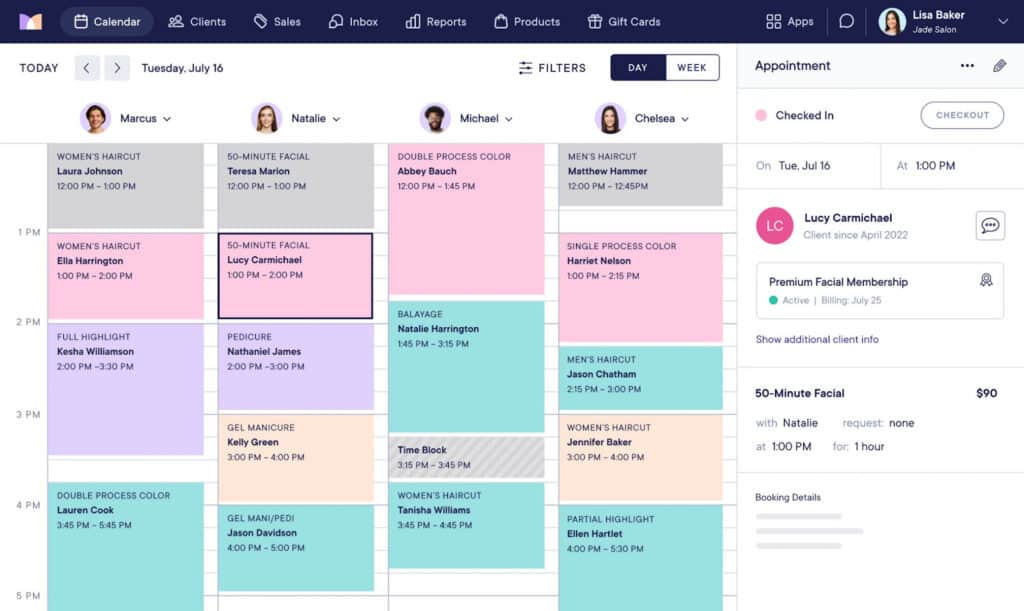
Mangomint is one of the better-looking medspa software options available. The company openly positions against “ugly” salon software, and the interface reflects that priority.
For charting, Mangomint offers Integrated Forms with visual templates, image annotation, and SOAP notes. You can upload photos, mark injection sites, and store everything in the client profile. Telehealth integration through Doxy.me lets you do virtual consultations without separate software.
The platform became HIPAA compliant in 2023 and offers a Business Associate Agreement for practices that need it.
Key Features
- Modern, clean interface
- Phone integration with caller ID
- SOAP notes and image annotation
- Doxy.me telehealth integration
- Commission and payroll tracking
Pricing
Starting at $165/month for teams of 2-10.
Pros
- Excellent design
- Easy to learn
- Good communication tools
Cons
- HIPAA only on higher tiers
- Fewer integrations than larger platforms
8. Jane
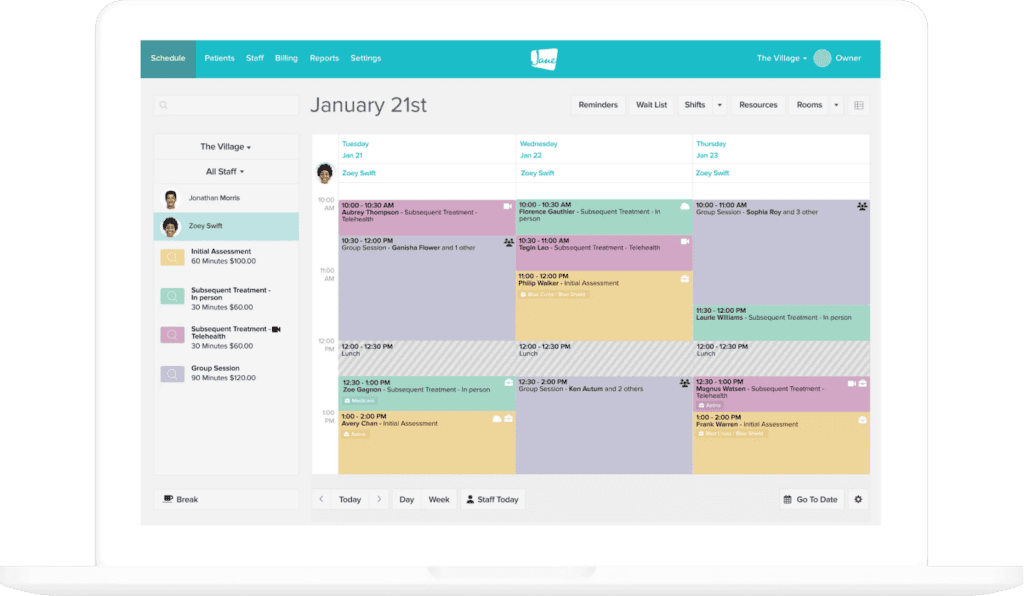
Jane is practice management software for health and wellness practitioners, popular in the US and Canada. The platform is cloud-based and works across all devices without installation.
The charting tools include customizable SOAP notes with over 1,000 templates. Dictation is available if typing slows you down. A duplicate charts feature copies information from previous appointments to save time, though you still need to review it.
Jane operates from Canada, so patient data is stored in regional data centers in the US, Canada, UK, or Australia depending on your location. You can upload before-and-after images directly to patient profiles.
The platform doesn’t include built-in marketing automation like PatientNow or Pabau, but it integrates with Mailchimp and similar tools if you need email campaigns.
Key Features
- Integrated telehealth
- 1,000+ charting templates
- Dictation support
- Insurance billing
- Strong customer support
Pricing
Starting at $54/month for single practitioners.
Pros
- Excellent telehealth integration
- Strong support team
- Good documentation tools
Cons
- No built-in marketing automation
- Requires third-party tools for campaigns
9. Fresha
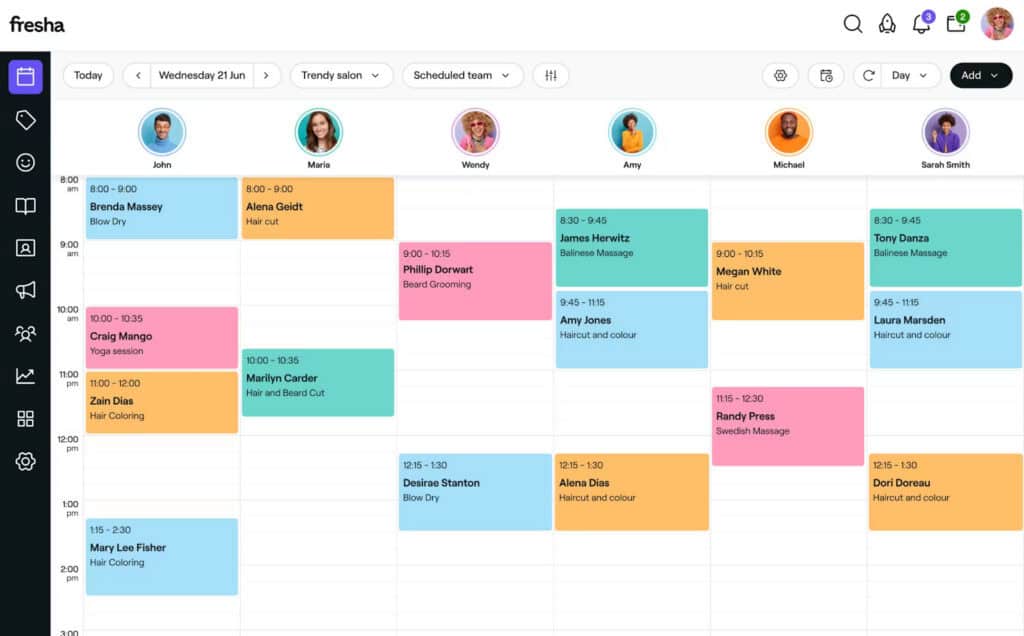
Fresha doesn’t charge booking fees for each appointment. That’s the first thing that makes it different.
Bookings are only charged when new clients find you through the Fresha Marketplace, and this is a one-time fee. If a marketplace client returns later, there are no additional charges. You aren’t charged for bookings from your own website, Google, or social media.
The interface is clean and modern. The website contains detailed guides with visuals for almost every task.
Like Boulevard, Fresha integrates with Reserve with Google, so potential clients can book directly from search results and Google Maps. The Fresha marketplace is another discovery channel where millions of people search for beauty and wellness appointments.
Key Features
- No monthly fees for core features
- Built-in marketplace
- Integrated payment processing
- Inventory tracking
- Multi-location support
Pricing
Free for core features. Charges apply for marketplace clients and payment processing.
Pros
- Cost-effective model
- Simple interface
- Good for budget-conscious practices
Cons
- Limited clinical features
- Basic reporting
10. Phorest
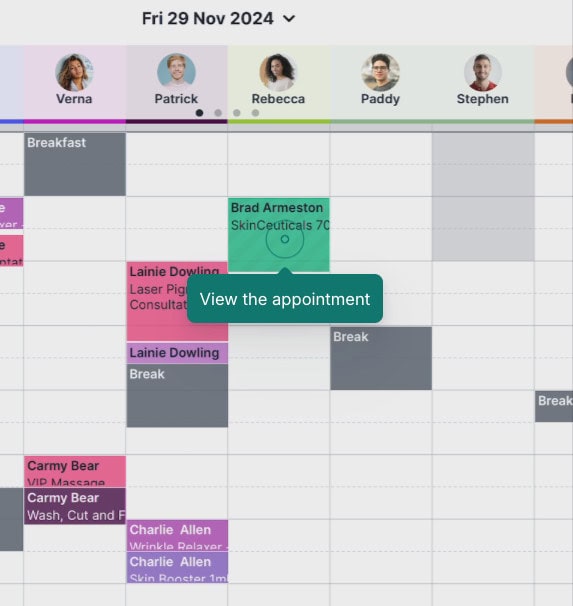
Phorest comes from the beauty industry, and that origin still shows. The marketing tools feel salon-focused, with loyalty programs and SMS campaigns designed for rebooking haircuts. That said, the company has been adapting for medical aesthetics.
The Treatment Plans feature lets you build detailed multi-session plans with course tables that track specifics like laser settings and patient progress. You can collect multiple signatures on consent forms, and there’s face mapping and image markup tools for documentation.
Key Features
- Treatment planning with course tables
- Face mapping and photo markup
- Integrated Meta ads management
- AI-powered note transcription
- Dedicated Business Advisor
Pricing
Custom pricing. Contact sales for quotes.
Pros
- Good for salon-to-medspa transitions
- Strong support model
- Comprehensive marketing tools
Cons
- Higher price point
- Some features feel salon-oriented
How to Choose
- Consider your practice size. Solo practitioners have different needs than multi-location operations. Vagaro or Fresha work for smaller practices, while PatientNow or Zenoti scale better for growth.
- Evaluate clinical depth. If you’re performing medical procedures, you need proper documentation, consent management, and photo tracking. PatientNow, AestheticsPro, and Pabau prioritize these features.
- Factor in marketing needs. Some platforms include robust automation for recalls and campaigns. Others require third-party tools. If patient retention is a priority, built-in marketing saves time.
- Calculate total cost. Monthly fees tell only part of the story. Factor in per-user charges, transaction fees, SMS costs, and add-ons.
Why PatientNow
PatientNow was built for aesthetic practices from day one. The platform combines clinical documentation, marketing automation, and practice management in one system designed specifically for Botox, fillers, laser treatments, and similar procedures.
For practices that want to consolidate their tools and automate patient retention, PatientNow offers a complete solution without the need for multiple vendors.
Schedule a demo to see how it works for your practice.
FAQs
How does medspa software reduce no-shows?
Automated reminders via SMS and email notify patients before appointments. Better systems allow confirmation or rescheduling directly from the message. Some platforms also support deposit requirements or cancellation fees.
Does a medspa need HIPAA compliance?
Yes. Any practice storing patient health information needs HIPAA-compliant systems and processes. This applies regardless of whether treatments are elective.
What reporting capabilities matter most?
Look for revenue reports by service and provider, appointment metrics (booking rates, cancellations, no-shows), patient retention data, and inventory tracking. Marketing performance reporting helps optimize campaigns over time.