
Table of Contents
Quick Summary
Many dermatology practices struggle with fragmented systems that slow workflows, complicate billing, and limit patient engagement. The solution is an all-in-one EHR designed for both medical and cosmetic dermatology, unifying charting, photo management, marketing, memberships, scheduling, and revenue tools. This simplifies operations, improves efficiency, and supports overall practice growth.
The Wrong EHR Slows Everything Down
Most EHR platforms are built for either insurance-based medical care or cash-pay aesthetic services. Only in rare instances are they designed for both. Dermatology sits at the intersection of clinical medicine and elective aesthetics. Two worlds with very different software requirements. A platform built for prior authorizations and biopsy tracking won’t support memberships and Botox. Also, a tool designed for cash-pay cosmetics won’t hold up when insurance billing and pathology workflows are added. Ideally, a complete dermatology EHR should be able to handle both aspects:
- medical insurance
- cash-pay cosmetic treatments
This guide discusses the best dermatology EHR software in 2026. It compares their features and pros/cons, so you can match the right platform to how your practice actually runs.
Why Trust Us?

With 20+ years serving aesthetic and dermatology practices, PatientNow Pro is purpose-built for cosmetic dermatology and plastic surgery. Our award-winning platform combines clinical-grade tools, all-in-one practice management, and proven AI automation. We base our recommendations on real-world experience with dermatology practices worldwide, making PatientNow the most trusted EHR for efficiency, growth, and patient care.
What Is Dermatology EHR Software?
A dermatology EHR is built for the unique needs of dermatology practices. It manages specialty-specific charting and detailed procedure documentation. Moreover, it supports accurate CPT and ICD-10 billing.
Most dermatology EHRs integrate with labs, e-prescribing tools, and telehealth platforms. But for practices that offer aesthetic services alongside medical dermatology, the system must do more. It should also support memberships, marketing automation, and clinical photo workflows. However, most general EHRs do not provide these capabilities.
Key Benefits of Purpose-Built Derm EHR Software
Here’s how a purpose-built derm EHR software benefits your practice:
- Reduces charting time.
- Cuts billing errors.
- Keeps photo storage HIPAA-compliant.
- Adds memberships.
- Upsell tools.
The right platform supports marketing automation that generic EHRs don’t support. It turns a clinical record system into a practice growth tool.
5 Top Dermatology EHR Software Compared
Here’s a quick comparison of leading dermatology EHR platforms:
| # | Platform | Aesthetic Tools | Marketing Built-In |
| 1. | PatientNow Pro | Full suite | Native |
| 2. | Nextech | Strong | Basic |
| 3. | Modernizing Medicine (EMA) | Basic | Limited |
| 4. | DrChrono | Basic | Limited |
| 5. | Aesthetic Record | Moderate | Limited |
Now, let’s take a closer look at what each platform provides and how it may fit different practice models:
1. PatientNow Pro
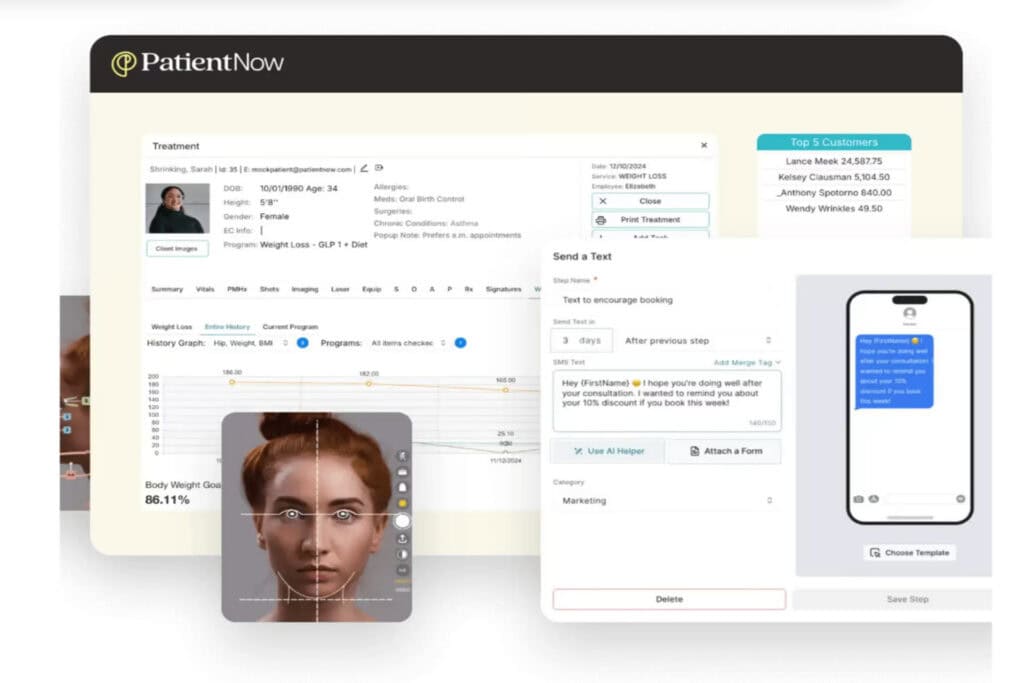
First, there’s PatientNow, a solution built for cosmetic and aesthetic dermatology. Unlike salon-first platforms, it unifies EMR, photo management, marketing, memberships, and operations in a single, all-in-one system, simplifying workflows and improving efficiency. The platform’s per-location pricing also keeps costs predictable as you grow.
Features
- Cosmetic charting with injection tracking and customizable templates.
- RxPhoto before-and-after galleries with markup and social sharing.
- Weight-loss and body composition progress tracking for wellness services.
- Online booking and automated waitlist notifications.
- Two-way SMS and patient engagement tools.
- Loyalty programs, memberships, and automated recall campaigns.
- KPI dashboards, inventory, and employee performance tracking.
- Telehealth and e-prescribing integration.
Pros
- EMR, photo management, and marketing in one native system.
- Per-location pricing stays predictable as your team grows.
- U.S.-based support from a team that knows aesthetics.
- True all-in-one platform replaces 4–6 separate vendors.
- Scales easily for multi-location or expanding practices.
Cons
- Might need training for staff to achieve competency.
2. Nextech
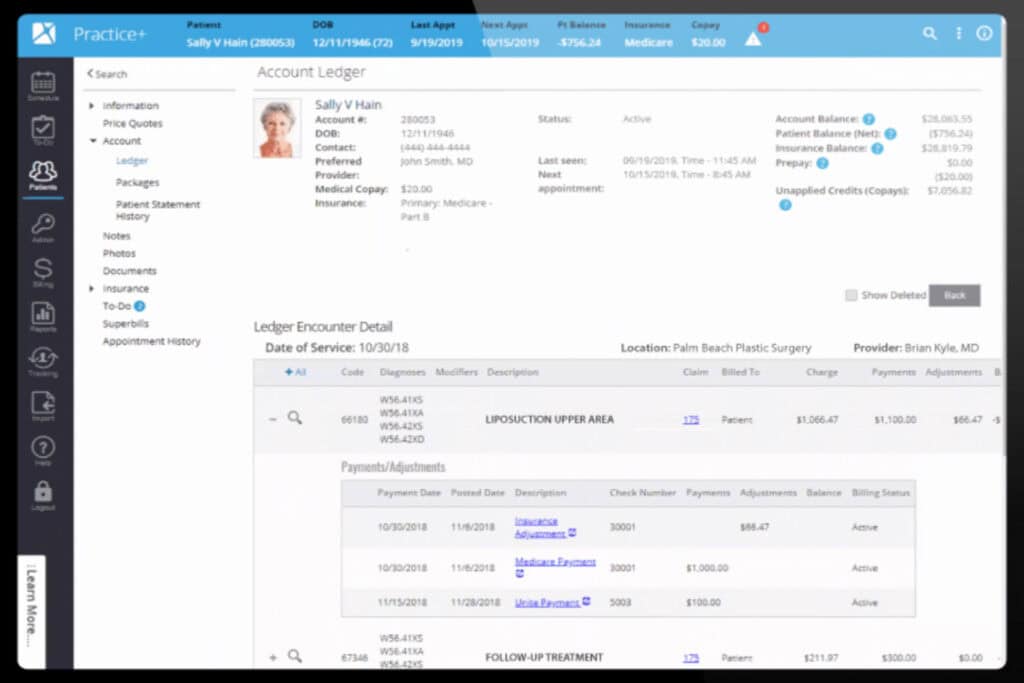
Another dermatology EHR solution is Nextech. The platform is strong for large specialty practices and multi-location groups. It offers enterprise controls and multi-site reporting.
Features
- AI Scribe with specialty-specific charting for derm workflows.
- Integrated insurance billing, coding, and RCM.
- SnapPro AI photo assist for before-and-after documentation.
Pros
- Multi-location controls and federated reporting.
- AI Scribe reduces documentation time.
- Covers aesthetic and insurance billing.
Cons
- Per-provider pricing becomes costly fast.
- Ophthalmology roots show in aesthetic workflow gaps.
3. Modernizing Medicine (EMA)
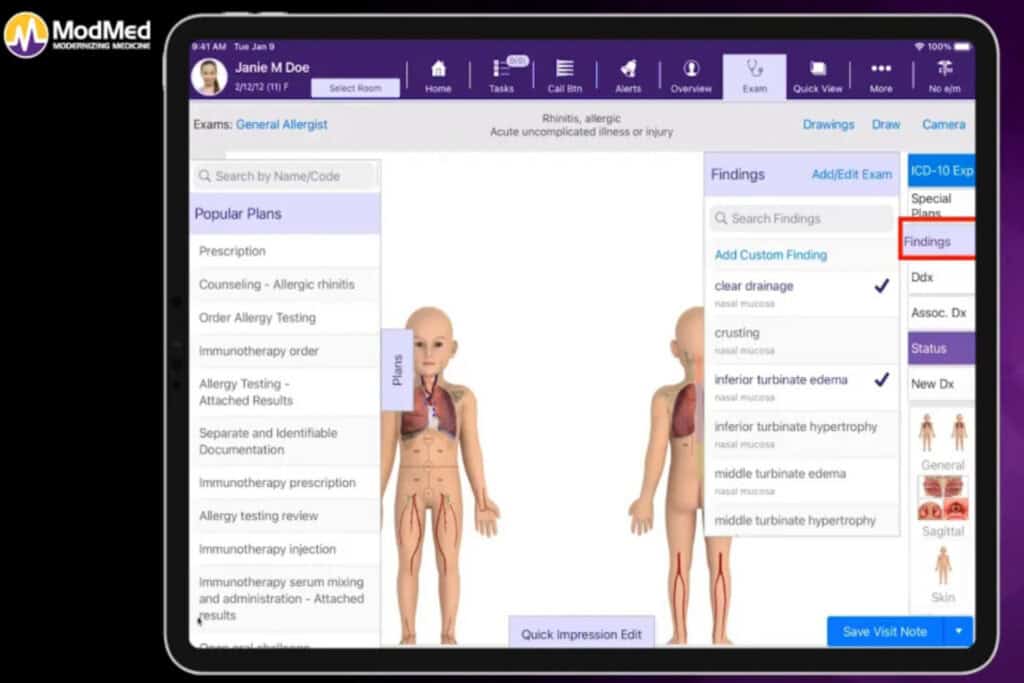
Modernizing Medicine’s EMA Dermatology is a cloud-based EHR built for dermatologists, with easy-to-use workflows, coding support, and structured data. It’s popular in insurance-based practices and helps simplify daily clinical and administrative tasks.
Features
- Adaptive charting that refines templates per provider over time.
- Pathology, biopsy, and lab workflow management.
- Robust prior authorization and insurance processing tools.
Pros
- Adaptive charting learns provider style.
- Strong pathology, biopsy, and prior authorization.
- Purpose-built for medical derm.
Cons
- No cosmetic or cash-pay support.
- High and opaque pricing.
4. DrChrono
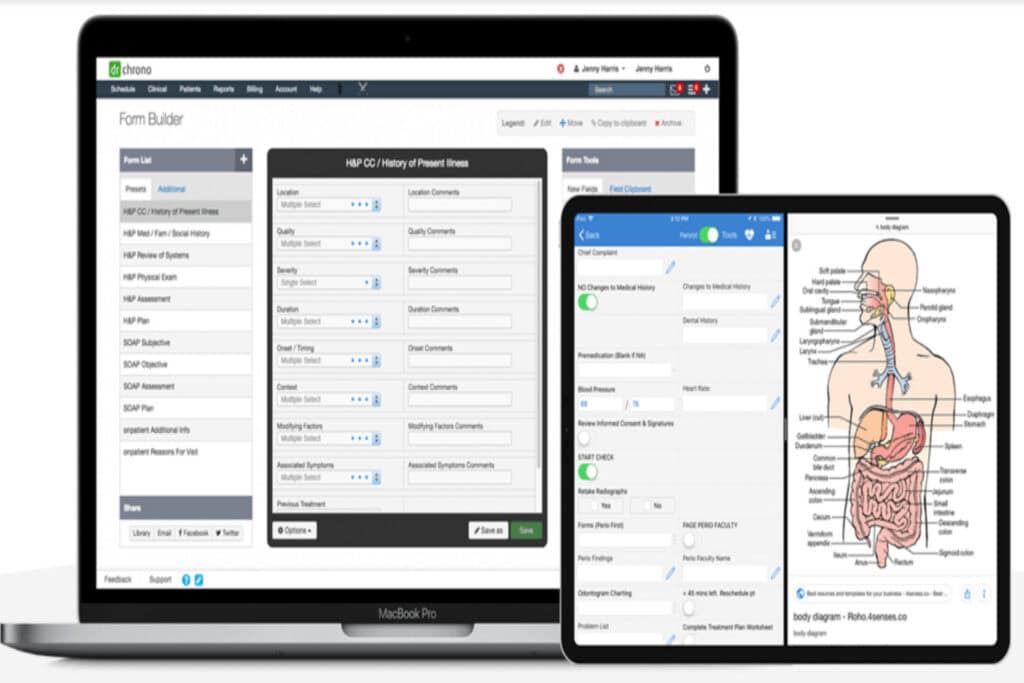
DrChrono is a cloud-based EHR that blends charting with practice management, focusing on accurate billing and simplified financial workflows. It’s good for clinics that prioritize billing efficiency.
Features
- AI claim checker reduces rejections.
- Cloud-based, device-agnostic access.
- Free open API for custom integrations with derm-adjacent tools.
Pros
- Strong RCM with an AI claim checker reducing rejections.
- Free open API custom integrations at no extra cost.
- Cloud-based, device-agnostic access.
Cons
- No aesthetic tools, marketing, or photo management.
- Per-provider cost adds up fast at scale.
5. Aesthetic Record
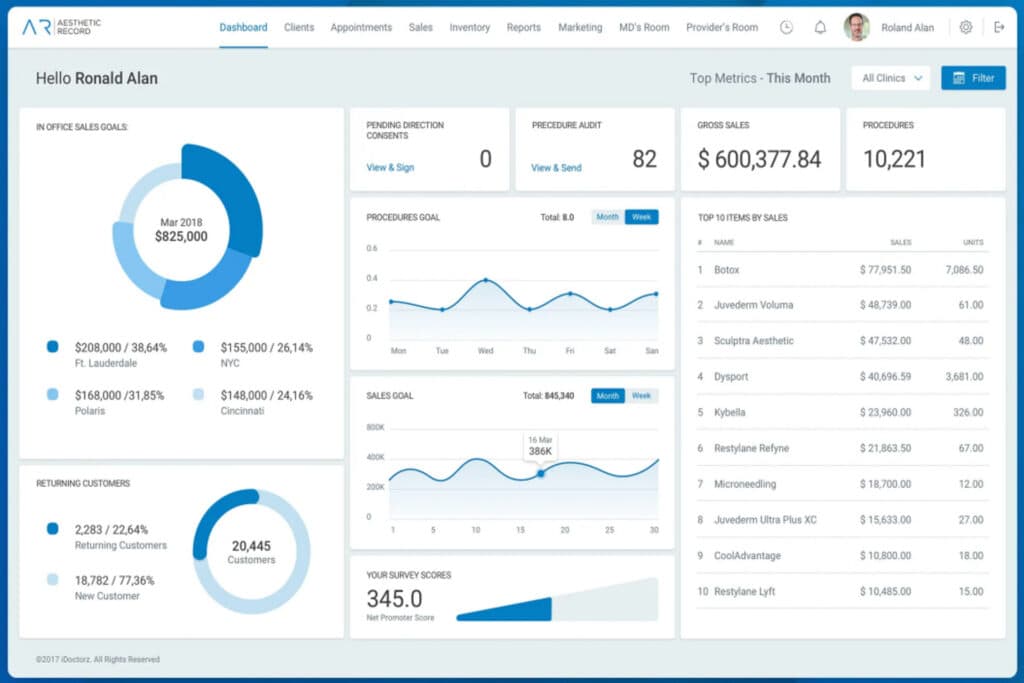
Aesthetic Record is a cloud-based EMR for med spas and aesthetics, offering AI charting, photo management, scheduling, and payments. It’s good for small, cash-pay practices.
Features
- AI Scribe with voice-to-chart and auto-populated treatment templates.
- Patient app managing appointments, memberships, and payments.
- Cosmetic charting with injectable documentation and photo uploads.
Pros
- Lowest entry cost on this list.
- AI Scribe and the patient app are strong for the price.
- Covers cash-pay aesthetic basics without heavy upfront investment.
Cons
- Reliability complaints at higher patient volume.
- Add-ons erode the cost advantage fast.
4 Signs Your Current EHR Is Already the Wrong One
Are you still unsure whether your current EHR suits your needs? Then consider these warning signs that indicate it may be time for a change:
1. Your photo workflow lives outside your EHR
Photos stored on personal iPhones or disconnected apps aren’t just inconvenient. They’re a compliance risk and a missed conversion. If images don’t connect to charting, billing, and marketing, your platform is limiting you.
2. You’re pricing for insurance but growing in cash-pay
Insurance-first systems don’t support memberships or upsells well. If you’re adding injectables or wellness programs alongside medical derm, your EHR should support both. But if cash-pay runs outside your EHR, you are leaking revenue.
3. Your team builds workarounds instead of reporting them
Shadow spreadsheets and copy-pasting signal a deeper issue. It’s an admission that your platform is inadequate. Workarounds consume time, introduce errors, and compound quietly. Eventually, a migration becomes unavoidable.
4. Your marketing runs on a separate system with no patient data
Campaigns without patient data are just broadcasts. Effective recall and re-engagement flows depend on clinical data as their trigger. A practice with its EHR and marketing on separate systems is leaving its most valuable asset out of its growth strategy.
How to Choose the Best Dermatology EHR for Your Practice
Now, here is how to pick the right EHR for your practice:
1. Match the platform to your revenue mix, not your wishlist.
An insurance billing platform treats cash-pay aesthetics as secondary and vice versa. Map where your revenue comes from today and in two years, then choose accordingly.
2. Run the pricing at 2x your current team size.
Per-provider pricing looks manageable at three providers and painful at eight. Get a full quote including add-ons and onboarding fees. Then model it at 2x headcount. That’s the real cost.
3. Bring your five hardest workflows into the demo.
Generic demos are designed to impress. Test vendors beyond the silky demo. Bring your five key workflows and ask them to walk through each one specifically. Where they hesitate or pivot to workarounds tells you more than a polished presentation ever will.
The Right Platform Depends on Your Practice Mix
Choosing the right dermatology EHR depends on your practice mix, growth goals, and workflow needs. While EMA, Nextech, DrChrono, and Aesthetic Record each serve specific use cases, PatientNow Pro is the best option for cosmetic and aesthetic dermatology.
It combines EMR, photo management, marketing, memberships, and operations in an all-in-one platform, simplifying workflows, improving patient retention, and supporting both clinical and business growth.
For practices looking to simplify operations, grow revenue, and deliver an exceptional patient experience, it’s the complete solution. So, get started with PatientNow today to grow your dermatology practice.
Frequently Asked Questions
Here are some quick answers to common questions about dermatology EHR software.
1. What is the best EHR for a dermatology practice?
PatientNow Pro leads for cosmetic and aesthetic dermatology. EMA is good for insurance-based medical dermatology while Nextech suits larger hybrid practices.
2. Do dermatology EHRs support aesthetic services?
Most don’t meaningfully. PatientNow Pro is built for cash-pay cosmetic workflows. EMA is focused exclusively on medical derm.
3. Can a dermatology EHR handle both insurance and cash-pay services?
Nextech handles dual billing best. PatientNow Pro is optimized for cash-pay but supports basic insurance workflows. Heavy insurance revenue warrants a platform with dedicated RCM tools.
4. What integrations should I look for in a dermatology EHR?
At minimum: e-prescribing, labs, and payments. Aesthetic practices should also verify photo management, CRM, and accounting sync. All these features are native in PatientNow Pro.
5. How long does dermatology EHR implementation take?
Lighter platforms go live in days. Enterprise systems like Nextech can take weeks to months. PatientNow’s U.S.-based onboarding team targets a faster go-live than most platforms. Most practices go live within 3-4 weeks. This includes template configuration, staff training, integrations, and data migration.