

Table of Contents
Quick Summary
Many aesthetic practices struggle with Zenoti because it can feel overly complex, expensive, and difficult to use in daily operations, especially for smaller or growing clinics. The solution is to switch to a simpler, more specialized alternative. It should be easier to manage, offer better automation, improve integrations, and better match the needs of medspas and salons without unnecessary complexity.
Why Many Aesthetic Practices Look Beyond Zenoti for Simpler Solutions
While Zenoti is a renowned platform used by salons, spas, medspas, and fitness centers, many aesthetic practices find it difficult to use in everyday work. It can feel complicated, costly, and better suited to large practices than to small or growing medspas. Some users also face a steep learning curve and integration issues, which can make daily tasks slower instead of easier.
Due to these challenges, many clinics seek simpler, more specialized alternatives that are easier to manage and better suited to aesthetic workflows. In this article, we’ll review the 10 best Zenoti alternatives for aesthetic practices and compare their features, pros, and cons to help you choose the right fit for your clinic.
Why Listen to Us?

At PatientNow, we have 20+ years of experience in the aesthetic software industry and understand how real med spas and clinics operate day to day. This Zenoti alternatives guide is based on that deep industry knowledge, working closely with aesthetic practices to understand their challenges, workflows, and growth needs.
Instead of general opinions, it reflects practical experience from supporting hundreds of clinics. We’ve helped ensure the insights are relevant, dependable, and focused on what actually works in real aesthetic businesses.
What Is Zenoti?
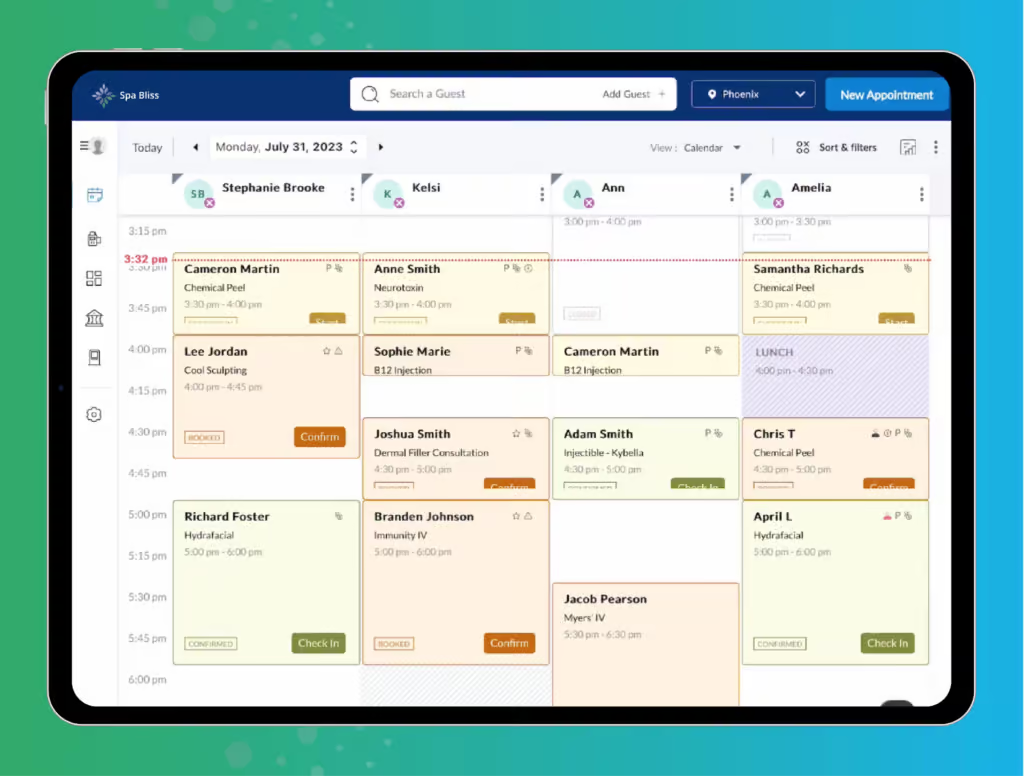
Zenoti is a cloud-based, all-in-one software solution used by salons, spas, medspas, and fitness centers to manage their businesses. It works by combining everything into a single system, including bookings, payments, staff scheduling, marketing, and inventory. Customers can easily book services online through websites, apps, Google, or social media.
Staff also use the same system to manage appointments, manage schedules, and process payments. In addition, Zenoti uses real-time data and automation to reduce manual tasks, such as sending reminders, managing waitlists, and following up with customers.
Why Aesthetic Practices Look for a Zenoti Alternative
Aesthetic practices often move away from Zenoti because it can feel too complex, costly, and built for large enterprises rather than everyday medspa needs. Here are some user reviews from platforms like Trustpilot, Capterra, G2, and real clinic discussions, mentioning the reasons practices look for a Zenoti alternative:
1. Too Complicated for Daily Use
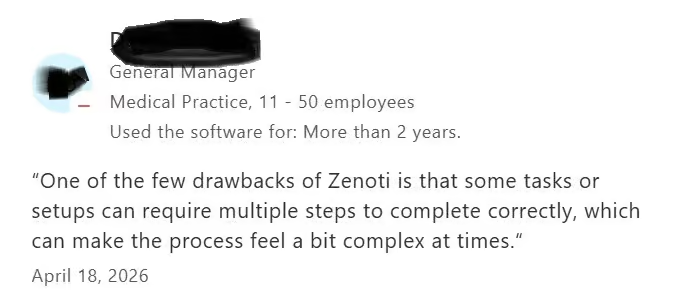
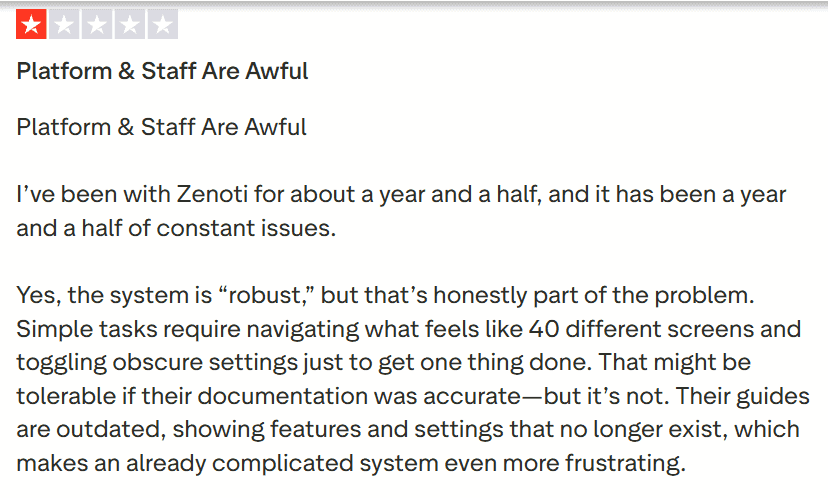
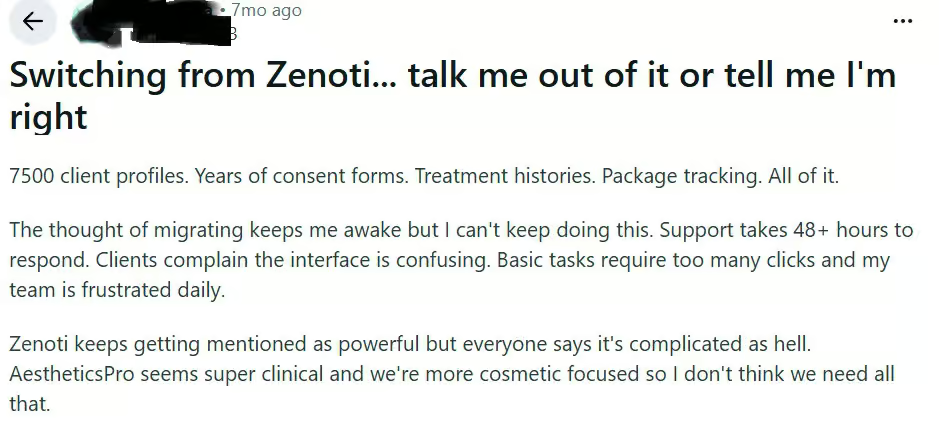
Some users on Trustpilot and Capterra say Zenoti is hard to use, with too many steps and screens. One Reddit user also reported frustration with basic tasks taking too many clicks.
2. Difficult Setup, Glitches, and Learning Curve
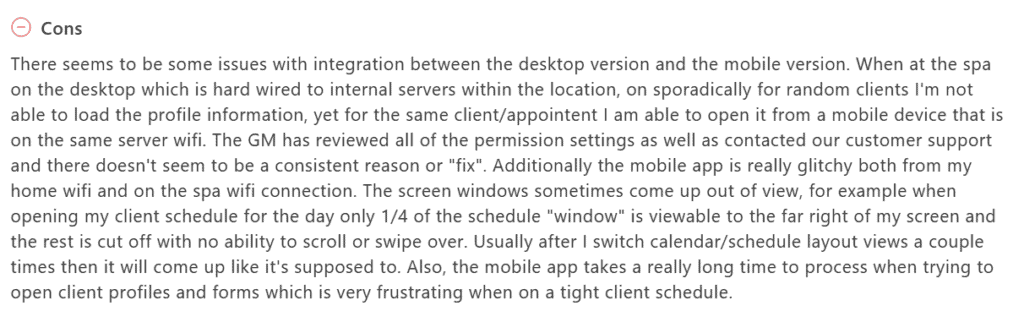
Some users on Capterra describe onboarding as slow and overwhelming, with staff needing weeks to fully adapt. Others describe Zenoti as difficult and unreliable, saying support was slow or unhelpful, and that some staff did not fully understand the system. They also report issues such as glitches, double bookings, slow loading of client profiles, and inconsistent performance across desktop and mobile.

3. Integration Limitations
Users on Reddit report issues with limited integrations and data silos, making marketing and tracking harder. A medspa switched from Book4Time to Zenoti, but bookings now happen in Zenoti while the website runs on Shopify, causing a disconnect.
As booking data stays in Zenoti, they can’t properly track ad conversions, making marketing less efficient and likely increasing ad spend. Email marketing is also weak since Shopify doesn’t know who booked services, so campaigns feel generic.
4. Clunky Interface & Overpriced
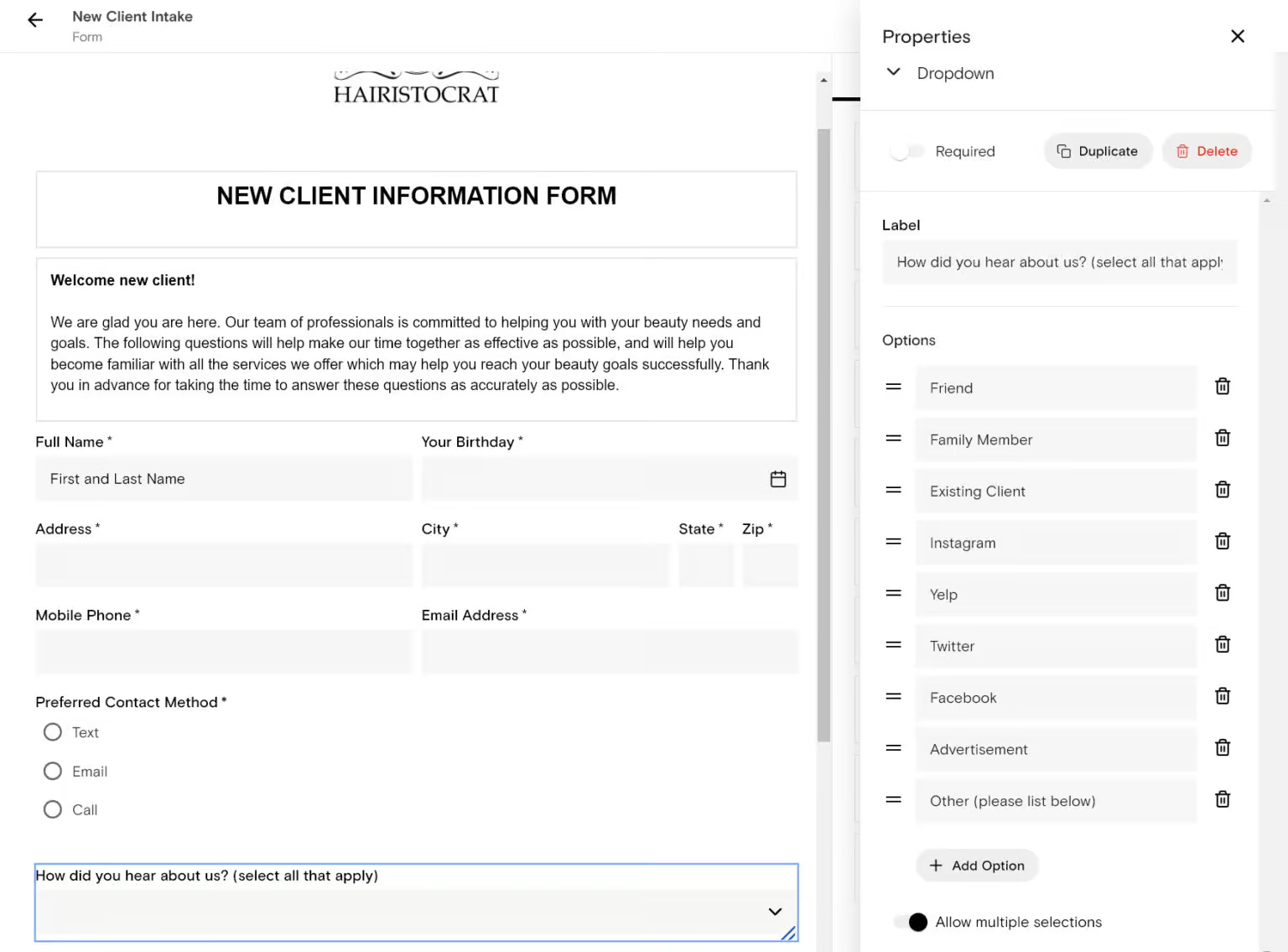
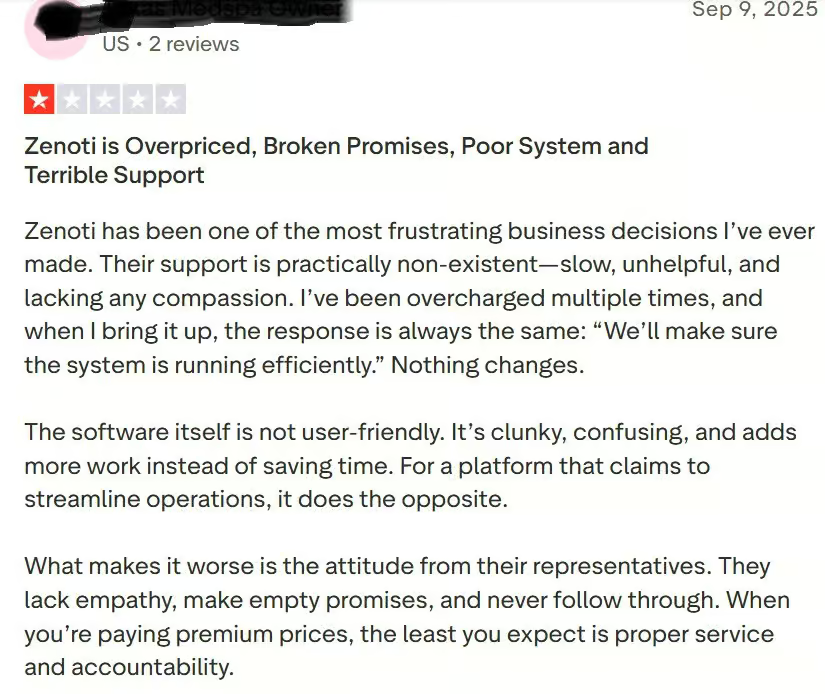
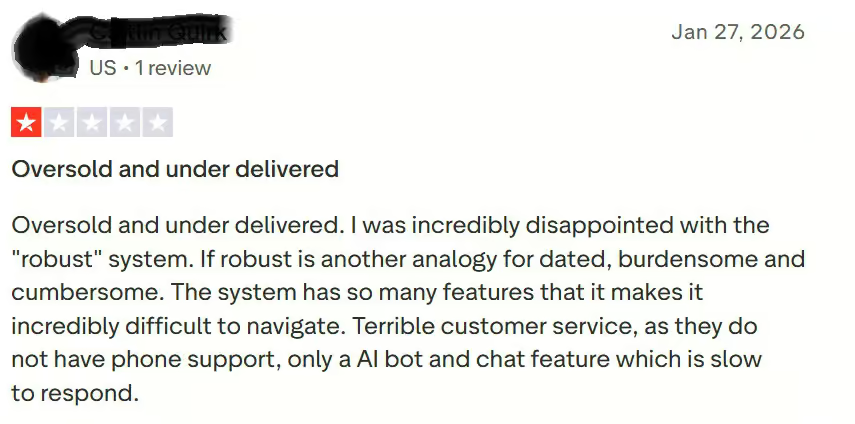
Users on Trustpilot are frustrated with Zenoti’s billing, saying they are charged even before the system is fully live, with setup delays and repeated data upload issues. Many also feel the software is clunky and confusing, and that it adds extra work rather than saving time. Some users describe it as overpriced, poorly supported, and a disappointing experience that falls short of expectations.
5. Poor Customer Service
Users on Trustpilot report very poor customer service, with slow or no resolution even after weeks and repeated follow-ups. They also mention feeling stuck in contracts, with support failing to deliver on promises and being difficult to reach.
A Short Comparison of 10 Zenoti Alternatives
Here’s a short comparison of all 10 Zenoti alternatives explained in the latter section. Have a look:
| Platform | Key Features |
| PatientNow | EMR, AI automation (Recura), marketing suite, RxPhoto, memberships, payments |
| Pabau | EMR, scheduling, CRM, marketing automation, multi-location support |
| AestheticsPro | EHR, telemedicine, e-prescriptions, medical photo tools, scheduling |
| Mangomint | Smart scheduling, automation, payments, client intelligence, memberships |
| Consentz | iPad-based EMR, clinical photography, POS, CRM, inventory management |
| Boulevard | AI scheduling, advanced CRM, online booking, multi-location tools |
| Portrait Care | Free EHR, CRM, compliance support, scheduling, inventory, payments |
| Vagaro | Booking, POS, payroll, marketing tools, marketplace visibility |
| GlossGenius | Online booking, payments, marketing tools, AI insights, website builder |
| Phorest | Loyalty programs, marketing automation, reviews, reporting tools |
10 Best Zenoti Alternatives for Aesthetic Practices Explained
Here are the 10 best Zenoti alternatives for aesthetic practices, including their core features, integrations, pros, and cons:
1. PatientNow
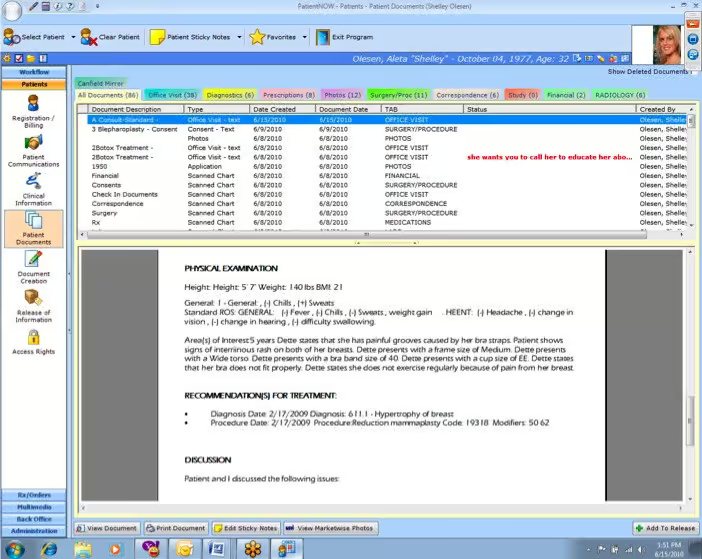
PatientNow is a strong alternative to Zenoti for med spas and aesthetic clinics. It’s built specifically for medical aesthetics, not adapted from salon or general wellness software. PatientNow focuses on the full medical-aesthetic patient journey. It brings together clinical EMR, AI automation, marketing tools, and practice management in one platform.
Instead of just handling booking or POS, it includes features such as injection tracking, e-prescribing, telehealth, lab integrations, and advanced photo documentation (RxPhoto). Moreover, it features memberships, loyalty programs, KPI dashboards, and AI-driven lead follow-up via Recura. The latter can automatically book and rebook patients. This makes the platform a better fit for clinics that need deeper medical functionality and business automation without relying on multiple separate tools.
Key Features:
- AI Automation (Recura): Automatically handles booking, follow-ups, cancellations, and rebooking to keep schedules full 24/7.
- Clinical EMR System: HIPAA-compliant records with tools for injections, weight tracking, telehealth, labs, and prescriptions.
- Marketing & CRM Tools: Built-in lead generation, SMS/email marketing, reputation management, and social posting without extra software.
- Photo & Consultation Tools (RxPhoto): Before/after photos, annotations, and consultation galleries to support treatment decisions.
- All-in-One Management: Combines scheduling, payments, memberships, inventory, staff tracking, and reporting in one system.
- Retention & Revenue Tools: Includes memberships, financing, recalls, and loyalty programs to increase repeat visits and lifetime value.
Integrations:
- It integrates with QuickBooks, Canva, 120+ lab vendors, Tippy, RxPhoto, and Recura AI.
Pros:
- All-in-one system for med spas (EMR, marketing, CRM, payments, and photos in one platform).
- Strong medical features like injection tracking, labs, e-prescribing, and weight-loss tools.
- AI (Recura) automatically fills schedules and manages bookings without manual effort.
- Built specifically for aesthetics practices and not adapted to native workflows
- Supports the full patient journey from first inquiry to repeat visits and retention.
- Includes revenue tools like memberships, KPIs, and automated upselling.
Cons:
- Feature-rich system that comes with a learning curve.
- Best value is realized when fully adopted.
2. Pabau
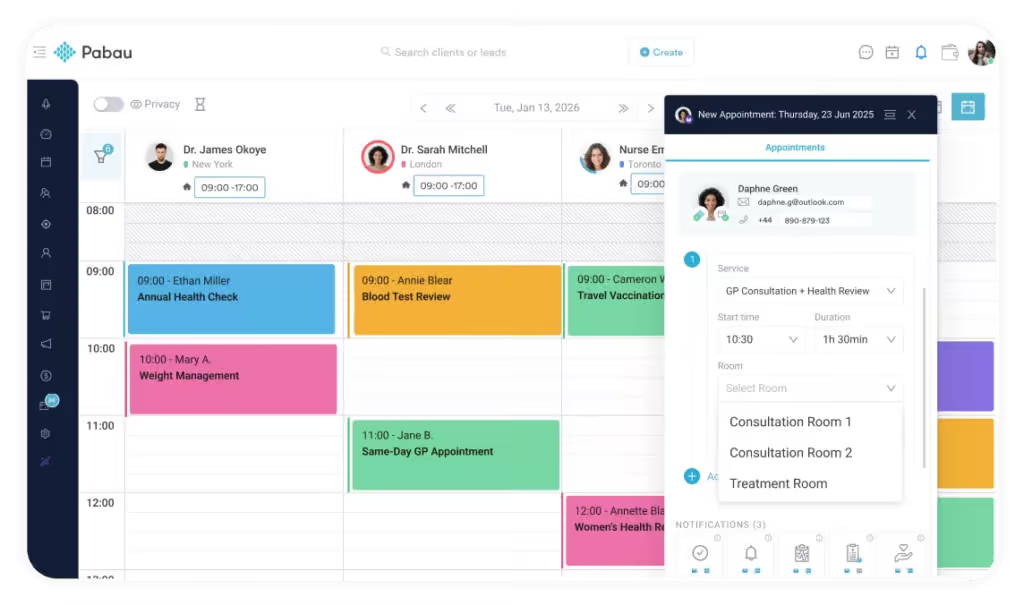
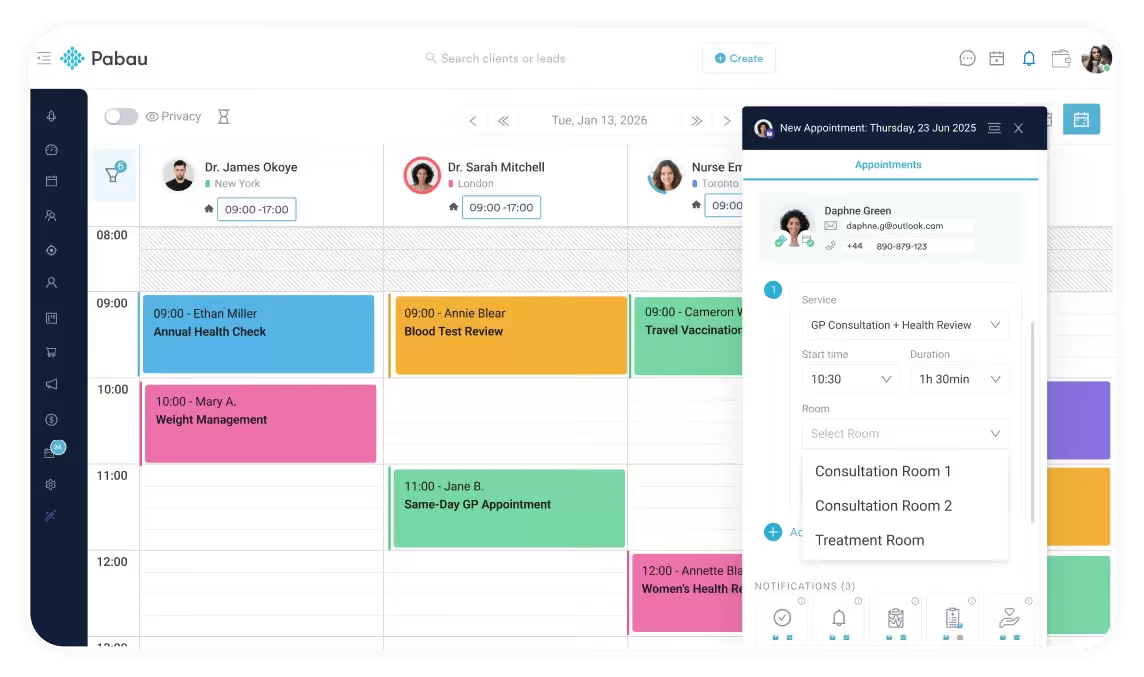
Pabau is a cloud-based platform that helps medical and aesthetic clinics and med spas manage everything in one place, including patient records (EMR), daily operations, and marketing. It’s suited for growing or multi-location practices looking for a scalable system.
Key Features:
- Unified EMR & Patient Records: Centralized clinical notes, prescriptions, lab results, and patient history in one place.
- Smart Scheduling & Online Booking: 24/7 online booking, automated reminders, waitlists, and multi-location calendars.
- Built-in Payments & POS: Integrated billing, deposits, payment links, and POS.
- Marketing & Automation Tools: Email/SMS campaigns, loyalty programs, memberships, and automated workflows to drive retention
Integrations:
- It integrates with HubSpot & Salesforce (CRM), Google Analytics, Slack, Zoom, Zapier, and an open API for custom integrations.
Pros:
- A true all-in-one platform (EMR + CRM + payments + marketing) reduces tool sprawl.
- Good automation & AI features (e.g., AI clinical notes, workflows).
- Good for growth-focused clinics with built-in retention and revenue tools.
Cons:
- Overkill for small/simple clinics needing only basic booking.
- Learning curve due to feature depth.
- Less specialized for large practices compared to enterprise EMRs.
3. AestheticsPro
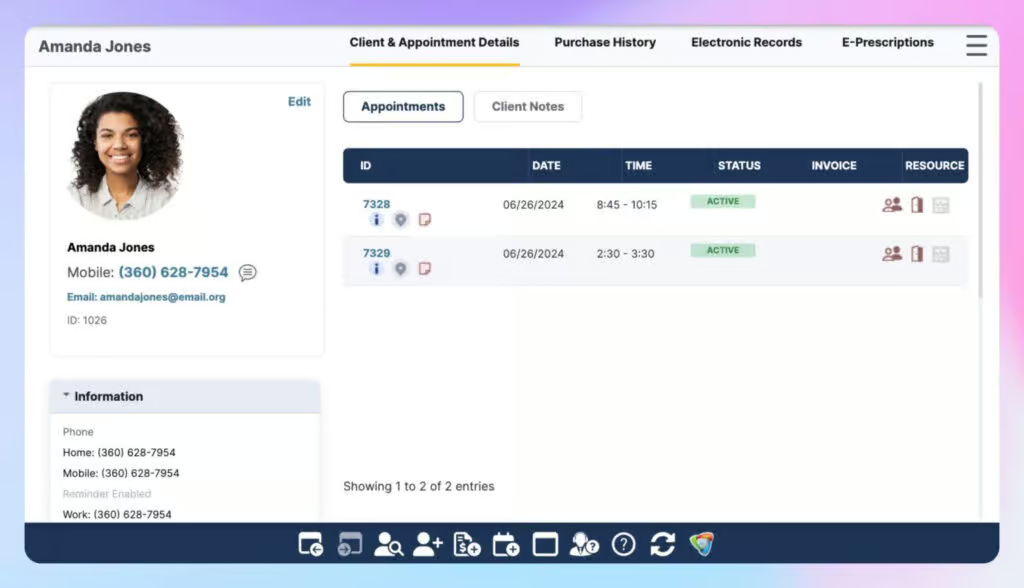
AestheticsPro is a cloud-based EHR and practice management system designed for medspas, used by owners, aestheticians, and front-desk teams. It focuses on simple, centralized workflows and adheres to HIPAA regulations for both new and multi-location clinics. In addition, AestheticsPro offers features telemedicine, e-prescriptions, and advanced medical photo tools.
Key Features:
- AP Photo (Medical Photos): Standardizes before-and-after photos and stores them in client records to track progress and encourage repeat visits.
- HIPAA EMR: Includes 500+ forms, custom templates, secure records, e-prescriptions, digital signatures, and client photos in one system.
- Telemedicine (Zoom): Enables virtual consultations with access to records and photos, plus booking within the same platform.
- Marketing & CRM: Offers email/SMS campaigns, segmentation, analytics, and automation for better marketing and retention.
Integrations:
- Integrates with e-prescribing, telehealth, and telemedicine platforms (typical EMR ecosystem). It also connects to marketing, CRM, and reporting tools.
Pros:
- Good all-in-one medspa system with detailed client records, charting, and compliance-ready data in one place.
- Users praise responsive support and helpful client success teams that improve daily workflow.
- Supports both solo clinics and multi-location practices with shared reporting and growth tracking.
Cons:
- Steep learning curve, with users reporting confusion and frequent errors during daily use.
- Extra charges for SMS and email, along with outdated, difficult-to-use marketing tools.
- Limited integrations with other tools like accounting, marketing, and e-commerce platforms.
4. Mangomint
Mangomint is a modern salon and spa software platform popular in the US and Canada, offering robust tools for scheduling, online booking, payments, inventory management, and reporting. It also provides Express Booking that simplifies multi-service appointments. The software is good for salons and spas that want a clean design, smart automation, and the flexibility to connect with other tools.
Key Features:
- Express Booking: Makes booking quick and simple by reducing steps, so clients can schedule appointments faster.
- Smart Automations: Automatically sends confirmations and handles forms, payments, inventory updates, and follow-ups.
- Client Intelligence: Tracks client preferences, history, notes, and key details such as allergies in a single profile.
- Flexible Payments & Memberships: Supports easy payments (card, contactless, Apple Pay) and lets businesses offer memberships and packages for steady income.
Integrations:
- Integrates with Mailchimp, Docovia, Doxy.me, and webhooks for custom integrations with other CRM and automation tools.
Pros:
- Good for handling patient data in compliance with HIPAA.
- Customer support is strong, with users reporting quick help and regular updates based on feedback.
- Operates well for multi-location businesses, sharing client data across sites and consolidating payments and finances into a single system.
Cons:
- Not ideal for solo users, as it’s built for teams and has a higher starting cost.
- Customization options are limited, especially for calendars and multi-location settings.
- Intake forms don’t automatically populate client profiles, so some information must be entered manually
5. Consentz
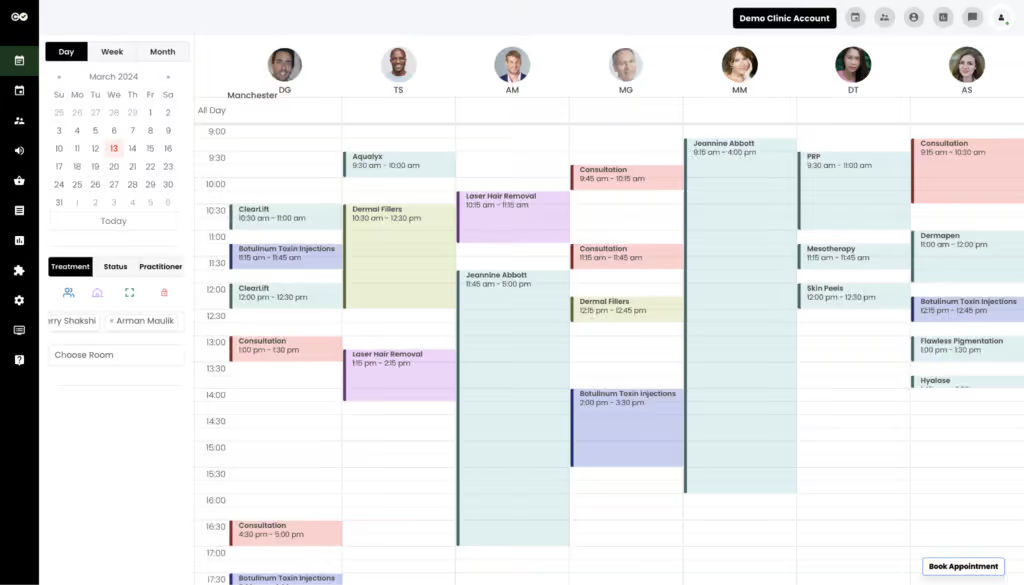
Consentz is a cloud-based practice management system made specifically for medical aesthetics clinics and medspas. It combines a web dashboard with an iPad app, making it easy to manage bookings, payments, photos, and daily tasks during treatments. Consentz is good for iPad-focused clinics that need detailed photo records, flexible scheduling across staff and rooms, and built-in marketing tools, all designed for medical aesthetics.
Key Features:
- Clinical Photography: Lets you take consistent before-and-after photos on an iPad with alignment tools, plus secure storage for records and consent forms.
- Smart Scheduling: Manages bookings across staff, rooms, and equipment, with reminders and waitlists to reduce gaps.
- POS & Inventory: Handles payments and tracks stock (including injectables) with automatic updates.
- Marketing & CRM: Includes email/SMS marketing, client tracking, staff management, and loyalty or membership features.
Integrations:
- Integrates with payments, inventory, and marketing tools, with basic built-in EMR features but limited external integrations.
Pros:
- Built around treatments (not just booking or billing).
- Designed specifically for aesthetics, with features tailored for treatments like Botox, fillers, and laser services.
- Fully paperless workflow with iPad-based consent forms, medical histories, and before/after photo tracking.
Cons:
- Only works on iPad for clinicians, limiting device flexibility.
- The admin side can feel complex, with extra steps for managing stock, pricing, and settings.
- Some features are basic or separated (like stock control and photo notes), which can make workflows less smooth.
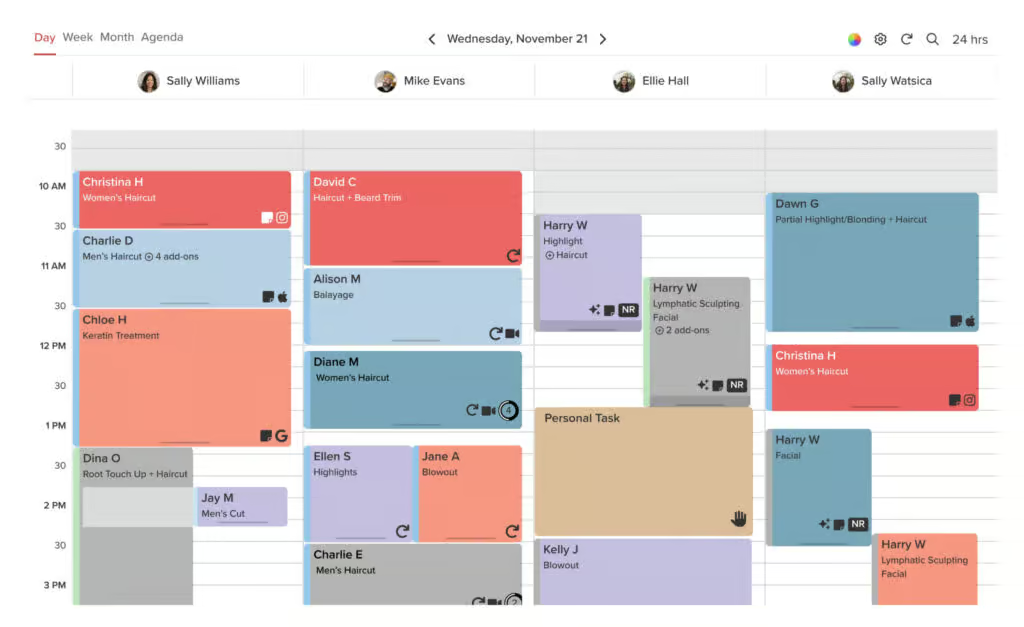
6. Boulevard
Boulevard is a salon and spa software built for businesses that need advanced tools and strong client management. It focuses more on creating personalized client experiences with detailed profiles, smart scheduling, and built-in memberships, packages, and rewards. Boulevard is good for multi-location or high-end salons and spas that rely on strong client relationships and plan to grow.
Key Features:
- Smart Scheduling: Uses AI to fill gaps in the calendar and organize appointments efficiently without overbooking staff.
- Advanced Client CRM: Keeps detailed client profiles with history, notes, purchases, and photos for better personalization.
- Branded Online Booking: Lets clients book directly on your website with a mobile-friendly experience, instead of redirecting elsewhere.
- Multi-Location Management: Manages multiple locations with shared client data, centralized reports, and consistent services across sites.
Integrations:
- Connects with payments, POS, marketing, and CRM tools, and some reporting apps, but has limited medical or EMR integrations.
Pros:
- Smooth onboarding with full data migration and appointment setup handled by the support team.
- Easy checkout with memberships, packages, vouchers, and rewards in one system.
- Fast and helpful customer support, often resolving issues quickly.
Cons:
- Expensive pricing, mainly suitable for high-revenue salons, not small teams.
- Reporting and multi-location switching can be time-consuming, with limited advanced analytics tools.
- Lacks integrations with some medspa tools, causing extra manual work and duplicate data entry.
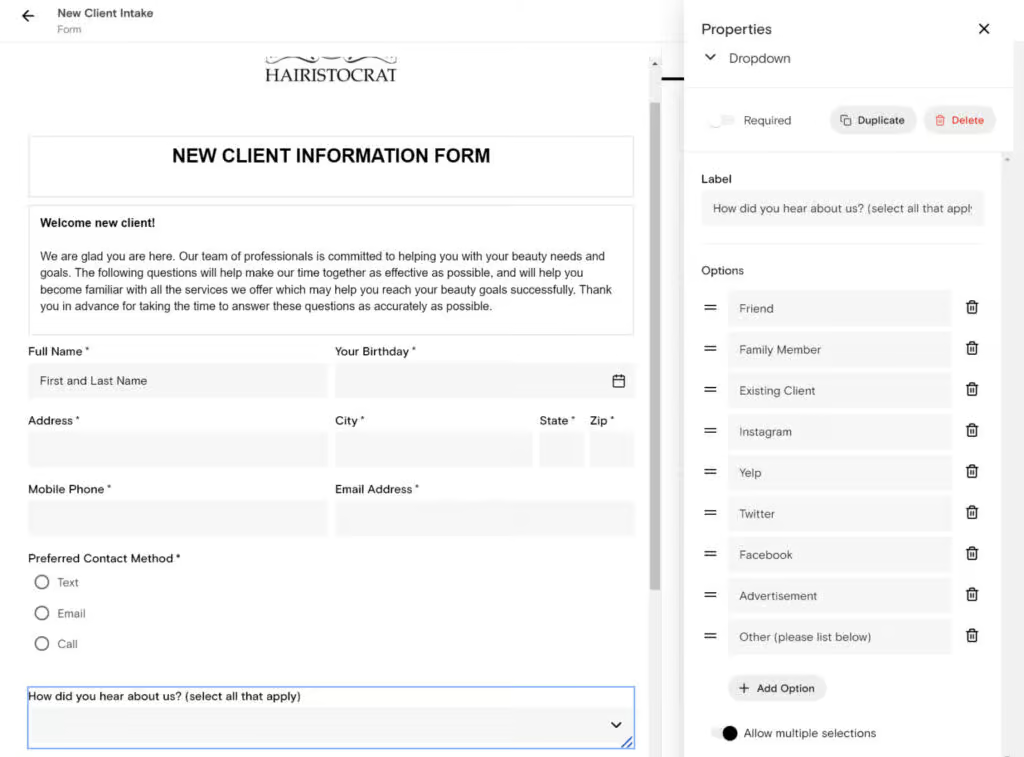
7. Portrait Care
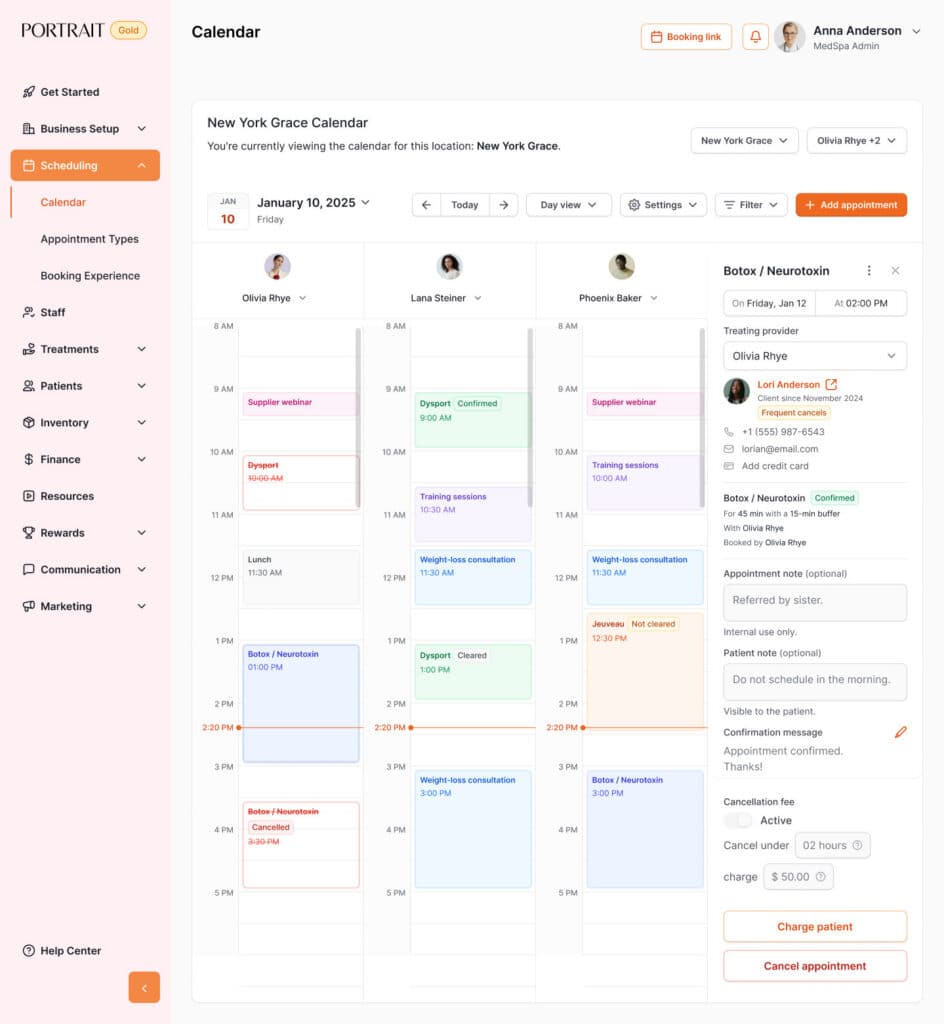
Portrait Care is an all-in-one platform for med spas and medical wellness clinics, combining software, services, supply savings, and compliance support into a single system. It offers an affordable entry with a free core EHR, making it easier for new or growing clinics to get started. The platform is designed for med spas that want everything in one place, like CRM, EHR, supplies, and compliance – allowing them to focus more on patient care and growth.
Key Features:
- Free Core EHR: Offers a basic EHR system for free, with optional paid upgrades for extra features and integrations.
- Supply Savings: Helps clinics save on supplies and equipment through group pricing, with no monthly fees or long contracts.
- Compliance & Support Network: Includes compliance and business support, with access to medical directors.
- All-in-One Management: Combines EHR, scheduling, payments, CRM, and inventory in one simple platform used by many clinics.
Integrations:
- Connects with EHR, CRM, payments, inventory, and compliance services, along with external support partners.
Pros:
- Functions as a partner, helping clinics choose and set up systems that fit their workflow and goals.
- Provides business support, coaching, and launch help to grow and build a brand.
- Free to start, making it easier for new or solo practitioners to begin.
Cons:
- Some users report bugs, scheduling issues, and limited flexibility in pricing and inventory.
- Advanced features require paid add-ons, which can increase overall cost as the clinic grows.
- Less flexible as standalone software since it also functions as a consulting-based platform.
8. Vagaro
Vagaro is an all-in-one salon software that includes features such as scheduling, POS, and payroll on a single platform. It offers much better value for small to mid-sized salons, spas, and fitness studios that want strong functionality at a lower cost.
Key Features:
- Online Booking & Scheduling: Lets clients book anytime, with easy calendar management and automatic reminders to reduce no-shows.
- Vagaro Marketplace: Helps new clients discover your business through a built-in local service marketplace.
- Payroll & Commission Tools: Manages staff pay, tips, commissions, and booth rentals in one system.
- AI Tools & Digital Forms: Uses AI for content and client communication, plus custom forms for intake, consent, and surveys.
Integrations:
- Connects with payments, payroll, marketing tools, Google, QuickBooks, and other apps through its API and marketplace.
Pros:
- Starts at a low monthly price and includes core features such as booking, POS, payroll, marketing, and client management.
- Flexible pricing lets businesses add or remove features as needed to control costs.
- An easy-to-use system that helps streamline daily operations for most salon teams.
Cons:
- Clients need a Vagaro account to book, which exposes them to marketplace competitors and marketing.
- Extra features like messaging and forms often cost more, increasing overall expenses.
- The interface can feel crowded, and the reporting tools offer limited detail and customization.
9. GlossGenius
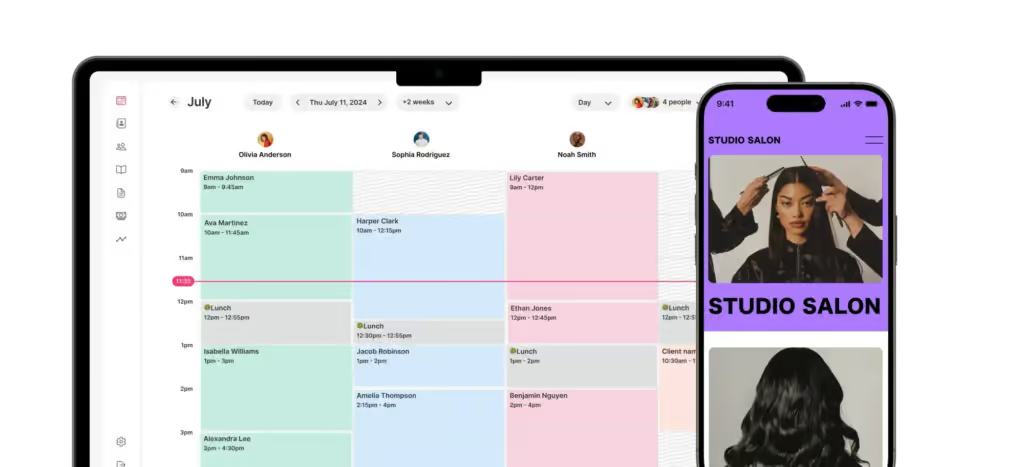
GlossGenius is an all-in-one app for salons and spas that combines booking, payments, and marketing into a single platform. It’s designed primarily for independent beauty professionals and includes easy card-reader payment processing, as well as new AI tools to analyze business data. The platform is good for solo stylists, estheticians, and nail techs who want a clean, stylish, and easy-to-use booking system with built-in payments and social media integration.
Key Features:
- Branded Booking & Website: Lets clients book from social media or search engines, and includes a simple website builder with custom design options.
- Flat Payment System: Built-in POS with secure payments at a fixed 2.6% fee and optional card readers.
- Marketing Tools: Offers email/SMS campaigns, Google reviews integration, and waitlist features to help grow and retain clients.
- AI & Reporting Tools: Provides business insights through AI analysis and simple reports to track performance and client value.
Integrations:
- Connects with payments, social media, marketing tools, and Google reviews, but has limited advanced EMR and third-party integrations.
Pros:
- Stylish, modern salon software with attractive booking pages, receipts, and a free premium-looking card reader.
- Good Instagram and social media booking integration, and an easy website builder for online presence.
- Simple, transparent pricing with no long-term contracts, ideal for solo users and small teams.
Cons:
- Lacks advanced features such as inventory, payroll, and robust team management controls.
- No AI receptionist or automated chatbot for handling bookings.
- Some important tools (like forms, waitlists, and rebooking reminders) are available only in the higher-priced plan.
10. Phorest
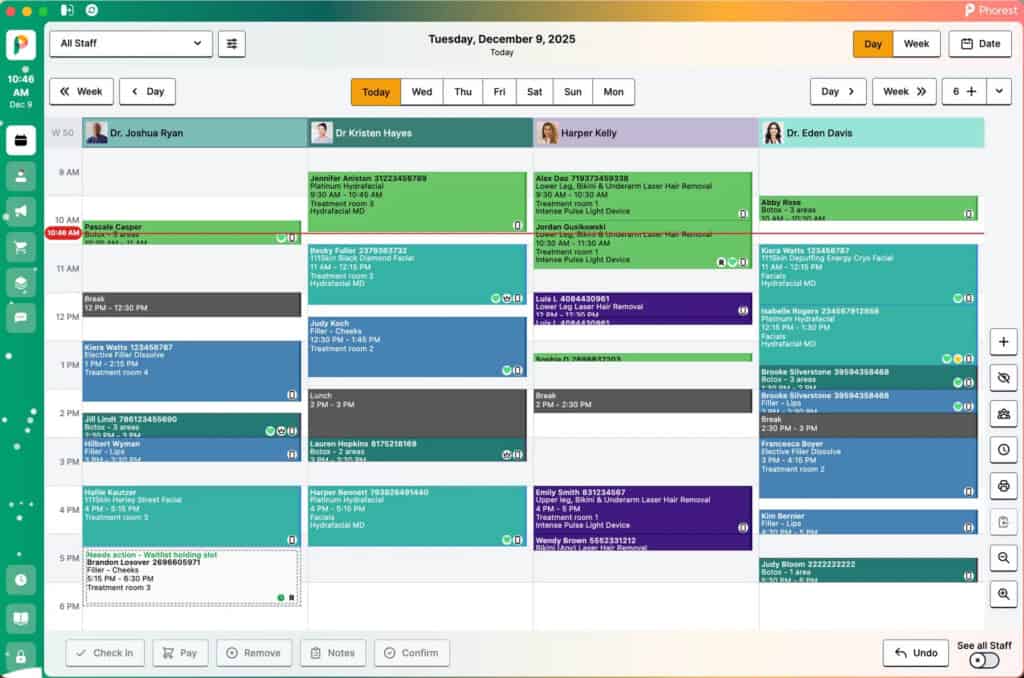
Phorest is salon software focused mainly on helping businesses keep clients coming back through loyalty programs, marketing automation, and rebooking tools. It’s less about enterprise operations and more about client retention. Phorest is designed for salons that want to increase repeat bookings and build strong loyalty programs. It is especially useful for European businesses because it supports GDPR compliance, multiple currencies, and local payment options.
Key Features:
- Loyalty Program (Treatcard): Helps salons reward clients and encourage them to try new services and products.
- Smart Marketing Campaigns: Sends targeted messages based on client behavior, like repeat reminders or win-back offers.
- Review Management: Automatically requests reviews and lets businesses manage Google and Facebook feedback in one place.
- Advanced Reports: Tracks sales, staff performance, and client retention, and helps identify clients who may stop visiting.
Integrations:
- Connects with marketing, loyalty, review platforms, payments, and basic CRM tools, focusing more on client retention than EMR features.
Pros:
- Good client retention tools that help bring back lost clients and reduce churn.
- Fine onboarding and customer support with helpful training and follow-up.
- Good fit for Europe with GDPR compliance, multi-currency support, and local payments.
Cons:
- Important features require higher-priced plans, making it costly for small salons.
- Data export on cancellation can be limited and may require an extra fee.
- Weaker presence and support in the US compared to European markets.
How Did We Evaluate Zenoti Alternatives?
To fairly compare all Zenoti alternatives, we used a clear set of evaluation criteria based on real clinic needs. These points can help you understand which platforms are easiest to use, most practical, and best suited for aesthetic practices of different sizes:
- Ease of Use: Checked how simple each platform is for daily clinic or salon operations.
- Aesthetic & Medspa Fit: Focused on tools designed specifically for aesthetic practices, not general salon software.
- Core Features: Compared booking, EMR/EHR, CRM, payments, marketing, and reporting capabilities.
- Automation & AI: Looked at systems that reduce manual work through automation and smart workflows.
- Integrations: Evaluated how well each tool connects with other software (CRM, accounting, marketing tools, etc.).
- Pricing & Value: Considered cost vs. features, especially for small vs. enterprise-level practices.
- Customer Support: Reviewed user feedback on responsiveness, onboarding, and issue resolution.
- Scalability: Assessed whether the software can grow with single or multi-location businesses.
How to Pick the Right Zenoti Alternative?
Choosing the right Zenoti alternative depends on your clinic’s specific needs and how you run your day-to-day operations. Before deciding, it’s important to compare a few crucial factors that can help you pick a system that fits your business better and makes work easier for your team:
- Business Type: Choose software built for your niche (medspa, salon, clinic, or solo practice).
- Size of Practice: Small teams may need simpler tools, while large clinics need advanced, scalable systems.
- Must-Have Features: Prioritize essentials like EMR, booking, payments, marketing, and inventory.
- Automation Needs: Choose platforms with AI or automation to reduce manual admin work.
- Budget: Match pricing with your growth stage, and avoid overpaying for unused enterprise features.
- Integration Needs: Ensure it integrates with your existing tools, such as a website, CRM, and accounting software.
- Ease of Adoption: Consider the learning curve and onboarding time for your staff.
- Support Quality: Choose providers with reliable customer service and onboarding help.
Final Take: Choosing the Right Zenoti Alternative for Your Aesthetic Practice
Zenoti can be hard to manage for many aesthetic practices because it is often complex, expensive, and not always built for fast, simple workflows. Most modern alternatives now focus on being easier to use, more automated, and designed specifically for medspas and clinics, with better tools for EMR, marketing, and patient engagement. The main goal is to choose a system that simplifies daily operations rather than complicating them.
Among all options, PatientNow is the strongest Zenoti alternative (for the client: link to Zenoti versus landing page) because it is built specifically for medical aesthetics. It brings EMR, AI automation (Recura), marketing, and practice management into one system, helping clinics manage the full patient journey from leads to repeat visits. PatientNow also improves efficiency, supports growth, and replaces multiple tools with one platform, making it a strong fit for both growing and established medspas.Ready to simplify your aesthetic practice? Book a demo with PatientNow to see how an all-in-one platform can improve efficiency, patient retention, and revenue!