
Table of Contents
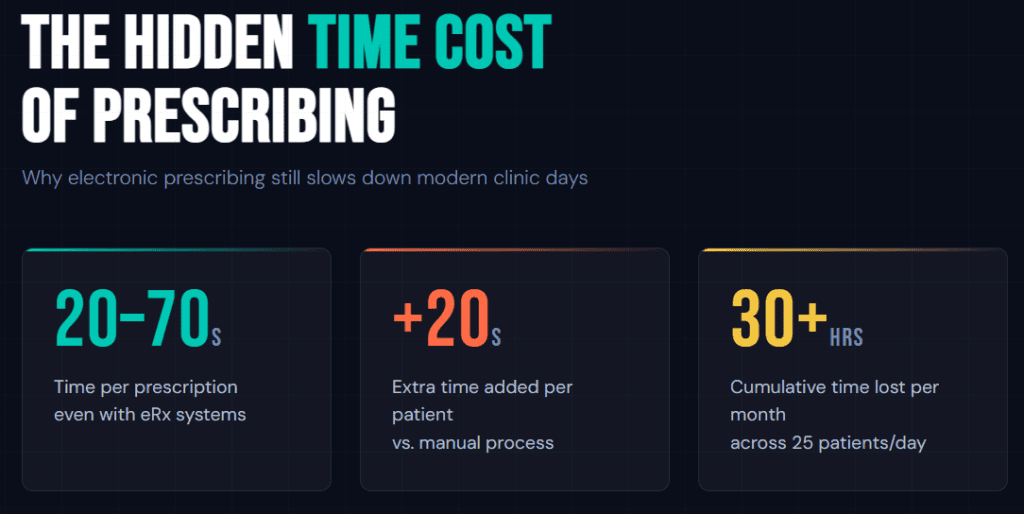
Digital transformation has changed a lot in the medical aesthetics industry, but eRx (Electronic Prescribing) often still feels clunky and slow. Many practices get bogged down by delays, extra steps, and the need to jump between tools. This not only wastes time but can also hurt patient care. Research shows that even electronic prescribing still takes about 20–70 seconds per prescription, which adds up quickly during a busy clinic day.
So, eRx workflows really matter because they affect how fast and safely doctors can prescribe medications, not to mention how the whole process feels for patients. In this article, we’ll outline how modern eRx systems work and examine why outdated prescription workflows continue to cause problems. We’ll also share how integrated solutions clear up those issues, making prescribing quicker, safer, and flawless for everyone.
Why Prescribing Still Bogs Down Modern Practices
Even though eRx systems are meant to make prescribing easier, many modern practices still face delays and extra steps in the process. These small issues build up over time and slow down daily workflows. The following points explain the main reasons why prescribing is still not as fast or flawless as it should be:
- The “5-Minute Prescription” Problem
Prescribing may seem simple. Just choose a drug, set the dose, and send. But in reality, it involves several decisions, including confirming the diagnosis, selecting the appropriate medication, adjusting the dosage, and considering the patient’s needs.
Even with electronic systems, the process can take longer because providers must go through additional steps, review alerts, and verify patient-specific details. In fact, studies show that e-prescribing can add about 20 extra seconds per patient, which can add up significantly over the course of a full clinic day.
- Frequent System Switching
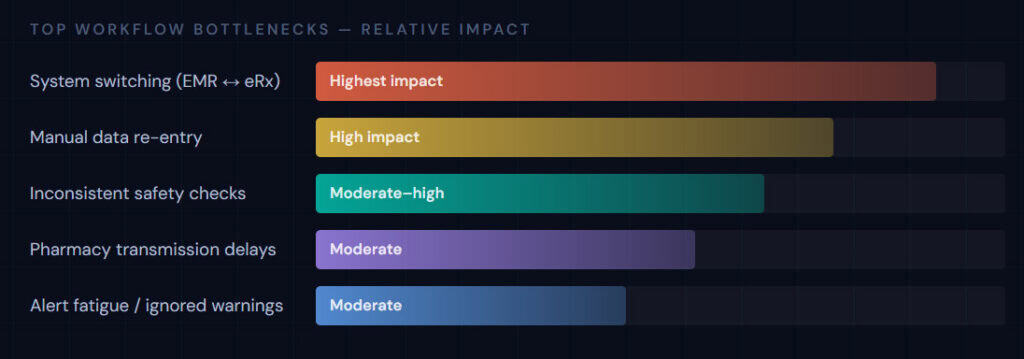
Frequent system switching is a major hidden inefficiency in prescribing. Many practices still rely on separate systems. One for patient records (EMR), another for e-prescribing, and additional portals for pharmacies or labs. This fragmentation forces providers to constantly switch between platforms, disrupting their workflow.
Each switch adds time delays, increases mental effort, and raises the chances of errors. In fact, disconnected systems are widely recognized as a main cause of inefficiency and workflow disruption in prescribing.
- Manual Data Entry and Redundant Documentation
Even with digital systems, prescribing still involves a lot of manual work, like re-entering patient details, typing medication instructions, and repeating information across different systems.
This duplication not only wastes time but also increases the risk of mistakes. Research shows that many prescribing errors stem from incorrect data entry, selecting the wrong drug or dose from dropdowns, or leaving fields incomplete.
- Safety Checks Performed Manually or Inconsistently
Prescribing today requires checking things like drug interactions, allergies, contraindications, and patient-specific risks. While some systems offer built-in safety alerts, they’re not always used effectively.
Poor design can lead to too many alerts (“alert fatigue”), causing providers to ignore warnings or apply safety checks inconsistently. When these checks aren’t automated and well-integrated, clinicians either spend extra time manually verifying details or risk missing important safety issues.
- Hidden Inefficiencies That Compound Over a Full Clinic Day
Individually, delays may seem small. Just a few seconds or minutes. But across 20–30 patients a day, they quickly add up to hours of lost time, longer wait times, and more administrative work.
For example, delays in sending prescriptions can lead to follow-up calls and confusion with pharmacies. While slow systems can affect real-time data exchange. Over time, these small inefficiencies can turn into bigger problems, such as lower productivity, frustrated staff, and disrupted patient flow.
What a Broken eRx Workflow Looks Like
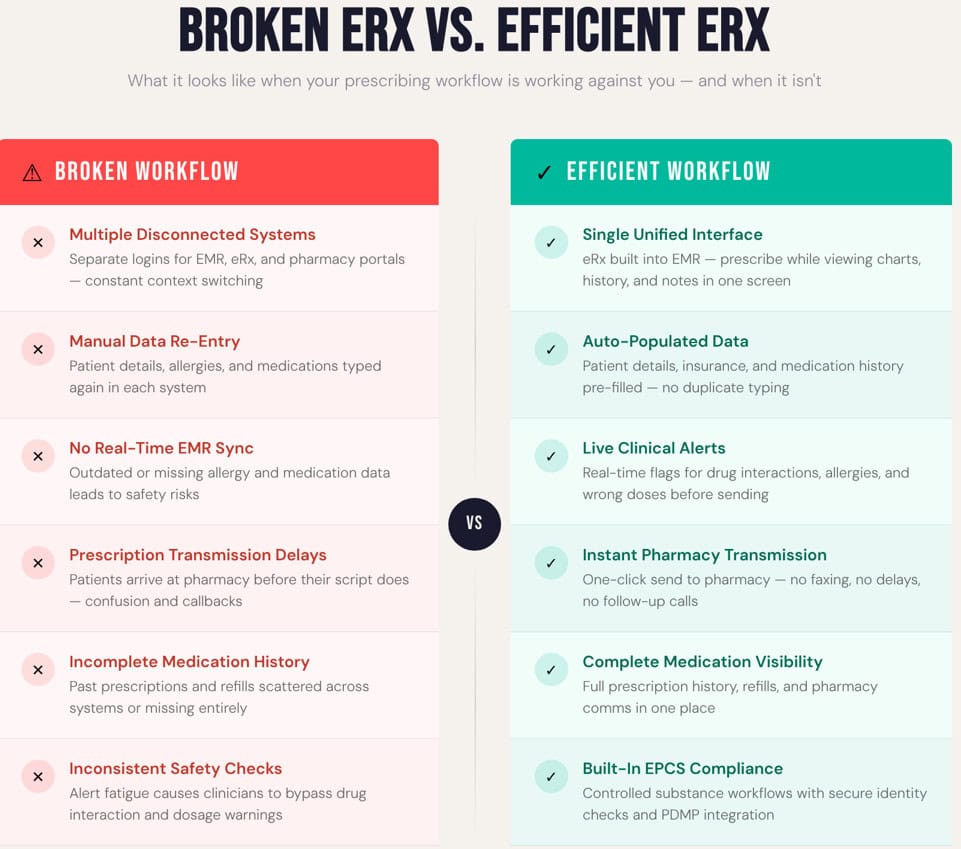
A broken eRx workflow shows up in small inefficiencies, delays, and gaps in information that disrupt care delivery. Here’s what it looks like:
- Multiple Screens and Disconnected Tools
In many practices, prescribing is still managed through separate systems like EMRs, eRx software, and pharmacy portals. This forces providers to switch between platforms, disrupting their workflow. Poor system integration also increases workload and slows care because information doesn’t move flawlessly between systems.
- Re-Entering Patient and Medication Data
When systems don’t sync properly, providers often have to re-enter patient details, prescriptions, or medication instructions manually. This wastes time and increases the risk of errors. Besides that, pharmacy staff frequently need to fix or complete missing prescription information, especially medication details and directions.
- Lack of Real-Time Integration With EMR
A major problem in broken workflows is the lack of real-time data sharing. Medication lists, allergies, and patient updates often don’t sync properly between systems, leading to missing or outdated information. This poor integration can increase safety risks, delay care, and create more manual work for providers.
- Delays in Transmitting Prescriptions to Pharmacies
Even when prescriptions are sent electronically, delays can still happen due to technical issues, system limitations, or incorrect routing. Patients often reach the pharmacy before the prescription arrives, leading to confusion and extra follow-up work for both providers and pharmacists.
- Poor Visibility Into Medication History and Refills
In disconnected systems, medication histories can be incomplete or difficult to access. This makes it harder to track past prescriptions, manage refills, and make informed prescribing decisions.
- Inconsistent Tracking of Specialized Treatments
For practices managing aesthetic or wellness treatments, tracking medications over time can be challenging. Many systems aren’t built to monitor ongoing therapies alongside patient progress, leading to disconnected care and incomplete documentation.
What an Efficient eRx Workflow Should Look Like
Modern eRx workflows are designed to reduce manual work, improve accuracy, and keep prescribing connected to the rest of the clinical process. Instead of slowing providers down, the right system helps prescriptions move quickly and safely from provider to pharmacy. Here’s what an efficient eRx workflow should look like:
- Single, Unified Prescribing Interface
E-prescribing function inside the EMR, so doctors don’t need separate logins. They can see patient records, allergies, medicines, and history all in one place.
- Auto-Populated and Context-Aware Data
The system automatically adds patient details like allergies, insurance, and past medications. It may also suggest common medicines to save time.
- Built-In Safety and Compliance Checks
It provides instant alerts on drug interactions, allergies, or incorrect doses before sending a prescription. Moreover, it checks regulations, such as controlled drug rules, to ensure safe prescribing.
- Instant Pharmacy Transmission
Doctors can send prescriptions directly to a pharmacy with a single click, instead of printing or faxing. This makes the process faster, reduces delays and calls, and helps patients get their medicine sooner.
- Complete Medication Visibility
A connected eRx workflow stores prescriptions, refills, pharmacy communications, and medication history in one place. This helps providers easily track ongoing treatments and monitor patient progress over time.
How to Improve Your eRx Workflow
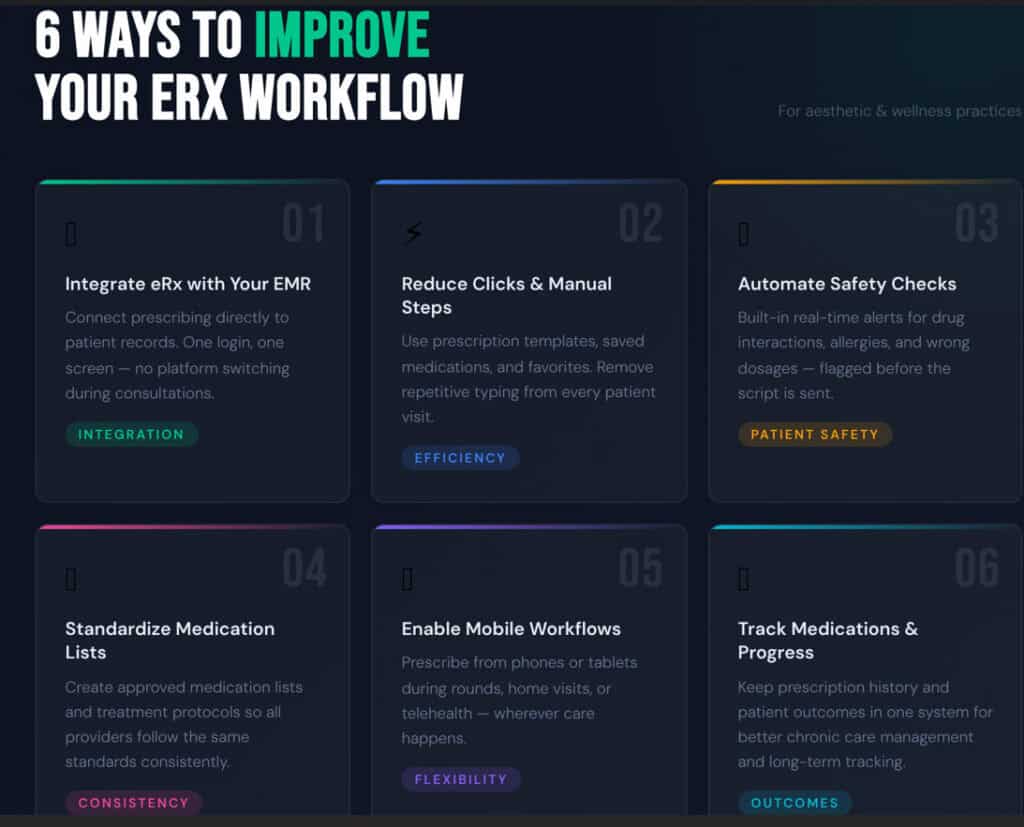
Improving an eRx workflow starts with making the system simpler, faster, and more connected. The important thing is to remove unnecessary steps so providers can focus more on patient care instead of administrative work. Here are some top ways to improve your eRx workflow for better efficiency and safety:
- Integrate eRx Directly with Your EMR
Connect the e-prescribing system directly with the EMR. This removes the need to switch between different apps or logins. Besides, doctors can view patient records, allergies, and medications in one place, which speeds up and improves prescribing accuracy.
- Reduce Clicks and Manual Steps
Make prescribing quicker by reducing extra work. Use features like prescription templates, saved medications, and favorites to help doctors avoid re-entering the same information repeatedly. This saves time during each patient visit.
- Automate Safety Checks
Use built-in system alerts to automatically check for:
- Drug interactions
- Allergies
- Wrong dosages
These real-time alerts help prevent mistakes before prescriptions are sent, improving patient safety.
- Standardize Medication Lists and Protocols
Create a common list of approved medicines and treatment guidelines for all providers.
This ascertains everyone follows the same standards, reduces confusion, and improves consistency across clinics or departments.
- Enable Mobile and Tablet Workflows
Allow doctors to prescribe using mobile phones or tablets. This helps them work from anywhere, during rounds, home visits, or consultations, making the process faster and more flexible.
- Track Medications Alongside Patient Progress
Keep all prescription history and patient progress in one system. Doctors can monitor a patient’s response to treatment over time, adjust medications easily, and provide better long-term care. This is especially for chronic or ongoing treatments.
What to Look for in eRx Software for Aesthetic Practices
Choosing an eRx software for an aesthetic practice is really about how flawlessly it fits into your daily clinical workflow. It’s also about how safely it supports decision-making, and how well it connects with the rest of your practice system. Here’s what to look for in an eRx software for aesthetic practices:
- Native EMR Integration
A good eRx system should be built directly into the EMR, not as a separate tool. This allows providers to prescribe while viewing patient charts, history, and visit notes in the same place.
With PatientNow, prescribing is fully integrated into the EMR. Doctors can view patient charts, allergies, medications, and notes on a single screen. This removes the need to switch systems or log in separately, saving time and keeping focus on patient care.
- Real-Time Clinical Alerts
Good eRx software should actively protect patients by flagging risks before a prescription is sent. This includes alerts for drug interactions, allergies, incorrect dosages, and contraindications based on patient history.
These safety checks should be built directly into the prescribing workflow. This ensures providers are immediately warned of potential issues, helping prevent prescribing errors and improve patient safety without slowing workflow.
- Controlled Substance Support (EPCS)
For aesthetic and wellness practices that prescribe controlled drugs, the eRx system must support Electronic Prescribing of Controlled Substances (EPCS). This includes secure identity checks, safe prescription sending, and PDMP compliance to meet legal requirements.
PatientNow includes compliance-focused workflows that help providers easily meet these rules. This is especially useful for weight loss, HRT, and medical wellness practices that frequently use controlled prescriptions, without adding extra administrative work.
- Workflow Simplicity and Speed
In busy aesthetic practices, speed is very important. A good eRx system should reduce clicks, limit manual typing, and make prescribing quick from start to finish. Providers should be able to quickly choose medications, use saved templates, and send prescriptions without navigating complicated menus. This saves time per patient and lets doctors focus more on patient care rather than paperwork.
- Customization and Flexibility
Aesthetic and wellness practices often use treatments that don’t follow standard hospital prescribing rules, so flexibility is important. The system should support custom drug lists, preferred medications, and protocol-based prescribing.
With PatientNow, you can create custom workflows and treatment protocols for services like injectables, weight loss, IV therapy, and regenerative medicine for your practice. This helps maintain consistent care across providers while still meeting each clinic’s specific needs.
- Flawless Connectivity
A modern eRx system should not operate in isolation. It needs to connect easily with pharmacies, labs, patient records, and other tools to create a complete workflow.
For instance, PatientNow links prescribing with EMR data, lab integrations, telehealth, and patient history tracking. This gives providers full visibility of the patient journey from consultation to prescription fulfillment, helping improve continuity of care and track outcomes more effectively.
Simplify eRx Workflow for Your Aesthetic Practice
An efficient eRx workflow is actually about reducing delays, cutting manual work, improving safety, and keeping everything connected in one system. Many practices still face problems such as switching between systems, re-entering data, slow processes, and incomplete medication histories, which lead to wasted time and more errors. But a modern eRx system should fix these issues.
PatientNow is a strong solution for improving eRx workflows in aesthetic and wellness practices. It is fully built into the EMR, so providers can prescribe without changing systems. Moreover, it offers real-time safety alerts, EPCS compliance, and flexible treatment protocols for services like injectables, weight loss, IV therapy, and regenerative medicine. Its simple design also reduces clicks and manual steps, while direct connections with pharmacies, labs, telehealth, and patient records create a flawless, complete workflow.So, if you want to make the eRx process faster, safer, and easier for your practice, book a demo with PatientNow!