Table of Contents
Your Front Desk Isn’t Understaffed. But It’s Overloaded with Manual Work
It’s 3:15 p.m. at your medspa front desk. The phone is ringing again. A patient is waiting to check in, another needs to reschedule, and someone’s asking about pricing on Instagram. Your coordinator is juggling texts, calls, and scheduling, trying not to double-book or miss a lead. By day’s end, nothing breaks, but everything feels manual, reactive, and exhausting.
Most medspas respond by hiring more staff. But what looks like a staffing problem is usually a workflow problem. Front desk teams spend most of their time on repetitive tasks like scheduling and reminders.
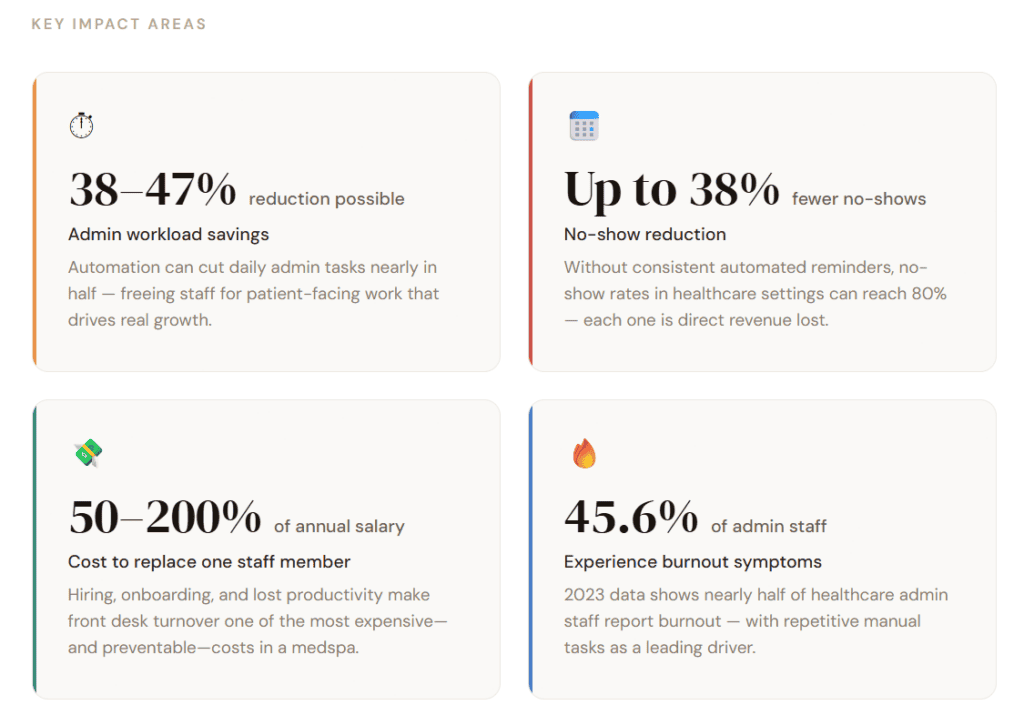
However, adding staff to a manual system doesn’t fix the bottleneck. It scales it. On the other hand, automation can cut admin workload by 38% to 47% and no-shows by up to 38%. So, here you’ll find how to reduce manual tasks at your medspa front desk without hiring more staff and with the right method!
What Manual Front Desk Work Is Really Costing You?
Manual front desk work quietly drains time, revenue, and team energy in ways that compound as your practice grows. Here’s what it can actually cost your medspa:
- Time Tax Adds up Quickly
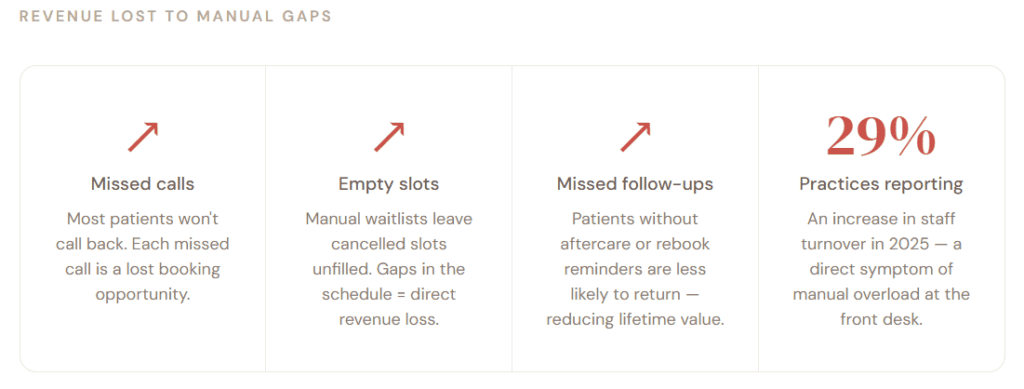
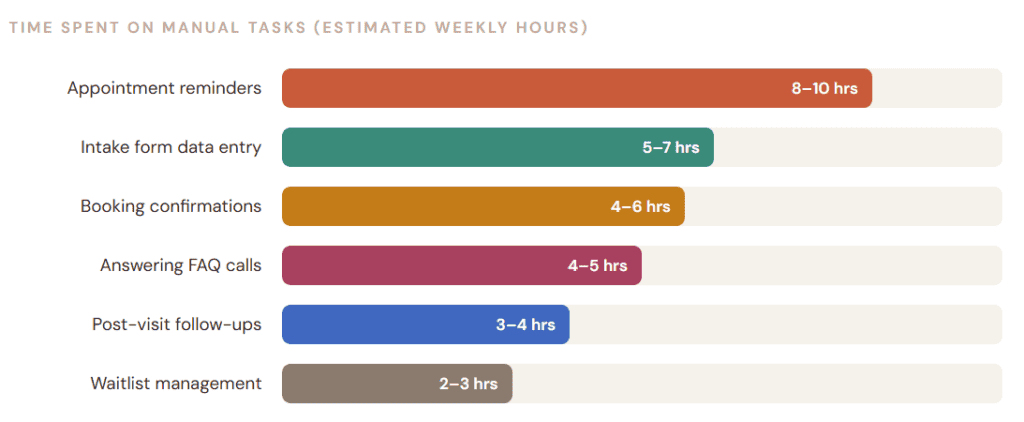
Front desk teams spend a large portion of their week on repetitive tasks, like answering calls, sending reminders, confirming appointments, and entering data. In many healthcare settings, this can take up most of their time. That’s hours each day spent on work that doesn’t directly grow the business or improve patient care.
- Revenue Leaks Through Missed Touchpoints
Every missed call is a potential missed booking, as many patients won’t call back and will move on to another medspa. Without automated reminders, no-shows increase, leaving gaps in the schedule that directly impact daily revenue.
- Manual Errors Create Bigger Problems
Double bookings, incorrect intake details, or missed notes can disrupt the entire day. Even small mistakes slow down providers, affect patient trust, and create more cleanup work for staff later.
- Burnout Leads to Turnover
Repetitive, high-pressure admin work is a major cause of staff exhaustion. In aesthetics and wellness practices, this often leads to burnout and higher turnover, especially when teams feel like they’re constantly “catching up.” In fact, a 2023 study reports burnout symptoms among 45.6% of healthcare admin staff, and 29% of practices in 2025 reported an increase in staff turnover.
- Replacing Staff Is Expensive
The average cost to replace a front desk employee can range from 50% to 200% of their annual salary when you factor in hiring, onboarding, and lost productivity.
8 Front Desk Tasks Causing Staff Burnout
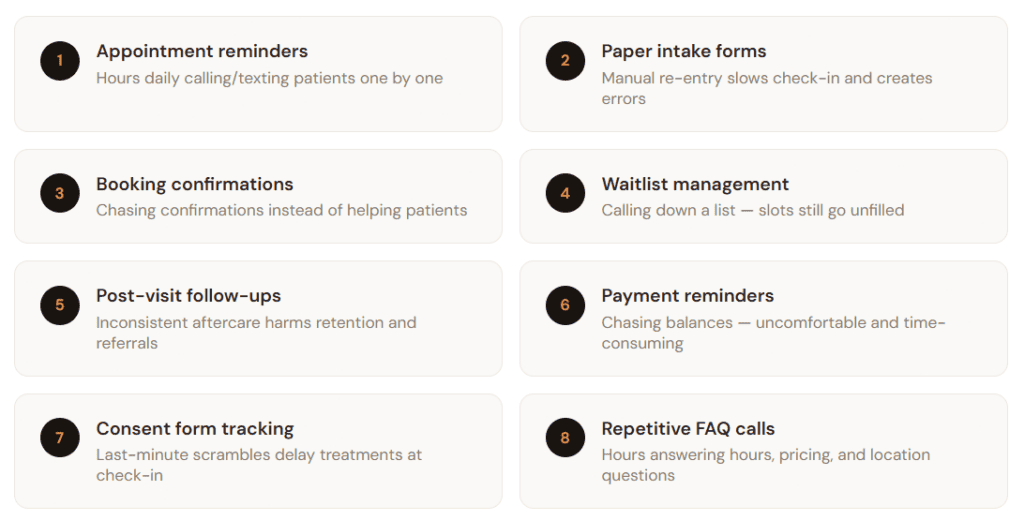
The front desk tasks don’t seem like much on their own, but together they take up most of the day. When they’re all managed manually, they quickly lead to stress, delays, and missed opportunities. Here’s how:
Task 1: Appointment Reminders
This usually means texting or calling patients 24–48 hours before their visit, one by one. It sounds quick, but across a full schedule, it can take hours every day. It’s draining because it’s repetitive and time-sensitive. Furthermore, your staff misses a batch, and no-shows increase. In healthcare settings, no-show rates can reach 80% without consistent reminders, which directly translates into lost revenue and unused provider time.
Task 2: Intake Forms
Many medspas still hand patients a clipboard at check-in, then have staff re-enter that information into the system later. It slows down the front desk during peak hours and creates double work. Moreover, it’s error-prone, as manual data entry increases the risk of incorrect patient details, which can affect treatment accuracy and compliance.
Task 3: Booking Confirmations
Calling or emailing every patient to confirm appointments adds another layer of back-and-forth. Staff spend large portions of their day chasing confirmations instead of helping patients in front of them. If confirmations don’t happen, uncertainty increases, and so do last-minute cancellations and gaps in the schedule.
Task 4: Waitlist Management
When a cancellation opens up, someone has to go down a list and call patients one at a time. This is tedious and often unsuccessful, as by the time you reach someone, the slot may still go unfilled. The cost here is obvious. Empty appointment slots that could have generated revenue.
Task 5: Post-visit Follow-Ups
Aftercare instructions, review requests, and rebooking nudges are critical for retention. They’re often managed manually. That means they’re inconsistent. When follow-ups don’t happen, patients are less likely to return, and practices lose out on lifetime value and referrals.
Task 6: Payment Collection Reminders
Chasing outstanding balances by phone or text is uncomfortable and time-consuming. It also gets delayed when the front desk is busy, which impacts cash flow. The longer a balance sits, the less likely it is to be collected in full.
Task 7: Insurance and Consent Tracking
Staff often have to check manually whether each patient has completed the right forms before their appointment. This creates last-minute scrambles at check-in and can delay treatments. In regulated environments, missing documentation also creates compliance risk.
Task 8: Answering Repetitive FAQs
A large portion of incoming calls are simple questions, like hours, location, pricing, or service details. Each call interrupts other work, and collectively, they add up. Studies show that administrative staff in healthcare spend a significant share of their time managing routine inquiries, which contributes heavily to workload fatigue.
Why These Tasks Usually Stay Manual
So if these front desk tasks are so time-consuming, why do they still stay manual in most medspas? The answer is in the following reasons:
- We’ve Always Done It This Way
This is the most frequent but least admitted reason. Front desk teams get used to manual habits, like calling patients, printing forms, and jotting notes. It feels safe because it’s familiar, even if it’s inefficient. Change feels risky when the current system is predictable.
- Too Many Disconnected Tools
Most medspas didn’t plan this, but they added software over time. A booking tool here, a texting app there, another system for charting. Since these don’t sync, staff end up doing the work to connect everything manually.
- Assuming Automation Is Too Expensive or Complex
Many owners think automation means enterprise-level cost or needing IT support. They don’t realize that affordable platforms today can manage most tasks without that complexity.
- Bad past software experiences
Some have tried to fix this before, and it backfired due to glitches, double bookings, and confusing systems. That makes teams hesitant to try again.
- Belief That “Personal Touch” Must Be Manual
Especially in medspas, owners worry automation feels cold. In reality, it removes busywork so staff can focus more on real patient interactions.
How Automation Can Reduce Manual Tasks At Your Medspa Front Desk
What really reduces manual tasks at your medspa front desk should be an all-in-one solution designed for aesthetic practices. It should have scheduling, charting, intake, reminders, payments, and follow-ups that are all connected and automated.
PatientNow balances all these tasks perfectly, so everything functions together naturally, from consultation to checkout. It joins EMR, CRM, scheduling, payments, marketing, and AI tools into one unified system. Here’s how PatientNow can reduce manual work by managing each of the tasks your front desk is currently doing by hand:
- Appointment reminders: Instead of staff calling or texting patients 24–48 hours before visits, reminders are automatically sent when the appointment is booked. So, patients can confirm or reschedule directly, and the front desk just sees the status update.
- Intake forms: Paper forms at check-in are replaced with digital forms sent after booking. Patients complete them in advance, and the answers flow straight into their chart. So, there’s no manual data entry needed.
- Booking confirmations: Patients can book online without calling, and confirmations are sent automatically. If booking happens by SMS or phone, confirmation can still be managed in the same thread without extra follow-up calls.
- Waitlist management: When a slot opens, the system automatically notifies waitlisted patients. Whoever responds first gets the appointment, removing the need for staff to call down a list.
- Post-visit follow-ups: Aftercare instructions, rebooking reminders, and review requests are automatically sent based on the type of treatment. So, staff don’t have to track or schedule follow-ups manually.
- Payment reminders: Outstanding balances trigger automatic reminders by text or email, reducing the need for front desk staff to chase payments.
- Consent and form tracking: Staff can instantly see which patients haven’t completed required forms, and the system sends reminders automatically before the appointment.
- Repetitive FAQs: Frequent questions like hours, pricing, or booking are managed through online booking tools and automated responses. So, your staff will spend less time answering the same calls.
Your Front Desk Needs Automation For Less Manual Work
Most medspa front desks grapple with daily tasks because they still depend on manual work. Front desk teams end up as the link between disconnected tools, managing reminders, intake forms, scheduling, payments, and follow-ups by hand. Over time, this leads to missed revenue, more mistakes, and burnout that hiring alone can’t fix.
The real solution is replacing manual coordination with automation. When scheduling, charting, intake, reminders, payments, and follow-ups all operate in one connected system, the front desk shifts from doing tasks to simply overseeing them. That’s where PatientNow offers smart automation to support your front desk routine, so your team can focus on care.
It’s built for aesthetic practices, offering everything in one platform, like booking, reminders, follow-ups, and payments. This helps teams save time by avoiding working with disconnected tools, preventing burnout, and keeping schedules full without hiring more staff.
If you want to see how PatientNow automates your medspa front desk routine, book a demo with us!