

Table of Contents
Quick summary
If intake is disorganized, it can stress your staff and leave patients feeling unsure. So, you need a patient intake software that shapes how patients experience your practice from their first visit. Find out the top 13 intake software solutions for med spas, aesthetic clinics, and wellness practices to simplify documentation, appointments, and first-visit workflows.
Why patient intake breaks down in growing med spas and wellness clinics
Patient intake is the first time a patient interacts with your clinic, but for many aesthetic practices, this step still feels more complicated than it needs to be.
Many patient intake software options are designed for general healthcare or simple scheduling. They often don’t meet the needs of aesthetic and wellness clinics, where consultations, treatments, and follow-up care must be coordinated. Some tools also just digitize paperwork without actually helping your team get ready for care. But here we’ve reviewed the top 13 patient intake software solutions that offer clear clinical processes, efficient operations, and a smooth first experience for patients and staff.
Why listen to us
At PatientNow, we have supported med spas, aesthetic clinics, and wellness practices for more than twenty years. We have watched teams move past paper intake, outgrow simple tools, and work hard to preserve top-notch care as they expand. This experience shapes how we review patient intake software and what actually works in a busy aesthetic practice. PatientNow itself serves as a complete intake solution. We help practices simplify forms, consultations, and first-visit workflows while keeping staff organized and patients confident from their very first interaction.
Comparing the 13 best patient intake software
Here’s a short comparison of the top 13 patient intake software on the market in 2026:
| # | Tool | Good for |
| 1 | PatientNow | Med spas and aesthetic practices |
| 2 | DocResponse | Mid-sized clinics |
| 3 | SimplePractice | Small wellness practices |
| 4 | LeadSquared | Growing clinics |
| 5 | Doctible | Solo to mid-sized practices |
| 6 | Luma Health | Larger clinics with complex intake workflows |
| 7 | ConsentZ | Practices that prioritize traceability |
| 8 | Phreesia | Large multi-speciality organizations |
| 9 | Qure4u | Mid-sized clinics |
| 10 | Tebra | Clinically focused practices |
| 11 | CareCloud | Clinically structured practices with insurance workflows |
| 12 | IntakeQ | Solo and early-stage wellness practices |
| 13 | Healow | EHR-centered clinics |
1. PatientNow
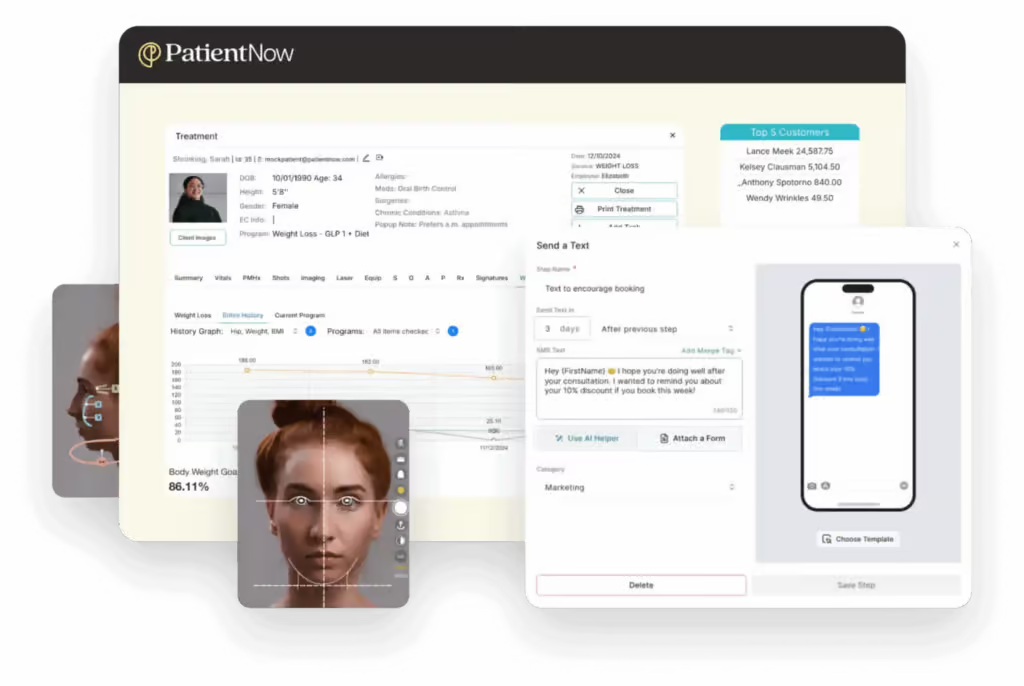
PatientNow is a clinical-grade platform made for med spas, aesthetic clinics, plastic surgery practices, and wellness clinics. The system is designed so that intake leads smoothly into care, communication, documentation, and follow-up. PatientNow works best for growing, multi-location practices led by clinicians who want clear operations without managing multiple systems.
Key features
- Two-way SMS and automated intake reminders: Patients can receive and reply to intake reminders by text, helping them complete forms before their visit without staff chasing them.
- Intake data connections: Information patients submit flows directly into their medical chart, appointment, photos, and billing, so staff don’t re-enter data.
- Customizable forms & consent capture: Supports tailored intake forms, medical histories, and digital signatures.
- AI-powered automation via Recura: Recura automatically handles follow-ups, reminders, and responses, reducing front-desk work and missed steps in the intake process
Pros
- Intake is clinical, purposeful, and meets the standards of aesthetic care.
- Keeps intake, documentation, communication, and follow-up all in one system.
- Supports both business oversight and provider workflows.
- Made for practices that need more than basic booking or form tools.
- Reduces administrative errors and improves compliance.
- Ideal for multi-location and growing practices.
Cons
- May offer more features than very small or solo practices need initially.
2. DocResponse
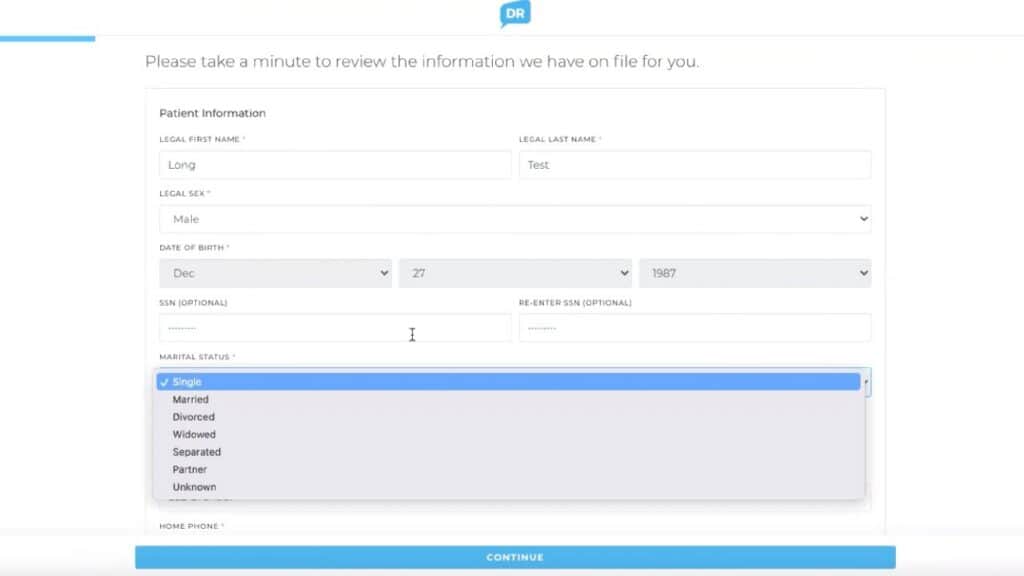
DocResponse is a patient intake and workflow tool that digitizes check-in, registration, and form completion for medical practices. It works for mid-sized clinics that want to reduce front-desk paperwork and make patient information collection more consistent before visits. The tool is most frequently used in general healthcare settings such as family medicine, OB/GYN, and multispecialty clinics.
Key features
- Appointment scheduling: Patients are prompted to complete required forms before their appointment is confirmed, reducing incomplete or missing intake data.
- Basic payment and balance capture at check-in: Staff can collect copays or outstanding balances during check-in without switching to a separate payment system.
- Digital forms & check‑in: Supports paperless intake, where patients complete histories, consents, and demographic details online or on a device, improving data accuracy and efficiency.
Pros
- Remote form completions shorten office wait times.
- Digital intake and check‑in simplify administrative tasks and reduce paperwork for general clinical settings.
- Designed to work with your current clinical record systems.
Cons
- Limited support for aesthetic-specific consent flows or treatment education.
- Minimal options for personalized branding and customization.
- Workflow automation is limited.
- Not designed to manage intake as part of a wider aesthetic patient journey.
3. SimplePractice
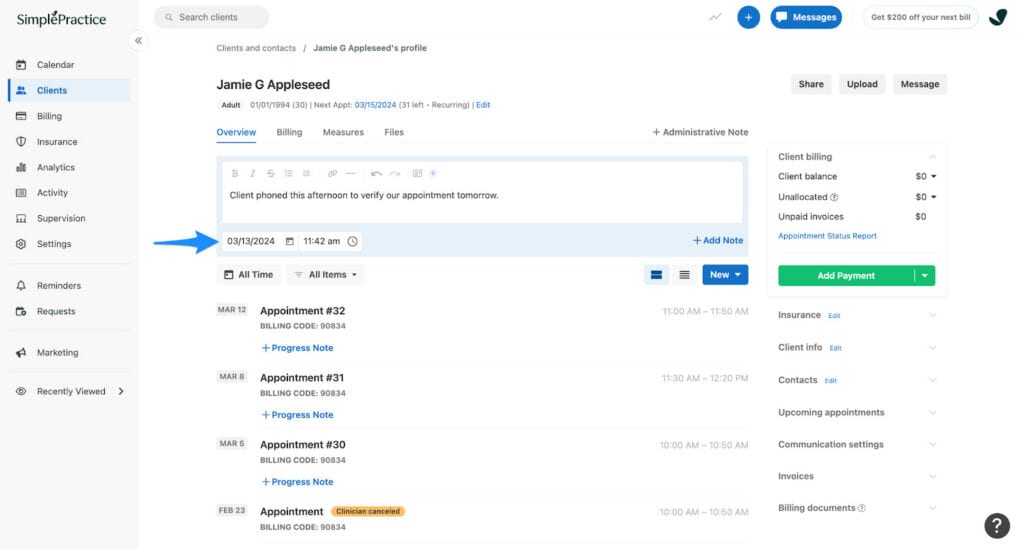
Simple Practice is a practice management and EHR platform designed for therapists and allied health professionals. Patient intake is just one part of its larger system that also handles scheduling, documentation, billing, and client communication. This software is most relevant to solo practitioners or small clinics offering consult-based services.
Key features
- Online appointment requests and reminders: Patients can request appointments online and receive automatic reminders to reduce no-shows.
- Streamlined payment collections: Patients can pay invoices and balances directly through their secure portal before or after visits.
- Client portal & documentation templates: Includes customizable templates for intake and clinical documentation.
Pros
- Works for practices that are consult-driven or have recurring visits.
- Easy setup for small teams.
Cons
- Intake templates are not made for aesthetic or systematic workflows.
- Limited support for layered consents or education specific to treatments.
- Customization options are limited for tailoring intake and documentation to aesthetic‑specific needs.
- The insurance-oriented structure may feel misaligned for self-pay med spas.
4. LeadSquared
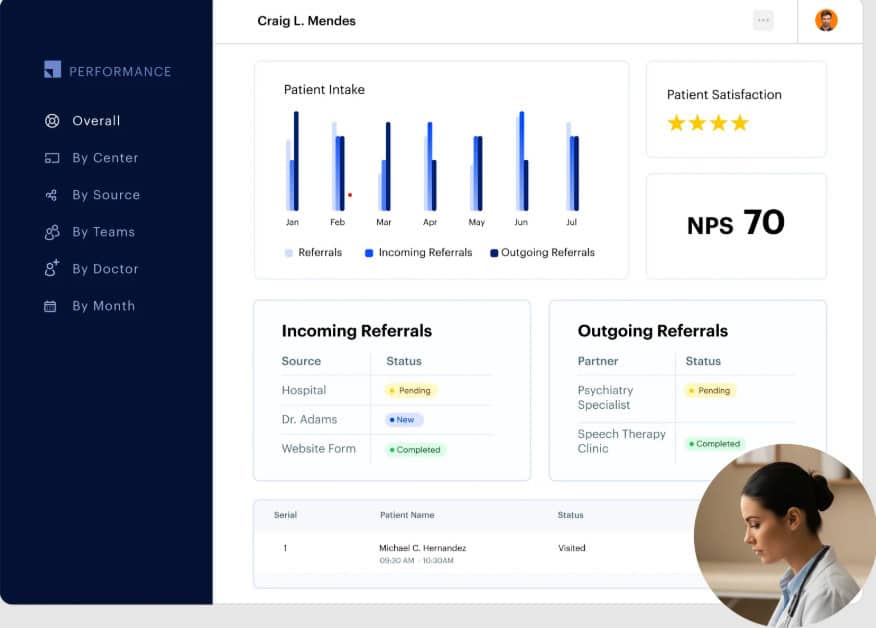
LeadSquared’s patient intake offering serves high-volume, process-driven healthcare teams that want tighter control over how inquiries turn into booked appointments. It sits closer to a CRM with workflow automation than to a wellness-specific practice platform, so it tends to fit growing clinics with dedicated front-desk or call-center coverage.
Key features
- Telephonic intake automation: Lexi AI answers calls, captures basic patient details, and handles common intake questions without staff picking up the phone.
- Automated doctor assignments: Patients are routed to available providers based on specialty, schedule, and case type to speed up intake decisions.
- CRM and automation: Manages lead tracking, follow‑ups, scheduling automation, and segmented patient communications through email/SMS campaigns.
Pros
- Ideal when intake involves calls, follow-ups, routing, and team handoffs.
- Gives clear insight into the intake lifecycle.
- Automates CRM workflows and follow-ups to manage leads and patient interactions.
- Good for practices with defined processes and dedicated front-desk or call center staff.
Cons
- Not built specifically for aesthetic medicine.
- Only good if you already have defined processes.
- Customization is complex and is only suited to users with dedicated admin or technical resources.
- Insurance-focused features may be less relevant for self-pay aesthetic practices.
- Users report issues with implementation support, slow responsiveness, and UI performance.
5. Doctible
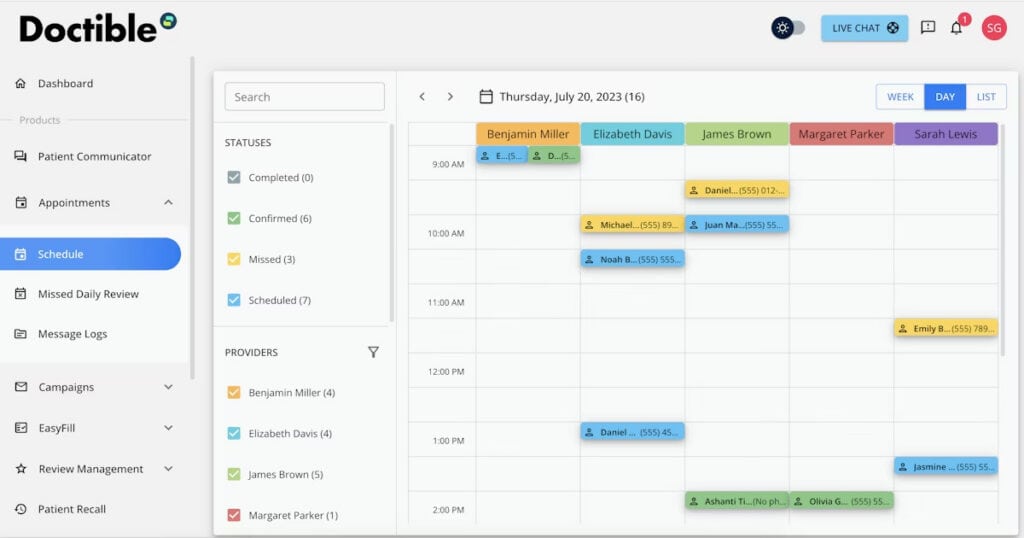
Doctible’s digital forms are useful for practices that want to replace paper intake with a text and email-driven patient experience, without turning intake into a heavy operational project. It is worth considering for solo to mid-sized clinics.
Key features
- Form logic with if/then options: Intake forms change based on patient answers, so patients only see questions relevant to their situation.
- Simplified form returns: Completed intake forms are returned as encrypted PDFs that can be uploaded into an existing practice management or EMR system.
Pros
- Mobile-friendly functionality.
- Form logic reduces incomplete intakes.
- PDF output provides a basic digital alternative to paper forms.
Cons
- Intake data flows as separate PDFs rather than a fully connected clinical record.
- Not positioned as an all-in-one system for aesthetic care.
- Doesn’t support deep clinical intake tied to procedure planning.
- Requires manual upload of PDFs into EHR or practice systems.
- Limited automation and patient engagement features.
6. Luma Health
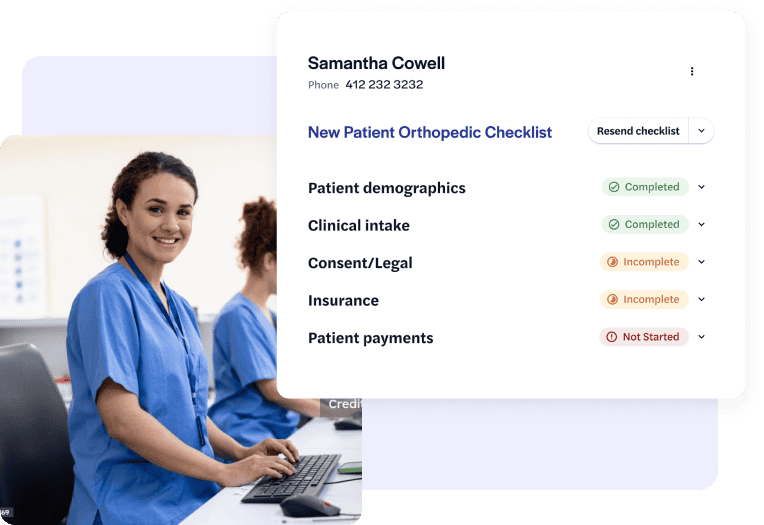
Luma Health acts as a patient success and access platform, not a traditional practice management system. Its intake capability is designed to sit at the front of access and care coordination, especially for organizations that struggle with missed steps between referral, intake, and arrival.
Key features
- Digital call deflection: Routine intake questions and requests are handled digitally, reducing inbound phone calls to the front desk.
- Real-time intake status visibility: Staff can see exactly where each patient is in the intake process, from start to completion.
Pros
- Reduces intake breakdowns caused by missing steps and unclear ownership.
- Intake status tracking helps teams intervene before appointments fall apart.
Cons
- Intake experience not designed around aesthetic or cosmetic consultation.
- Limited native support for procedure-specific consents.
- Not an all-in-one aesthetic platform.
- Requires integration with practice management, EMR/EHR, or billing systems for clinical documentation.
- Fewer built‑in tools for patient engagement, automated nurturing, or longitudinal care management.
7. ConsentZ
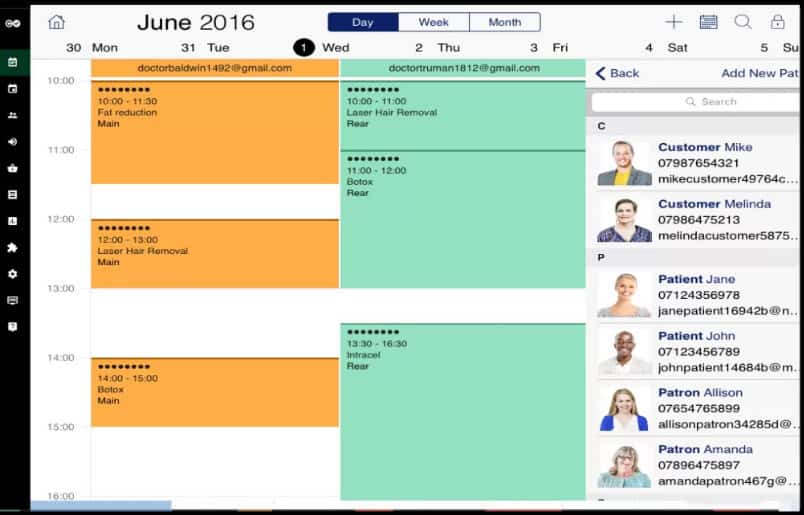
Consentz is a consent-first patient management system designed to capture, manage, and track informed consent and patient agreements. It is intentionally narrow, focusing on legal transparency, traceability, and patient understanding, and is designed to assist existing systems rather than replace them.
Key features
- Adjustable consent libraries: Practices can create consent templates once and reuse or update them across different treatments without having to start over.
- Detailed audit trails: Every consent shows exactly who completed it, when it was signed, and how it was captured for compliance tracking.
- Patient education within consent: Consents can include education and explanations to help patients understand procedures before treatment.
Pros
- Good option for aesthetic practices since consent is a clinical and legal priority.
- Strong traceability supports risk management and compliance.
- Patient education within consent can improve understanding before treatment.
Cons
- Not a comprehensive intake solution.
- Does not manage scheduling, intake orchestration, or patient communication.
- Best used as a specialist layer, not a standalone patient intake system.
- Lacks features for clinical documentation, treatment planning, or post‑visit engagement.
8. Phreesia
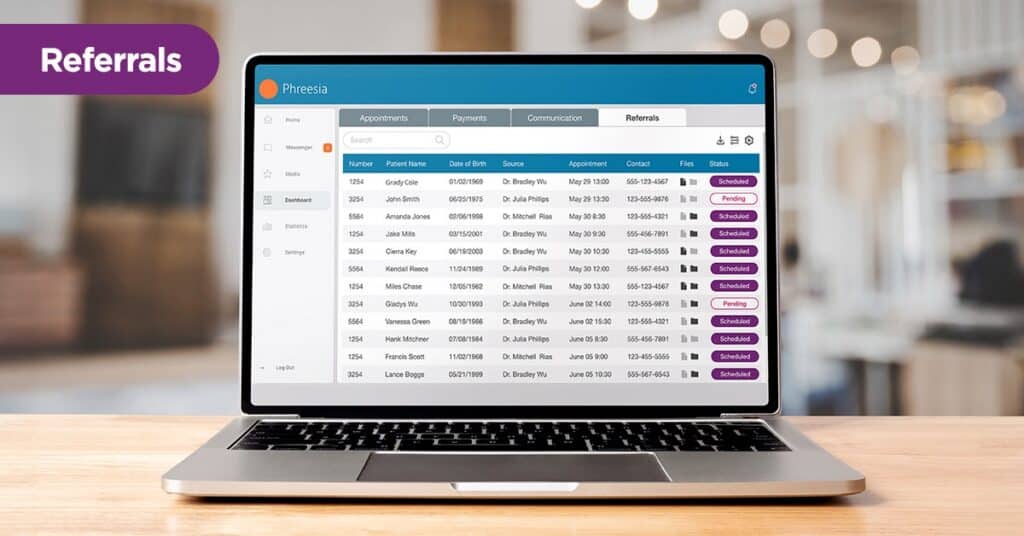
Phreesia is an enterprise-grade patient intake and activation platform designed primarily for large health systems, hospitals, and multi-specialty groups. Its intake capabilities are part of broader efforts to standardize data capture, patient activation, and operational reporting at scale. Phreesia is relevant in large, system-backed environments or practices embedded within hospital networks.
Key features
- Kiosk-based and remote intake workflows: Patients can complete intake either on in-office kiosks or remotely before arrival, even at high volumes.
- Enterprise-level reporting: Organizations can track intake completion, answers, and trends across locations and large patient populations.
- Standardized data capture: Enables consistent intake processes and data quality across departments and sites, supporting large‑scale operational needs.
Pros
- Highly standardized intake across many locations.
- Reporting depth supports administrative and compliance oversight.
Cons
- Intake experience can feel rigid and impersonal for elective aesthetic care.
- Limited flexibility for boutique or brand-driven patient experiences.
- Features are built for scale rather than the unique needs of self‑pay elective practices.
- Not designed around treatment-specific consent nuances common in med spas.
9. Qure4u
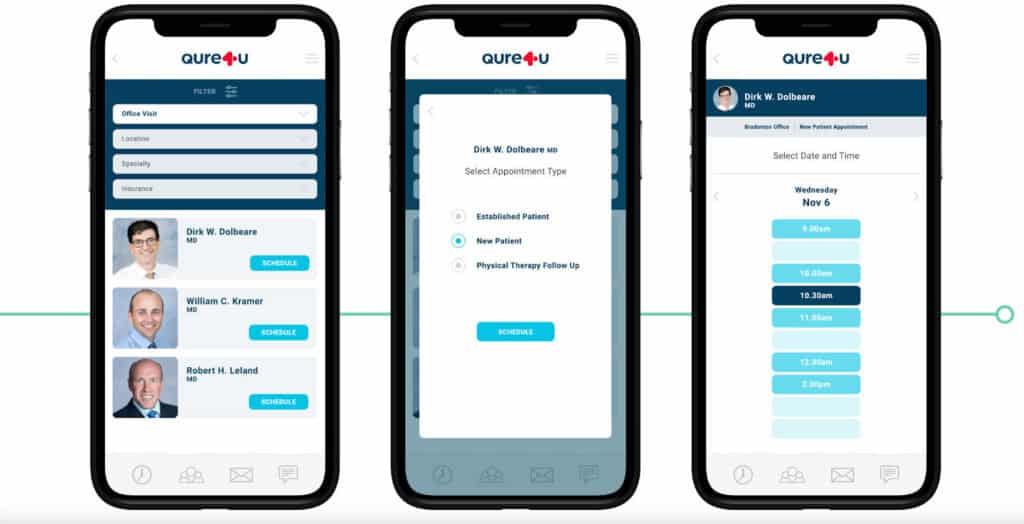
Qure4u is a patient engagement platform that includes intake as a segment inside a wider access and communication layer. It is built for practices that want patients to complete intake tasks remotely while keeping staff workload manageable. Qure4u’s intake is functional and access-focused.
Key features
- Patient mobile access: Patients complete intake forms on their own devices through a secure mobile experience.
- Pre-visit intake tasks tied to appointment readiness: Intake steps must be completed before appointments are marked as ready or confirmed.
- Integrated communication tools: Includes messaging and reminders that are tied to intake and appointment readiness.
Pros
- Reduces staff time spent chasing incomplete intake.
- Includes intake in a broader patient communication strategy.
- Mobile-first approach corresponds with patient expectations.
Cons
- Intake data is not deeply embedded in aesthetic-specific clinical processes.
- Limited support for complex treatment consent structures.
- Does not manage or integrate core workflows.
- Automation and engagement features are general.
- May require additional systems for charting, photos, and treatment planning.
10. Tebra
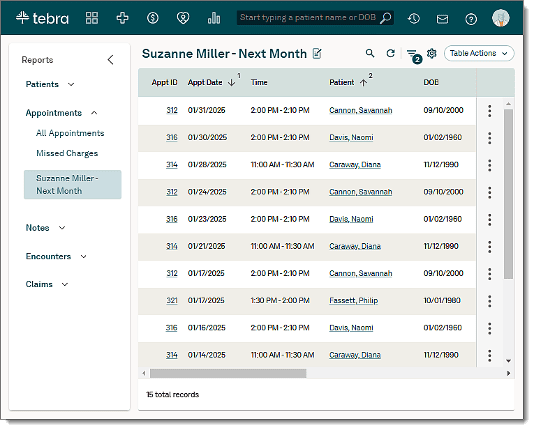
Tebra is a broad healthcare platform that combines EHR, practice management, and patient engagement tools. Its patient intake functionality supports general medical practices that want to digitize paperwork and reduce in-office friction as part of a larger clinical and billing system.
Key features
- EHR-linked digital intake forms: Patient-submitted intake data flows directly into the medical chart without manual entry.
- Patient experience flows: Patients are walked through required intake tasks step by step to avoid confusion or missed forms.
Pros
- Intake data flows directly into the medical record without re-entry
- Clear, guided intake experience for patients unfamiliar with digital forms
Cons
- Intake is designed around medical visits, not aesthetic consultations.
- Limited flexibility for treatment-specific education or cosmetic consent nuance.
- Experience may feel rigid for boutique or brand-forward med spas.
- Lacks deep integration with aesthetic‑specific workflows.
- Practice management and EHR focus may require workarounds or additional systems to fully support aesthetic intake.
11. CareCloud
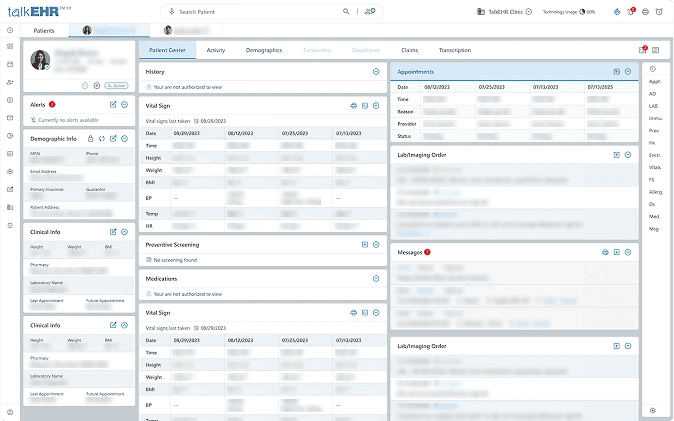
CareCloud’s intake experience is delivered through Breeze, its digital check-in and patient experience layer. Breeze is designed for medical groups and systemized clinics that want to move intake out of the waiting room and into a guided, pre-visit flow tied to billing and records.
Key features
- Breeze digital check-in with guided pre-visit steps: Breeze walks patients through check-in steps digitally before their visit.
- Integrated intake: Intake information links directly to both billing workflows and clinical documentation.
- Pre‑visit task tracking: Ascertains that required forms and consents are completed before appointments to support operational efficiency.
Pros
- Reduces in-office congestion by shifting intake earlier.
- Strong alignment between intake, billing, and records.
- Works well in structured, policy-driven clinical settings.
Cons
- Limited flexibility for aesthetic-specific workflows and education.
- Overbuilt for boutique or brand-led med spa experiences.
- Assumes insurance-style visit structures that many self-pay clinics do not follow.
- Reliance on an enterprise clinical platform can feel overbuilt and rigid for smaller or mid‑size clinics.
- Requires additional practice management or patient engagement tools to support the full patient journey.
12. IntakeQ
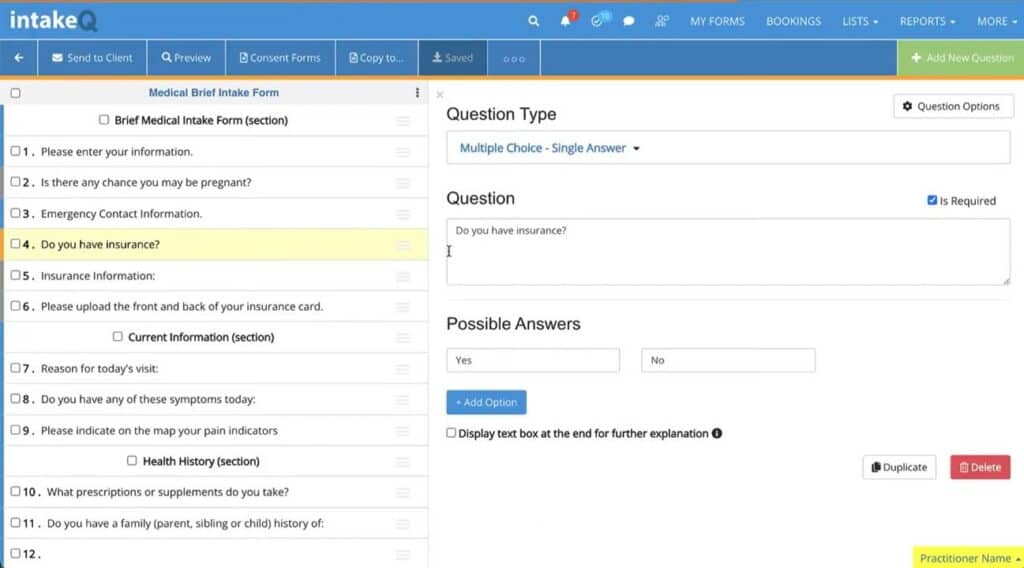
IntakeQ is a lightweight patient intake tool focused almost entirely on digital forms and questionnaires. It serves solo practitioners and small clinics that want a way to replace paper intake without adopting a full practice platform. IntakeQ is relevant at the very early stage, when intake needs are simple, and the primary goal is to collect information before the visit.
Key features
- Custom digital intake forms and questionnaires: Practices can design intake forms tailored to their services and workflows.
- Adaptable form logic: Questions automatically change based on patient responses to keep the intake shorter and more relevant.
- Patient‑friendly interface: Forms are mobile‑optimized and easy for patients to complete on their own devices.
Pros
- Simple to set up and easy for patients to complete.
- Flexible form logic supports different service types.
Cons
- Not a comprehensive intake or practice solution.
- No native support for multi-provider or multi-visit coordination.
- Limited usefulness once practices add services, staff, or locations.
- Requires additional systems for scheduling, charting, and follow-up.
- Minimal automation or patient engagement.
13. Healow
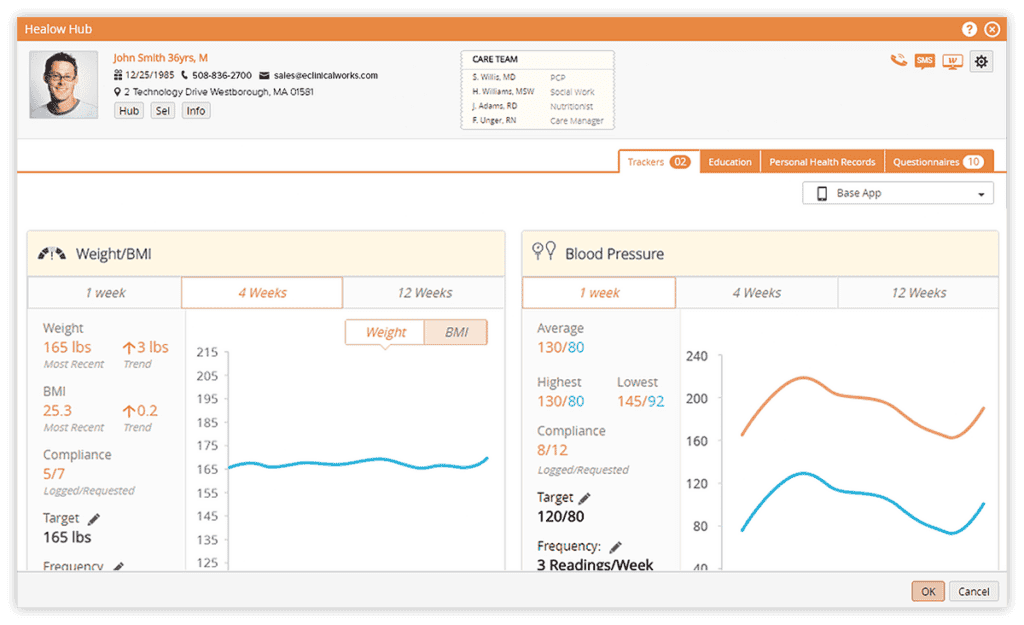
Healow is a patient engagement platform with a good patient app ecosystem. Intake is positioned as part of self-service access, allowing patients to complete forms, request appointments, and interact with their provider digitally. It is used when patient engagement is tied to an expanded medical EHR environment.
Key features
- Patient app–based intake and information capture: Patients submit intake information directly through the Healow mobile app.
- Self-scheduling: New patients can book appointments on their own without staff involvement.
- Patient portal engagement: Patients can view upcoming appointments, messages, and basic health information within the app.
Pros
- Familiar app-based experience for patients already using Healow.
- Reduces staff workload around basic intake tasks.
- Works well when paired with a compatible EHR system.
Cons
- Limited support for procedure-based consent or treatment education.
- Less control over branding and intake flow design.
- Not built for consult-heavy, elective care environments.
- Intake is not integrated with aesthetic‑focused workflows.
- Dependent on the underlying EHR.
Choose software that supports real care
The right patient intake software should reduce manual work without disrupting the flow of care. It should reduce manual work, streamline workflows, and let your staff focus on patients, not paperwork, and keep things consistent as your practice grows.
An intake solution, like PatientNow, is made for beauty practices that want intake to feel clinical, purposeful, and fully connected. Unlike generic or enterprise platforms, it connects intake directly to clinical documentation, treatment planning, scheduling, photos, and follow-up, creating a fully integrated, purpose-built system. With AI-powered automation, customizable forms, and patient engagement tools, PatientNow helps your team deliver a professional and personalized first visit every time.
If you want a flawless patient experience and to simplify your operations, schedule a demo today to see how PatientNow makes intake clinical, efficient, and scalable.