
Table of Contents
Quick Summary
Looking for the best dermatology patient engagement software? Dermatology practices often struggle with disconnected tools for communication, scheduling, and clinical workflows. But the best patient engagement software unifies clinical documentation, automated messaging, and scheduling in one platform. This improves efficiency, compliance, and patient experience across both medical and cosmetic services.
Why Dermatology Practices Need Specialized Patient Engagement Software (Not Generic Tools)
Dermatology practices face a unique challenge. You’re managing chronic skin conditions, cosmetic treatments, and complex billing. Generic patient engagement tools weren’t designed for that overlap.
The wrong software creates friction at every touchpoint, like missed follow-ups, and fragmented records. Your staff spends hours on tasks that should run automatically. But the right dermatology patient software drives positive results. It streamlines workflows, improves patient retention, and reduces administrative workload.
This guide covers 12 of the best dermatology patient engagement software options available in 2026. We’ve evaluated each platform’s key features, strengths, and weaknesses here.
Why Listen To Us

PatientNow has partnered with 5,000+ medspas globally since 2004. As an AmSpa partner, it’s built on real clinical and operational needs. Clients using our software see tangible results. Dr. Stanley Okoro doubled revenue. Evexias Medical Centers increased return rates from 40% to 70%. This guide reflects that experience.
What Is Dermatology Patient Engagement Software?
Dermatology patient engagement software is a platform that manages the clinical and operational touchpoints of a dermatology practice. It goes beyond basic scheduling. The best platforms combine:
- HIPAA-compliant EMR and charting tools.
- Automated appointment reminders and follow-ups.
- Two-way patient communication via SMS and email.
- Before-and-after photo documentation.
- Online booking and waitlist management.
- Revenue tools, including memberships and payments.
- Marketing automation for patient acquisition and retention.
For dermatology practices, clinical documentation must play a dual role. It must support both insurance-based care and cash-pay cosmetic services. That’s a combination most generic tools can’t handle cleanly.
5 Benefits of Using Patient Engagement Software in Dermatology
Fundamentally, the right platform does more than digitize paperwork. It reshapes how your practice operates. Here are five benefits of using dermatology engagement software:
- Stronger Patient Retention
Automated recall reminders, post-visit follow-ups, and loyalty programs keep patients returning. They do this without manual outreach. Practices using PatientNow’s recall tools have seen return visit rates climb from 40% to 70%.
- Reduced Administrative Burden
Automated booking, intake forms, and inventory management free staff from repetitive tasks. That time goes to patient care, increasing service quality.
- Better Clinical Documentation
Purpose-built charting templates, photo management, and labs integration keep records complete. They also ensure they stay compliant. Generic EMRs force dermatology workflows into templates built for other specialties.
- Consistent Revenue Growth
Memberships, automated upsells, and integrated payments increase average ticket size. They also create predictable recurring revenue without additional staffing.
- Faster Lead Conversion
AI-powered tools respond to new leads within seconds, day or night. Practices that automate lead follow-up convert significantly more inquiries into booked appointments.
Dermatology Patient Engagement Software: Quick Comparison
| # | Tool | Key Features | Two-way Communication |
| 1 | PatientNow | EMR charting, AI lead response | Yes |
| 2 | Nextech | Specialty EHR, AI Scribe | Partial |
| 3 | Modernizing Medicine | Derm-specific templates, billing integration | Partial |
| 4 | AestheticsPro | Charting & scheduling, mobile app | Yes |
| 5 | Aesthetic Record | Charting & scheduling, AI Scribe | Yes |
| 6 | Zenoti | AI Workforce Suite, AI Scribe | Partial |
| 7 | Boulevard | Precision scheduling, AI marketing suite | Yes |
| 8 | Vagaro | Basic scheduling, marketplace listing | Partial |
| 9 | Jane App | Scheduling & intake, AI Scribe | No |
| 10 | Mindbody | Smart Marketing AI, AI Insights Dashboard | Partial |
| 11 | Weave | VOIP + SMS, review management | Yes |
| 12 | DrChrono | Coding library, AI claims checker | Partial |
Now then, let’s evaluate each tool in-depth:
1. PatientNow
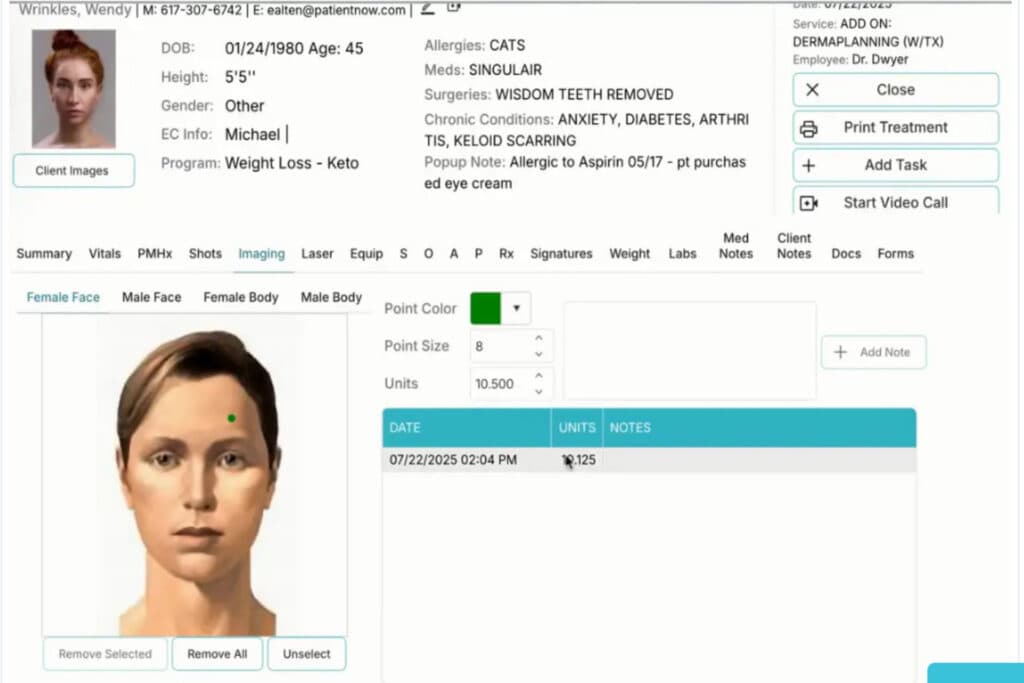
PatientNow is a purpose-built platform designed for dermatology practices that offer both cosmetic services and medical skin care. It combines clinical-grade EMR tools with business growth features in a single HIPAA-compliant system, simplifying workflows, improving efficiency, and supporting practice expansion. The platform’s design focuses on both the clinical and operational sides, helping practices retain patients, increase revenue, and reduce administrative burden.
Key Features
- Full EMR with HIPAA-compliant charting and injection tracking.
- AI-powered lead response and booking via Recura (responds in under 30 seconds).
- Built-in marketing suite with drip campaigns, reputation management, and social posting.
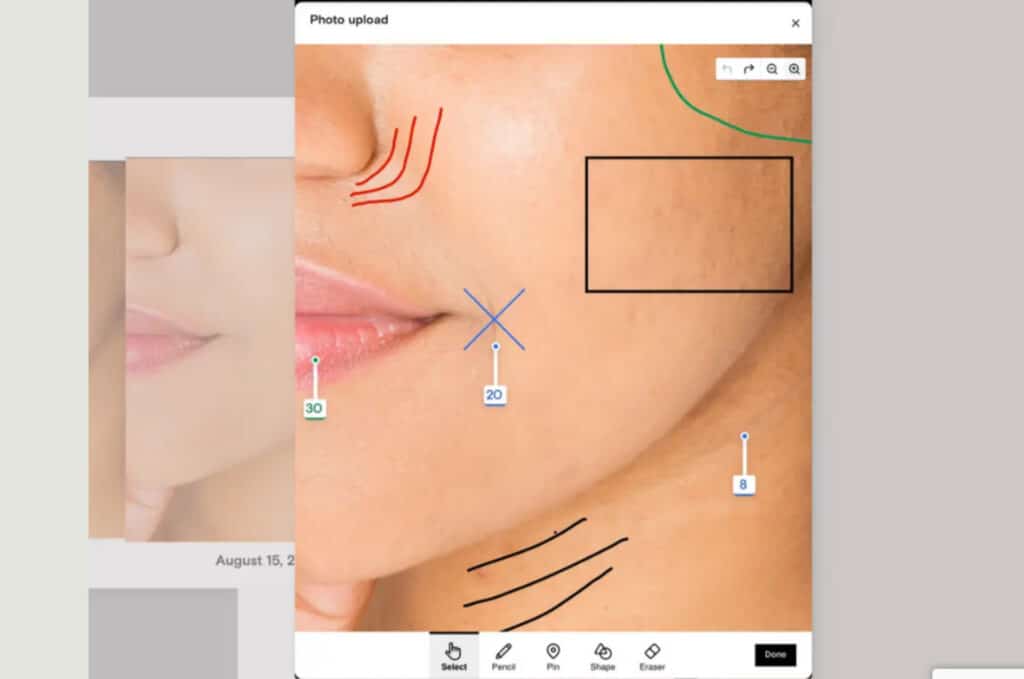
- RxPhoto for before-and-after documentation, photo markup, and galleries.
Pros
- Purpose-built for aesthetics.
- Comprehensive marketing suite (no need for an agency).
- AI-automated bookings, follow-ups, and lead nurturing.
Cons
- Needs training to achieve maximum proficiency.
2. Nextech
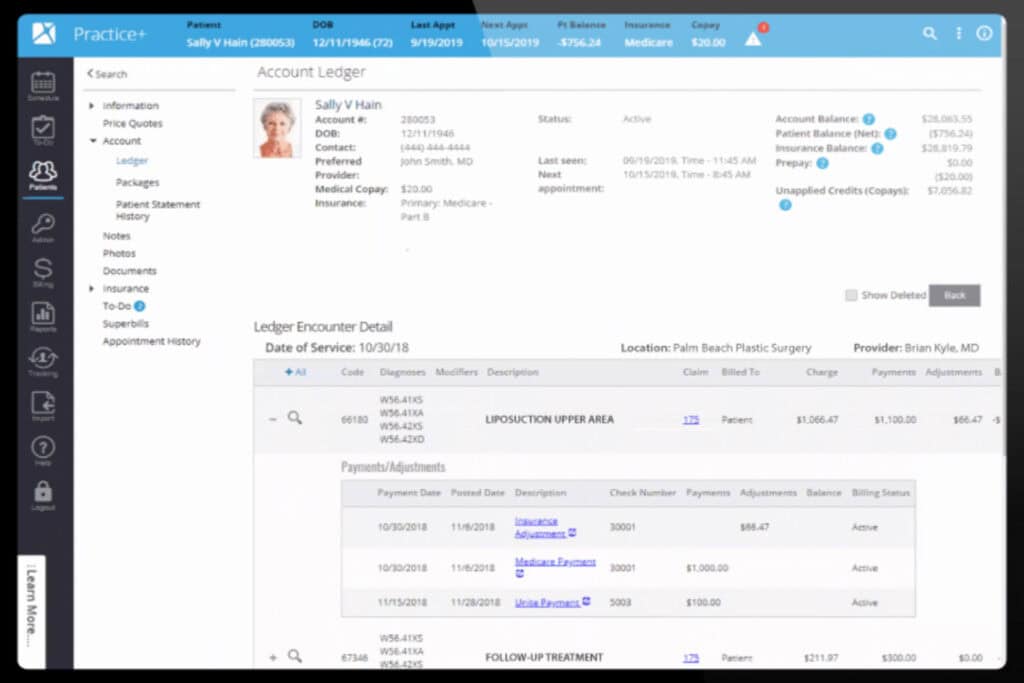
Second, there’s Nextech, a cloud-based EHR and patient engagement software. It has good clinical workflows for dermatology, ophthalmology, and plastic surgery. The platform stores encrypted patient data securely in the cloud, giving practices real‑time access to records from anywhere and improving team productivity and patient experience.
Key Features
- Deep EHR functionality with specialty-specific documentation.
- AI Scribe for voice-to-chart documentation.
- Multi-location reporting and enterprise permissions.
- AI photo assist (SnapPro) for before-and-after photos.
Pros
- Strong clinical documentation for complex dermatology workflows.
- Enterprise-grade multi-location controls.
- AI tools are actively developing.
Cons
- Expensive per-provider pricing.
- Weaker on patient engagement outside the clinical context.
3. Modernizing Medicine (EMA)
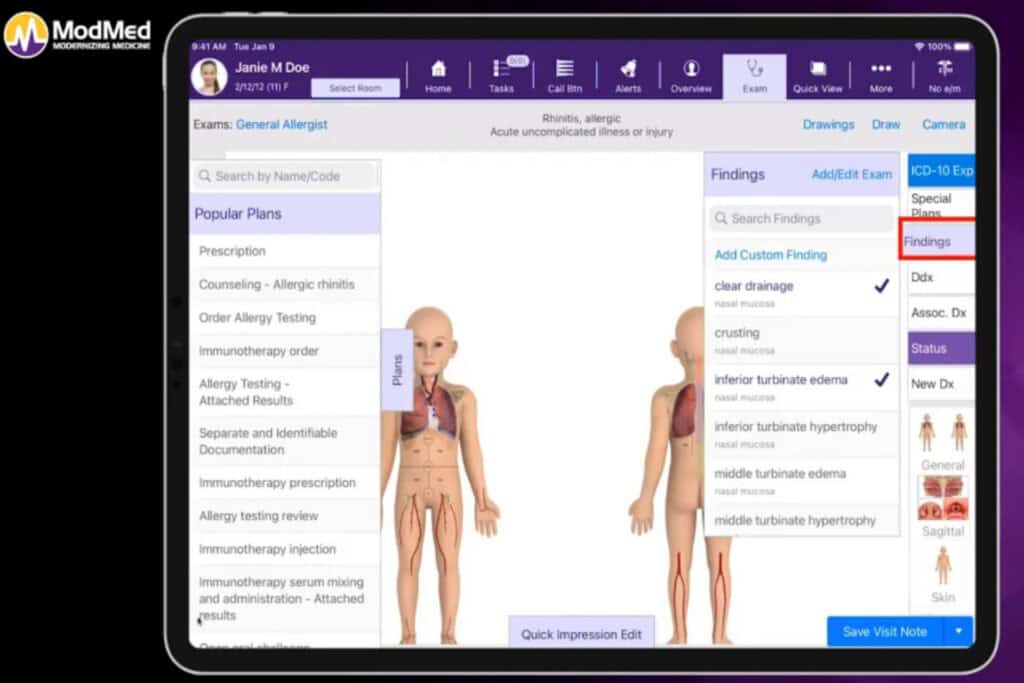
Modernizing Medicine’s EMA is a specialty-specific EHR built with dermatologists in mind. It’s a strong fit for practices that prioritize clinical documentation and insurance billing. The platform offers structured data capture, touch‑friendly mobile access, intuitive templates, patient engagement tools, practice analytics, and integration with practice management features.
Key Features
- Dermatology-specific charting templates.
- Integrated practice management and billing.
- Patient portal for appointment requests and communication.
- Insurance billing support with coding automation.
Pros
- Deep dermatology clinical workflows.
- Strong insurance billing capabilities.
- Well-regarded by medical dermatologists.
Cons
- Limited marketing automation.
- Less suited for cash-pay cosmetic dermatology workflows.
4. AestheticsPro
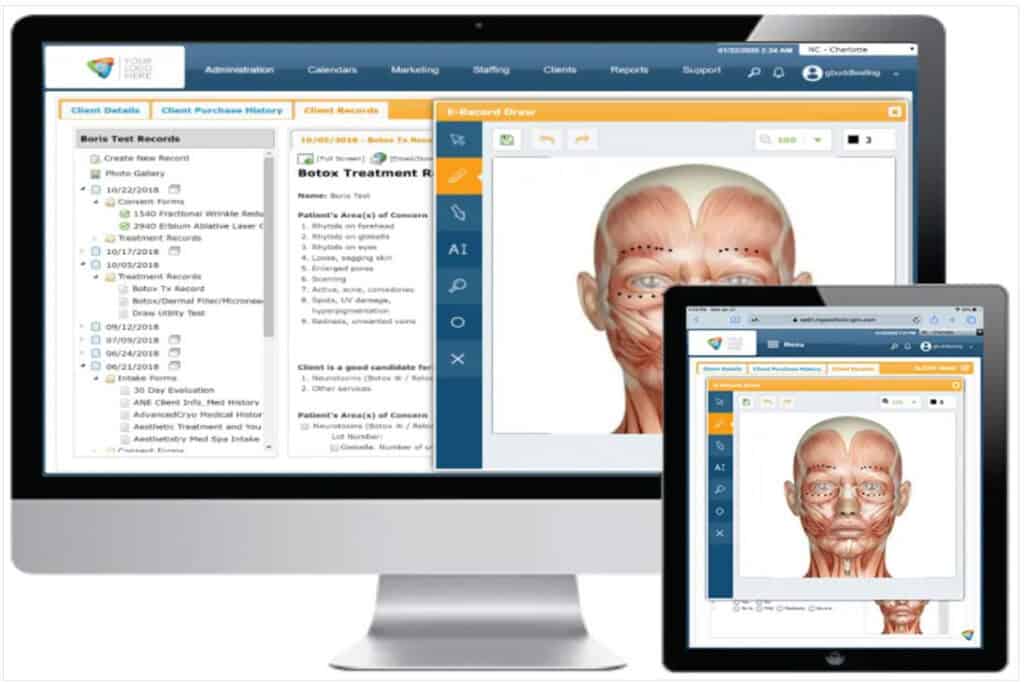
One more dermatology patient engagement solution is AestheticsPro. It has robust patient record management, customizable treatment notes, and detailed charting tools. The platform also includes client management, online booking, telemedicine, marketing tools, and secure electronic records to support both clinical documentation and business processes.
Key Features
- Charting, scheduling, and client management.
- Mobile provider app for iOS and Android.
- Basic marketing with drip campaigns and 2-way SMS.
- Telemedicine via Zoom integration.
Pros
- Affordable per-user pricing for small or solo practices.
- Simple, easy-to-learn interface.
- Positive reputation for ease of use.
Cons
- Marketing, eRx, and reputation management all cost extra.
- No lab integration or social media connections.
5. Aesthetic Record
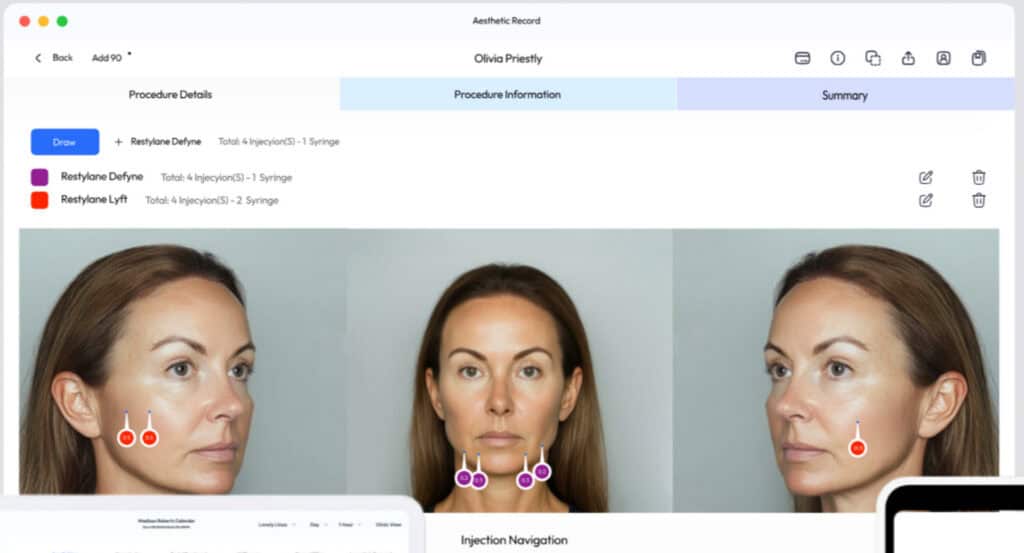
Aesthetic Record offers an all-in-one core at a low entry price for dermatology practices. It’s popular with startups and has decent charting and scheduling features. The platform also supports HIPAA‑compliant clinical documentation, automated reminders, and a patient portal to help simplify everyday workflows.
Key Features
- Charting, scheduling, photos, inventory, and reporting in one platform.
- AI Scribe for voice-to-chart notes.
- Patient app with appointment and membership management.
- Group buying power for skincare products and devices.
Pros
- Low cost of entry with a 14-day free trial.
- AI charting capabilities for faster documentation.
- All core functions available from one login.
Cons
- Reporting is limited to only one location filter.
- Marketing, 2-way SMS, and POS all require costly add-ons.
6. Zenoti
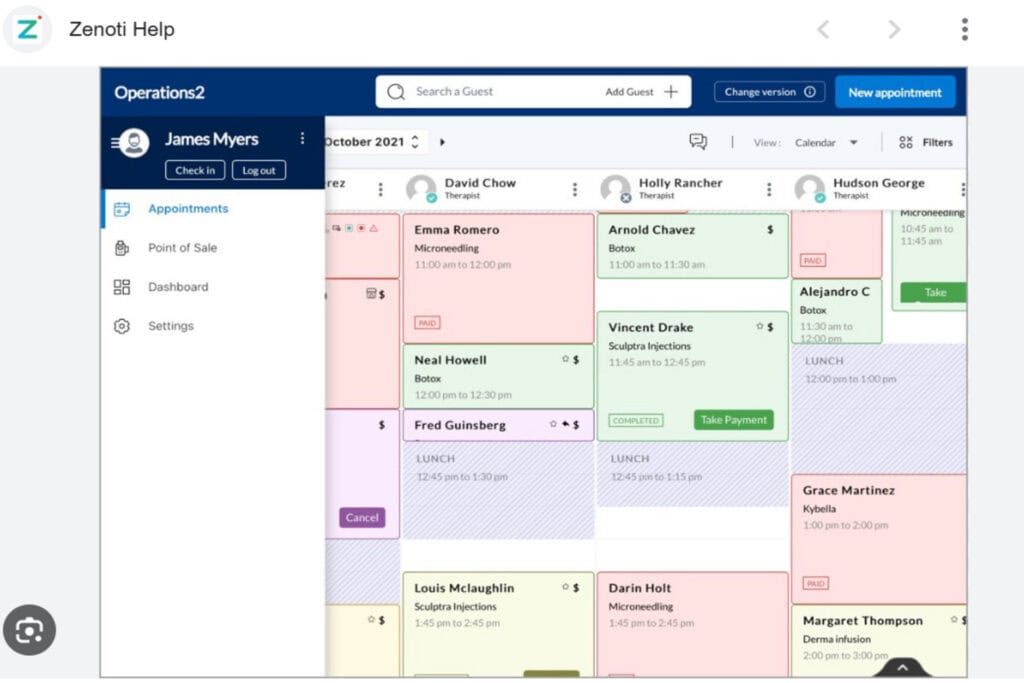
Next comes Zenoti, a powerful dermatology EHR software. It offers sophisticated AI tools and reporting, and is a good fit for multi-location enterprise medspas. The platform also includes HIPAA‑ready charting and photo documentation, automated marketing campaigns, and smart inventory tracking.
Key Features
- AI Workforce Suite: SmartBot, AI Receptionist, and Zeenie staff assistant.
- AI Scribe for charting and form completion.
- Multi-location reporting and brand-level permissions.
- A broad app marketplace, including Shopify, QuickBooks, and Zapier.
Pros
- Strong AI toolset actively expanding.
- Excellent for franchise and multi-location brand control.
- Real-time dashboards and KPI insights.
Cons
- Complex setup that takes several months.
- No labs, weight-loss tracking, or advanced photo markup.
7. Boulevard
Boulevard has a modern interface that performs reliably for basic scheduling, and is best for simple scheduling in salon-adjacent practices. It supports online self‑booking, automated reminders, client profiles, messaging, and loyalty programs to help improve engagement and reduce no‑shows.
Key Features
- Precision scheduling with AI-suggested optimal booking times.
- AI-powered marketing suite for emails and image generation.
- Social booking integrations with ad conversion tracking.
- Sandbox demo environment for pre-purchase exploration.
Pros
- Intuitive, modern interface with strong UX.
- Top-5 rated on G2 for med spa software.
- Solid basic scheduling and online booking.
Cons
- No weight-loss tracking, labs, eRx, or audit logs.
- Charges per SMS message for confirmations and review requests.
8. Vagaro
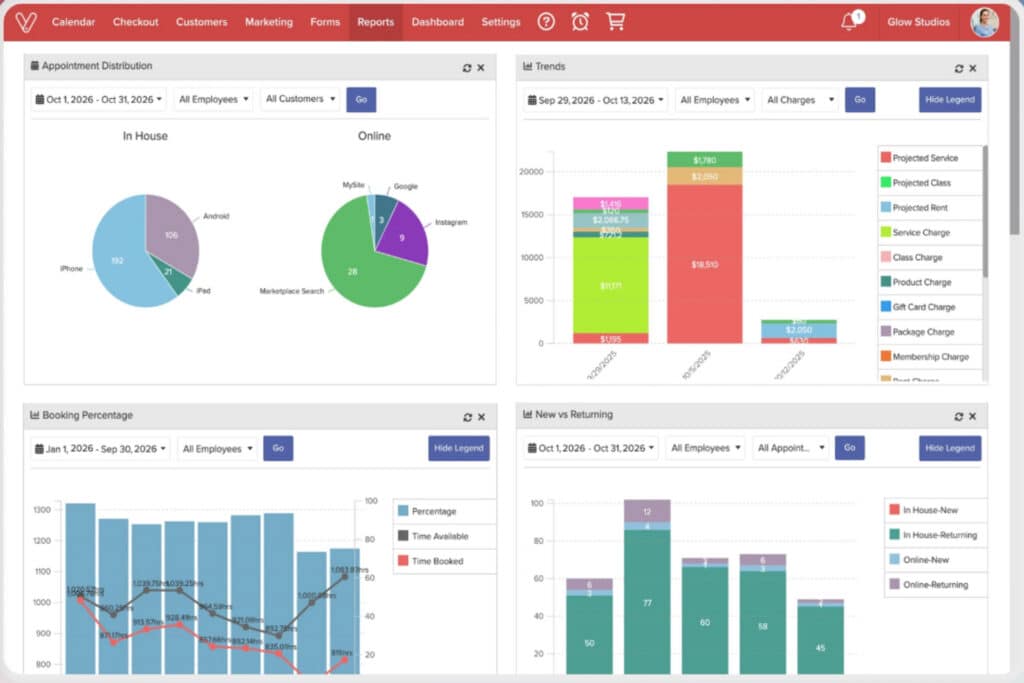
Another choice for a dermatology patient platform is Vagaro. It’s easy to use and works well for solo providers or small day spas. The platform offers online booking, automated reminders, client management, and integrated payments to help keep operations functional.
Key Features
- Basic scheduling, booking, and client management.
- Marketplace listing for local client acquisition.
- Vagaro AI Marketing for campaign content and subject lines.
- ePrescribe via ScriptSure.
Pros
- Very low starting price.
- Free marketplace listing adds visibility for new practices.
- Full-featured mobile app.
Cons
- No photo capture, markup, or before-and-after galleries.
- Intake forms, SMS, and email marketing all require add-ons.
9. Jane App
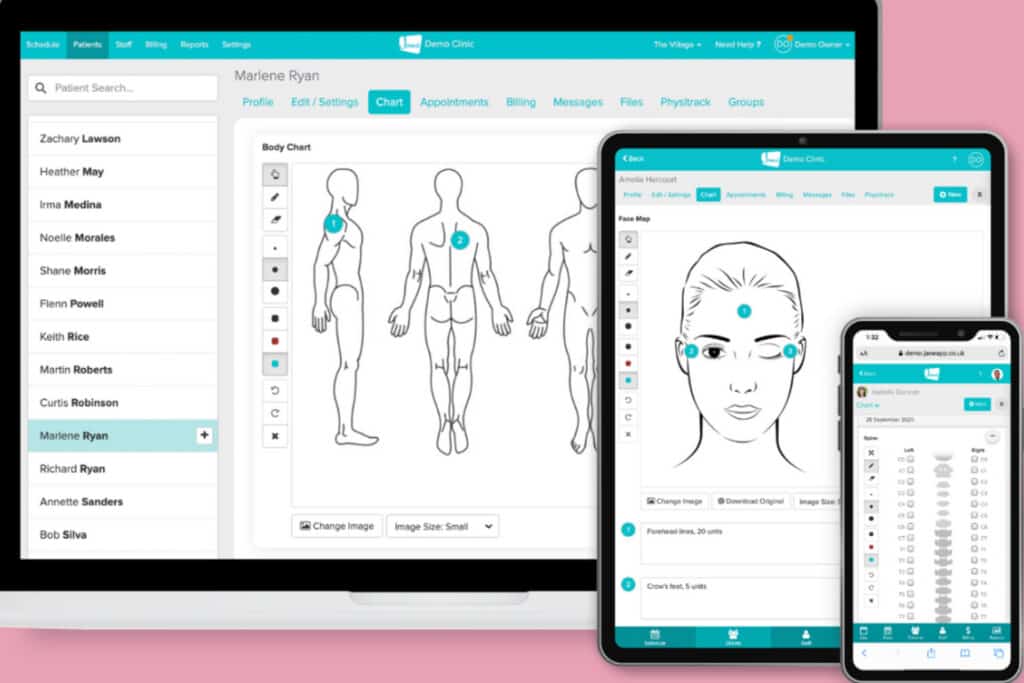
Jane is a clean, well-supported clinic platform popular in Canada. It’s a generalist solution that works well for small allied health clinics. The app combines online booking, scheduling, secure charting, billing, and telehealth in one cloud‑based system to help simplify daily admin tasks.
Key Features
- Intuitive scheduling and intake form management.
- AI Scribe with voice-to-chart.
- Google Calendar two-way sync.
- Client app for appointment management and telehealth (Canada only).
Pros
- Excellent support reputation.
- Simple onboarding for small clinics.
- Competitive entry pricing for fledgling practices.
Cons
- No lead capture, 2-way SMS, or native marketing tools.
- No labs, eRx, or inventory management.
10. Mindbody
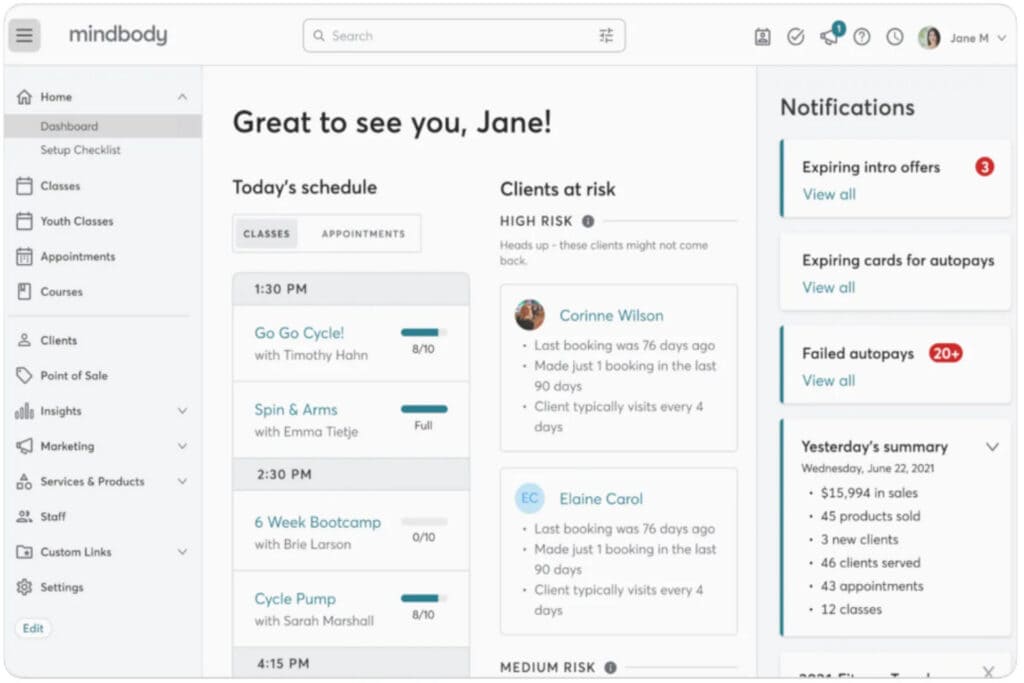
Mindbody is primarily built for wellness studios, fitness centers, and spa‑style services, offering good scheduling, membership, and client engagement tools. Its cloud‑based system includes online booking, automated reminders, and mobile business access.
Key Features
- Smart Marketing AI for automated email and schedule-filling campaigns.
- AI Insights Dashboard for predictive revenue and cancellation analytics.
- MessengerAI for front-desk text automation (not HIPAA-compliant).
- ClassPass marketplace for broad consumer visibility.
Pros
- Strong brand recognition in the wellness space.
- Effective for filling last-minute openings with AI marketing.
- 100+ integrations, including CRM, fintech, and communications.
Cons
- Not built for medical aesthetics.
- No eRx, labs, photo tools, or customizable charting.
11. Weave
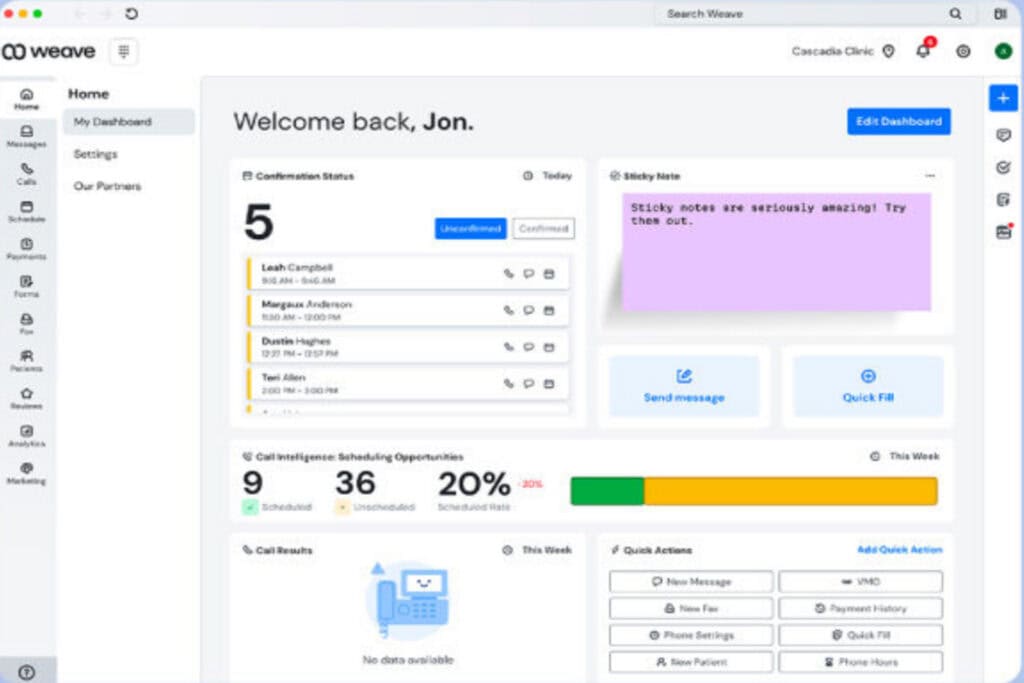
Weave is a patient communication platform that focuses on streamlined messaging, phone systems, and reputation management for healthcare and service‑based practices. It offers tools like VOIP calling, SMS texting, automated reminders, and review requests to help practices stay connected with patients.
Key Features
- VOIP phone system with SMS and digital intake forms.
- Review management and automated reputation tools.
- Text-to-pay and patient financing.
- AI Call Intelligence for transcription and sentiment analysis.
Pros
- Solid all-in-one communication feel.
- Integrated payments and text-to-pay.
- Strong reputation in the healthcare communication space.
Cons
- Not built for dermatology workflows.
- No AI voice or chat agents.
12. DrChrono
Lastly, DrChrono is an EHR built around insurance billing workflows. It’s good for insurance-heavy dermatology billing, and its cloud‑based system offers customizable clinical charting, patient portals, and telehealth.
Key Features
- Built-in CPT, ICD-10, and HCPCS coding library.
- An AI claims checker to reduce rejections.
- Free open API with unlimited calls for third-party integrations.
- Role-based customizable dashboards.
Pros
- Strong RCM and insurance billing capabilities.
- Browser-based with full cloud access.
- No-show predictor AI for proactive patient outreach.
Cons
- No built-in marketing, email, or SMS campaign tools.
- Per-provider pricing is expensive for group practices.
How We Evaluated These Platforms
We assessed each platform based on:
- Clinical depth. Does the platform support dermatology-specific workflows? Labs, eRx, charting templates, and photo documentation were evaluated.
- Automation capability. Can the platform handle lead follow-up, booking, recall, and marketing without manual intervention?
- Ease of use. How quickly can staff adopt the platform? Is the daily operation intuitive, or does it require constant training?
- Scalability. Can the platform grow with a practice adding locations, providers, or service lines?
- Pricing transparency. Are core features included, or do essential capabilities require expensive add-ons?
- Support quality. Is support U.S.-based, responsive, and knowledgeable about aesthetic and dermatology workflows?
How to Choose the Right Patient Engagement Software for Your Dermatology Practice
The right software isn’t the one with the longest feature list. It’s the one that fits how your practice actually works today and in two years. Here’s how to find the ideal tool for your practice:
- Identify your core revenue drivers
Start by being honest about your patient mix. A practice where most revenue comes from Botox, filler, and laser treatments has different software needs than one focused on referrals and biopsies. If your days blend both, you need a platform that can handle mixed workflows.
- Ask where your biggest operational leak is
Every practice has one leak, usually one of three types:
- You’re losing leads before they book. Patients inquire, don’t hear back fast enough, and book elsewhere. If this is your problem, lead conversion speed matters more than charting depth. Thus, focus on AI response capabilities and how quickly the platform engages new inquiries.
- You’re losing patients between visits. They had a good first visit, but never returned. So, prioritize automated recall, loyalty programs, and post-visit follow-up sequences.
- Your team is drowning in admin. You have scheduling conflicts, manual intake, and data re‑entered across systems. In this case, consolidation matters most. A platform that replaces three tools is worth more than one that perfects a single function.
- Map your growth trajectory before you sign
Where your practice is today defines what you need now. But where it’s headed in 18 months defines what you can’t afford to outgrow.
A solo provider launching a cash‑pay cosmetic practice needs simplicity and low overhead. Whereas a two‑location group adding weight loss and HRT needs a robust clinical infrastructure.
Ask vendors:
- What does onboarding a second location look like?
- Does my pricing change per provider?
The answers reveal more about long‑term fit than any demo.
- Don’t evaluate features. Evaluate workflows
Demos are designed to impress. Push past the initial polished demo. Bring your messiest real‑world workflow to every demo. Ask vendors to run that flow, not the rehearsed one. That real-life test will show whether the platform can handle your workflow.
Better Patient Engagement Starts With Software Built for Dermatology
Generic tools create friction, like manual work, disconnected systems, and missed opportunities. But PatientNow removes that friction by combining clinical-grade EMR, AI-powered patient engagement, marketing automation, scheduling, photo management, and operational tools in one HIPAA-compliant platform. The result is flawless workflows, higher patient retention, faster lead conversion, and more time for your team to focus on care. For practices serious about cosmetic and medical dermatology, PatientNow delivers precision, efficiency, and growth in a single system built exclusively for your specialty.
So, book a personalized demo to see the difference firsthand.
FAQs: Dermatology Patient Engagement Software
Here are answers to common questions:
- What features should dermatology patient engagement software include?
At a minimum, you need:
- HIPAA-compliant scheduling.
- Two-way patient communication.
- Automated reminders.
- Before-and-after photo management.
- Clinical charting.
Growing practices also need marketing automation, memberships, and integrated payments.
- Is PatientNow suitable for dermatology practices?
Yes, particularly for practices offering cosmetic dermatology, or one blending aesthetic and medical services. PatientNow includes labs integration, e-prescribing, telehealth, injection tracking, and full marketing automation.
- What’s the difference between a salon platform and a dermatology patient engagement platform?
Salon platforms like Boulevard and Vagaro were built for beauty services. They lack HIPAA-compliant EMR, lab, eRx, and clinical documentation tools that dermatology practices require. Using them for medical aesthetics creates compliance risk and workflow gaps.
- Can patient engagement software help with patient retention in dermatology?
Yes. Automated recall reminders, post-visit follow-ups, loyalty programs, and two-way SMS significantly improve retention without manual staff effort. All these tools are native to PatientNow.
- What integrations should I look for in dermatology patient engagement software?
Prioritize:
- Billing and accounting
- Labs vendors
- Patient financing
- E-prescribing
- Telehealth
- Social media tools
PatientNow integrates with QuickBooks, CareCredit, Canva, Tippy, and 120+ lab vendors.