
Table of Contents
The Practice That Didn’t Know It Was Bleeding
According to the American Med Spa Association, the average single-location medspa made nearly $1.4 million in revenue in 2024, with profit margins typically around 20–25%. That doesn’t leave much room for waste, yet many owners don’t know where their money is slipping away. They focus on new patients, ads, and bookings, while money quietly leaks out behind the scenes.
Being busy doesn’t always mean being profitable. A full schedule can hide thousands of dollars in losses, from missed calls, unanswered leads, or patients who were never followed up with. These leaks usually aren’t dramatic. They quietly add up over time, slowly widening the gap between actual and potential earnings. However, these revenue leaks can be fixed once you can identify them. This article explains how these hidden losses drain your practice and how medspa optimization can stop them.
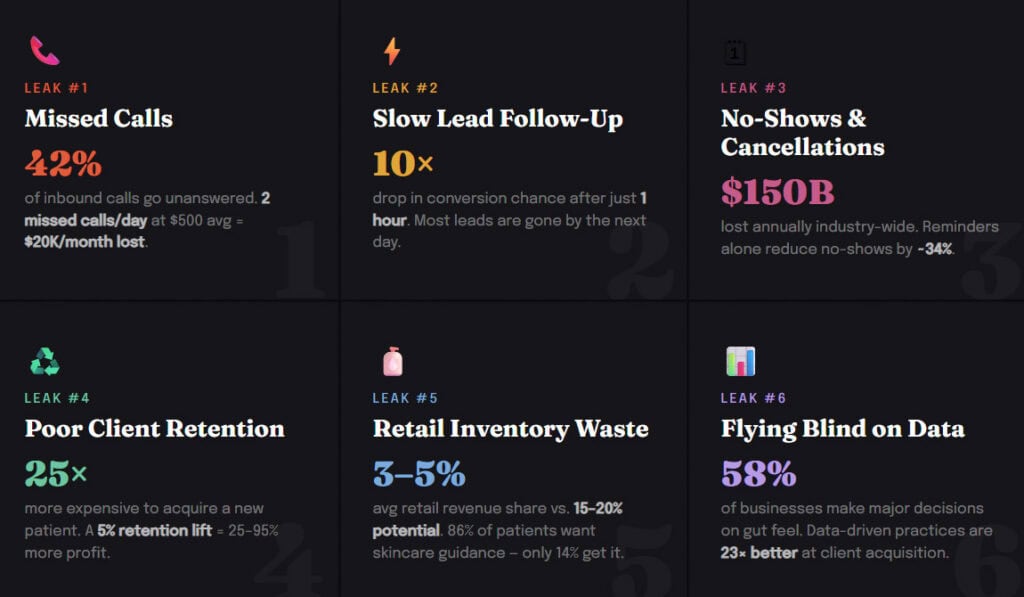
How to Identify and Fix Revenue Leaks In Medspas
Before you can fix revenue leaks, you need to know where they’re happening. The most frequent issues are often hidden in everyday operations. Once identified, they can be quickly improved with the right systems. Here’s how to identify and fix revenue leaks in medspas:
Missed Calls — The Most Expensive Silence in Your Practice
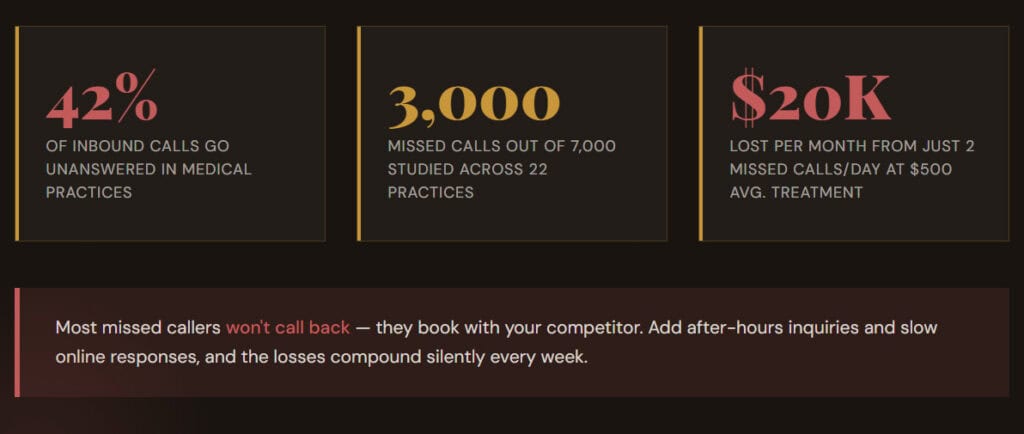
Medspas lose revenue every day from missed calls. When staff are busy with treatments or checkouts, phones go unanswered, and callers often hang up and book elsewhere. A study of 22 medical practices across 18 states found that out of 7,000 calls, 42%, nearly 3,000, went unanswered. This isn’t a staffing problem. But a timing issue, as peak call hours overlap with busy service hours.
The losses add up quickly. Most missed callers won’t try again. For a medspa with a $500 treatment average, missing two calls a day can cost about $20,000 a month, not counting repeat business or referrals. After-hours inquiries and slow online responses make the problem worse, sending potential clients to competitors.
What makes this particularly frustrating is that the solution isn’t simply hiring more staff. As Audrey Neff, Senior Director of Marketing Strategy at PatientNow, notes from working with practices over the last decade, “It is our protocol that we need to see you back in four months.” That kind of intentional, professional language matters at every touchpoint, including how your phones are managed.
PatientNow, with its Recura AI receptionist, fixes this by answering calls, booking appointments, and following up on missed inquiries 24/7, without extra staff. It keeps revenue flowing while your team focuses on patients, guaranteeing no lead is lost.
Ineffective Lead Follow-Up — Paying for Leads You Never Convert
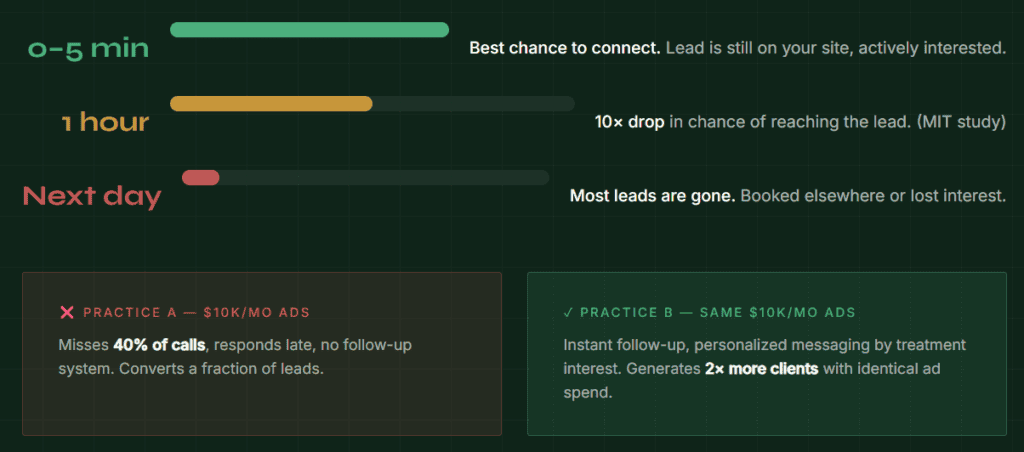
Many medspas think they need more leads and spend more on ads, but the real issue is what happens after leads come in. For example, two practices may each spend $10,000 a month. If one misses 40% of calls and responds late while the other replies quickly and follows up consistently, the second can generate more than twice as many clients. The difference is follow-up, not marketing.
Speed is critical. When someone submits an inquiry, they’re ready to book. An MIT study found the chance of reaching a lead drops over 10 times within the first hour, and most leads are gone by the next day. Poor systems make this worse, with unclear websites, missed calls, and unanswered forms all leading to lost opportunities.
This is where a strong, unique value proposition (USP) becomes important. If your follow-up is generic, you’re competing purely on price. Practices stand out when they have a clear USP. For instance, 50+ years of combined injector experience, expertise in treating skin of color, or specialized protocols for melasma and hyperpigmentation. This allows them to make follow-up communication more personalized and engaging right from the first interaction.
To connect speed with personalization, a system like PatientNow can capture website leads and send automatic, personalized follow-ups based on client interests, like Botox or laser treatments. With timely texts and emails, it keeps leads engaged and helps turn more inquiries into bookings without adding extra work for staff.
No-Shows and Cancellations — Empty Chairs Are Empty Revenue
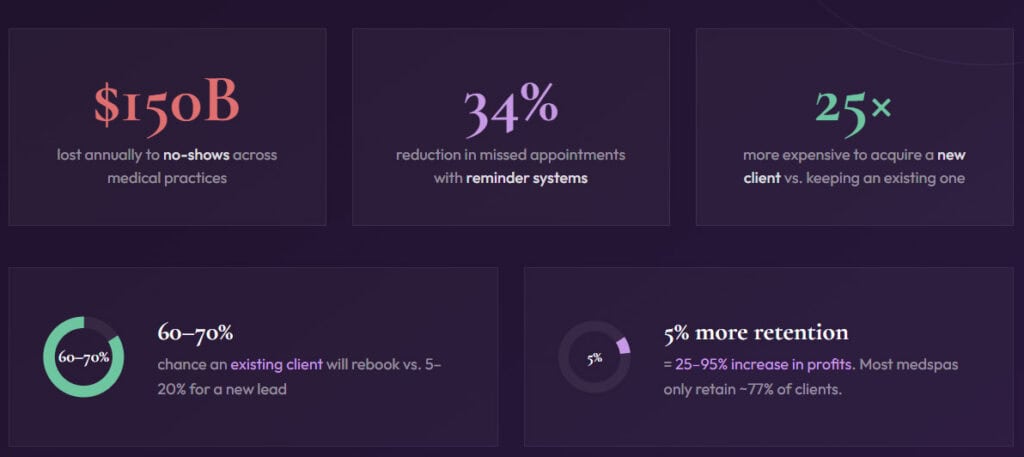
A no-show isn’t just a missed appointment. It also means losing that revenue and the chance to book someone else in that time slot. For medspas with high treatment values, even a small number of no-shows can lead to major losses. In fact, no-shows can cost practices up to $150 billion a year. Each missed visit not only loses income but also wastes staff time and resources.
Often, the reason is simply that patients forget. However, studies show that reminder systems can reduce missed appointments by about 34%. SMS reminders are just as effective as phone calls while being more cost-efficient.
But reminders alone aren’t enough, and neither is how you ask patients to rebook in the first place. One of the most overlooked drivers of no-shows and gaps in the schedule is weak rebooking language at checkout. Asking “Would you like to rebook your next appointment?” gives patients an easy out.
A more effective approach frames the return visit as a medical necessity:
- Provider Kennedy needs to see you back in one month. So, we need to schedule you today, as our calendar fills up quickly.
- It is our protocol that we see you back in four months to maintain your results.
- Your skin will be healed and ready for your next procedure in six weeks. Let’s lock this in now so you stay on track with your treatment plan.
Training your front desk on these talk tracks turns rebooking from a casual suggestion into a clinical recommendation. That shift alone can significantly reduce scheduling gaps. PatientNow helps reinforce this by showing an automatic pre-book reminder pop-up at checkout. So, your team never misses the opportunity to ask the client to rebook.
It also provides a pre-book analytics dashboard that tracks performance and helps you monitor results and keep staff accountable. When patients do cancel, PatientNow’s automated reminders and waitlist features quickly fill those slots with waiting clients. This keeps schedules full and reduces lost revenue without adding extra work for staff.
Poor Client Retention — Your Most Profitable Patients Are Already in Your Database
Many medspas focus on getting new clients, but their best opportunity is the ones they already have. Keeping existing clients is much easier and more profitable. Whereas getting a new customer can cost 25 times more, and even a small 5% improvement in retention can increase profits by 25% to 95%. Existing clients are also far more likely to return, with a 60-70% chance of booking again compared to 5–20% for new leads.
Still, most medspas only retain about 77% of their clients. The reason is usually simple. They aren’t followed up with, forget to rebook, or get busy. However, membership programs are one of the most powerful retention levers available. Research shows 81% of millennials (now ages 29 to 44) are highly influenced by membership programs. There are several program structures to consider:
- Banking Memberships: Clients pay a monthly fee that banks back as credit toward treatments and procedures. These require a contract, minimum commitment, and a cancellation policy, and they create a predictable, recurring revenue stream.
- Monthly Fee Memberships: A multi-tiered approach (ideally no more than three tiers) where the monthly fee is an actual charge, not a banked credit. Tiers can be designed around different income brackets or age-related treatment needs.
- Service-Specific Memberships: Particularly effective for medical weight loss programs, where you can build multi-tiered GLP-1 packages that include macronutrition guides, supplements, aesthetic consultations, and monthly check-ins. This creates a comprehensive offering that competes with direct-to-consumer marketers.
- Loyalty Points Programs: Points accrued based on dollars spent, redeemable for complimentary services. These can operate standalone or in conjunction with a contractual membership for added perks.
A real example shows the impact of membership revenue clearly. For instance, a single-location medspa with two injectors introduced a $150/month membership in April and enrolled 735 patients by year-end. This generated about $110,000 per month in membership revenue alone, or over $1.3 million annually, before any procedures were even included.
When offering memberships, it helps to link them directly to the patient’s treatment plan. For example, “We know this plan is a financial investment, so our $150 monthly membership gives you VIP pricing on recommended treatments and helps you save money over time.” Showing side-by-side pricing also makes the value easier to understand.
PatientNow supports these membership models, including banking, monthly fees, service-based plans, and loyalty points, with flexible billing options, automatic card-on-file payments, and built-in rewards management.
Retail Inventory Leakage — The Silent Margin Killer on Your Shelves
Retail inventory can quietly reduce profits in a medspa. Overstocking skincare products often leads to expired items. For example, buying $2,000 too much stock with a 30% expiry rate can result in a $600 loss on just one product line. In medspas focused on injectables, untracked waste from leftover products can drop margins from 60% to 45%.
Retail skincare should ideally account for 15–20% of a medspa’s annual non-surgical revenue. But the industry average is only around 3–5%, showing a major missed opportunity. The gap is also clear in patient expectations.
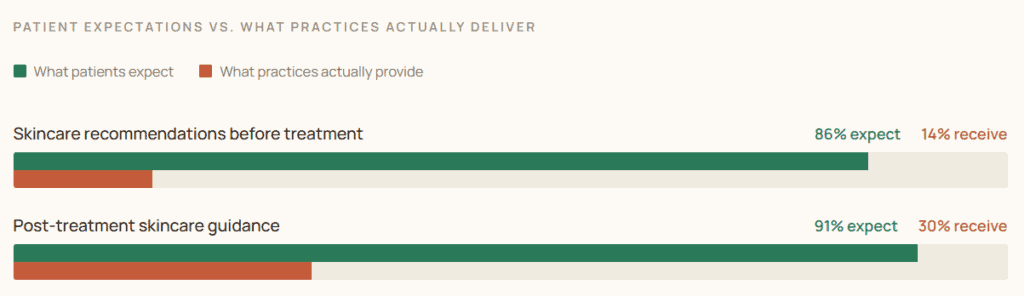
About 86% of patients expect skincare recommendations before treatment. But only 14% actually receive them, and while 91% expect post-treatment guidance, only 30% get it. This shows patients want education, but most practices are not providing it, leaving revenue untapped. Here are four strategies that make the biggest difference:
- Use before-and-after photos during consultations: Show patients similar cases (same age, skin type, and condition) to explain how medical-grade skincare improves results. Around 70-92% of patients check before-and-after galleries before deciding on treatment.
- Sell skincare as bundles, not single products: Group products into simple treatment systems like acne, melasma, or anti-aging routines. This makes it easier for patients to understand and increases the chance they will buy.
- Include skincare in treatment plans: Always add pre- and post-care skincare steps into the plan. For example, patients getting laser treatments for hyperpigmentation may need prep products like hydroquinone and post-care recovery support.
- Train staff with system reminders: PatientNow’s POS system shows checkout pop-ups that remind staff to recommend relevant skincare based on the service, making retail recommendations a natural part of the checkout process.
Both brand-name and private-label skincare can be profitable, but they serve different goals. Brand-name products like Obagi Medical come with strong clinical research and proven results, which helps build patient trust and justify higher prices.
Private-label products, on the other hand, help increase loyalty and keep patients coming back. If you use both, it’s best to be intentional. Use private-label products for everyday basics like cleansers, toners, moisturizers, and vitamin C, and reserve brand-name lines for advanced treatments where clinical proof matters most.
PatientNow can help you manage both brand-name and private-label skincare by connecting inventory with EMR and point-of-sale systems. So, you can easily track stock, monitor expiry dates, and see which products are selling best in real time.
Underutilized Upsells and Treatment Packages — Revenue Sitting in Every Appointment
Every appointment is a chance to grow revenue, but many medspas miss it. A client may book Botox and spend $400, yet other needs, like skin concerns or interest in additional treatments, often go unnoticed. Existing clients are far more likely to buy again, and upselling or cross-selling can account for 10–30% of revenue when done at the right moment.
The ideal time for recommendations is during the visit, when trust is highest. Bundles and treatment packages help increase spending while also improving results, since most aesthetic goals require a series of treatments over time. That ongoing journey is where long-term patient value is built.
This is also why a clear, unique selling proposition (USP) is important. When your team can clearly explain what makes your approach different, it builds trust with patients. This includes things like combination therapies, condition-specific protocols, or strong provider experience, which then makes it easier to guide patients into the right treatment plans naturally.
PatientNow supports this approach by giving providers full access to patient history, past treatments, notes, and preferences. So, they can make more personalized recommendations that improve both patient satisfaction and revenue.
Flying Blind — What You Can’t See Is Costing You
Many medspas look busy and profitable, but flat profits often hide losses from payroll, wasted inventory, and missed rebookings. The problem isn’t growth, but it’s not knowing where money is leaking. Relying on intuition or monthly reports can miss these slow losses. Studies show 58% of companies make major decisions based on gut feel, and two-thirds of executives ignore data. In a medspa, this can mask high no-show rates, falling membership renewals, or declining retail sales.
Data-driven businesses perform much better. McKinsey found they’re 23 times more likely to excel at new client acquisition and nine times more likely to succeed in loyalty. While Forrester reports that using data tools makes companies 58% more likely to meet revenue goals and 162% more likely to exceed them.
This shows up clearly in rebooking and retail performance. If your pre-book rate starts to drop, you need to catch it early, before it affects monthly revenue. But if one provider has a lower retail attachment rate than others, it’s a chance for coaching, not criticism.
PatientNow’s insights hub and KPI dashboard help track important numbers like revenue per appointment, no-show rate, lead conversion, retail-to-service ratio, membership renewals, and revenue per provider. Checking these metrics weekly helps owners spot issues early and fix them before small losses grow into bigger problems.
Stop the Leaks, and Turn Losses into Measurable Medspa Growth
Medspa revenue leaks are often small and easy to miss. But together, they can cost your practice thousands every month. Missed calls, slow follow-ups, no-shows, poor retention, inventory waste, and missed upsell opportunities all add up. Even a busy schedule and strong revenue can hide these problems if you’re not tracking what’s happening behind the scenes.
The good thing is that these leaks are fixable. With the right systems in place, you can capture more leads, keep your schedule full, improve client retention, and increase revenue from every appointment. You can do all this without adding more staff or taking on more work, with the aid of PatientNow. From AI call support and automated follow-ups to smart scheduling, inventory tracking, and real-time insights, it helps you close revenue gaps and operate a more profitable practice.
If you’re investing time and money into growing your medspa, make sure you’re not losing revenue along the way. Book a demo with PatientNow today and see how much more your practice could be earning!