

Table of Contents
Quick Summary
Many wellness practices struggle with Pabau because it lacks advanced clinical tools, AI automation, and integrated marketing. Thus, choosing a true all-in-one, aesthetics-focused CRM is crucial to simplify operations, improve patient retention, and grow your practice.
Top Picks at a Glance
| # | Tool | Good For |
| 1 | PatientNow | Med spas & aesthetic practices needing a true all-in-one platform with AI automation and clinical-grade EMR. |
| 2 | Carepatron | Solo clinicians and small practices wanting affordable, HIPAA-compliant scheduling and documentation. |
| 3 | Epic EMR | Large healthcare systems and hospital-affiliated aesthetic practices requiring enterprise-grade infrastructure. |
Pabau Works, But It May Not Work for You
Pabau is a well-known platform in the aesthetic space, offering scheduling, charting, and automation tools that work well for many clinics. But as your practice grows, complexity increases. You may need deeper reporting, stronger marketing automation, better U.S.-based support, or more advanced clinical workflows.
What worked at one location may not scale across multiple providers or sites. If you’re feeling friction, limitations, or rising costs, it may be time to explore alternatives built specifically for growth-focused aesthetic practices. This guide explores 10 Pabau alternatives worth considering for your practice.
Why Listen to Us

PatientNow has supported growth-focused aesthetic and medical spa practices since 2004 with a purpose-built EMR, CRM, and marketing automation platform. We’ve guided countless clinics transitioning from generalist or fragmented systems. This gives us firsthand insight into the gaps, scalability challenges, and missed growth opportunities that other platforms leave behind.
PatientNow consolidates charting, AI-powered lead management, marketing, payments, and reporting into one HIPAA-compliant system, making it a proven alternative for practices that outgrow tools like Pabau.
What Is Pabau?
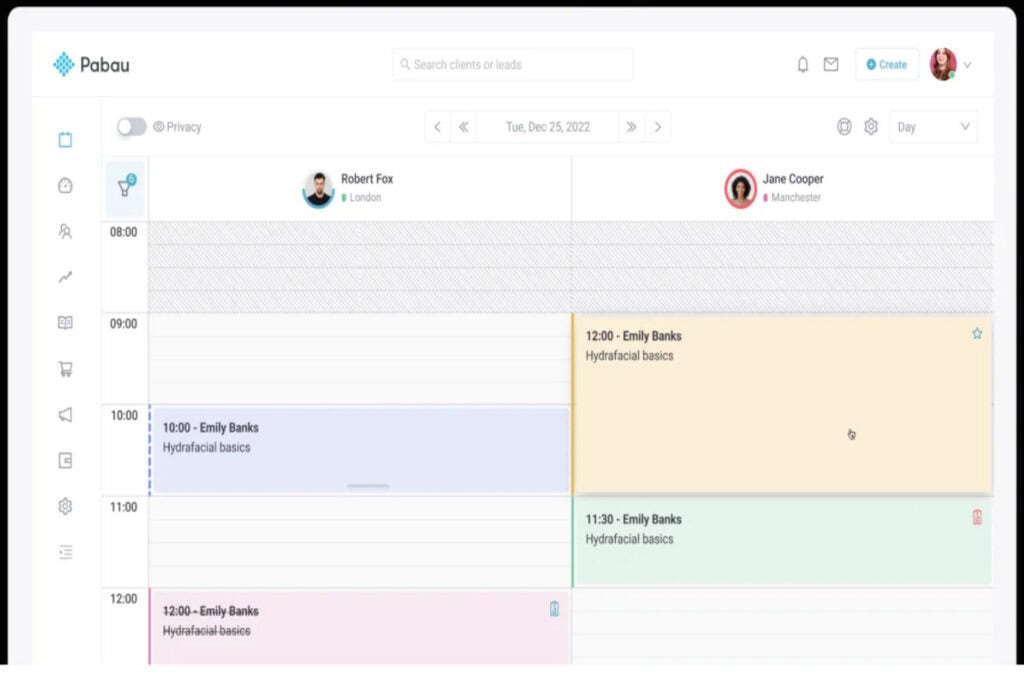
Pabau is a UK-based, cloud-based practice management platform designed for clinics, med spas, and wellness centers. It combines appointment scheduling, digital patient records, marketing tools, billing, inventory management, and reporting in a single system.
Key Features of Pabau
- Online booking and appointment scheduling.
- HIPAA-compliant digital patient records.
- EchoAI for voice-to-note dictation.
- Inventory management and stock tracking.
- Marketing campaigns and CRM tools.
- Reporting and analytics dashboards.
Why Med Spa Owners Look for a Pabau Alternative
Pabau’s all-in-one platform, expanding features, and 23,000+ global users make it popular, especially in the UK. However, recurring user-reported limitations are leading some med spa owners to explore more specialized or flexible alternatives:
1. Recurring Bugs and Glitches
Multiple reviewers on Software Advice note ongoing bugs, particularly following the Pabau 2 migration.

In aesthetics, where precision is everything, the last thing you need is a buggy system that compromises accuracy and efficiency.
2. Costly Add-Ons
Pabau’s base price is just the start. Marketing functions, SMS messaging, and API integrations all require costly add-ons, driving total costs well above what comparable platforms charge all-in.

3. Limited Real-Time Support
Some users on GetApp report that support is slow and hard to reach when problems arise.
This is a significant pain point for busy practices that cannot afford downtime during critical moments.
4. Weak Clinical Depth for U.S. Med Spas
As a UK-based solution, Pabau has limited features for U.S. aesthetic practices. In particular, there’s a critical gap for practices offering weight loss, HRT, or IV therapy.

A Peek At the Top 10 Pabau Alternatives
| # | Tool | Key Features | Good For |
| 1 | PatientNow | AI automation, full marketing suite, clinical EMR | Med spas & aesthetic practices |
| 2 | Carepatron | Scheduling, telehealth, billing | Solo & small practices |
| 3 | Epic EMR | Enterprise EHR, multi-location, analytics | Large hospital-affiliated practices |
| 4 | Vagaro | Online booking, POS, mobile app | Budget-conscious small salons |
| 5 | Cliniko | Flexible booking, clinical notes | Small allied health practices |
| 6 | Jane App | Scheduling, AI scribe, client portal | Solo & small practices |
| 7 | Aesthetic Record | Charting, inventory, patient portal | Budget-conscious med spas |
| 8 | ModMed | Specialty EHR, analytics, AI scribe | Dermatology practices |
| 9 | Practice Better | Care plans, nutrition tracking, client portal | Wellness & nutrition practices |
| 10 | Tebra | Billing, EHR, marketing tools | Independent primary care practices |
Let’s unpack what each tool offers:
1. PatientNow
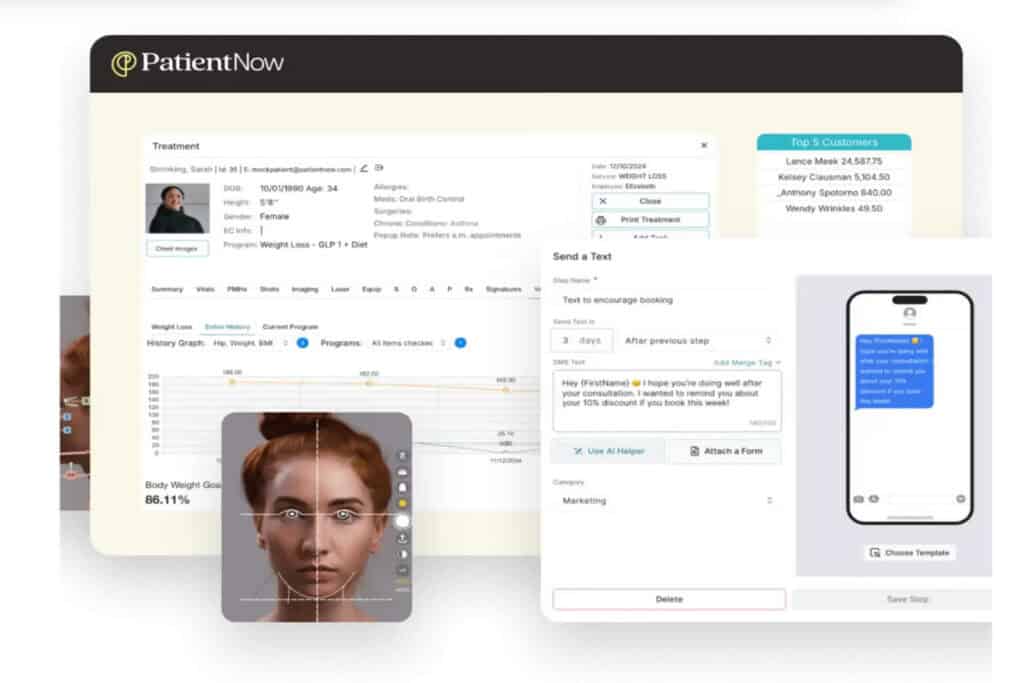
PatientNow is a practice management platform built exclusively for aesthetic medicine. The platform has been refined for 20+ years for med spas, plastic surgery, and aesthetic clinics. Unlike generalist tools such as Pabau, it delivers a fully unified system. It offers clinical EMR, CRM, marketing, AI automation, photo management, payments, and practice operations that work together instead of being fragmented across separate modules or requiring add‑ons.
In addition, it includes deeper workflow automation and sophisticated before‑and‑after photo tools designed for high‑volume aesthetics practices. This helps clinics simplify charting, nurture leads, and convert more bookings all within one HIPAA‑compliant platform.
Key Features
- 24/7 Inbound and Outbound AI: Recura follows up by phone and text within 30 seconds to fill up your schedule effortlessly.
- Full Marketing Suite: Built-in lead capture, drip campaigns, reputation management, social posting, and Canva integration without the need for an outside agency.
- Clinical-Grade EMR: Injection tracking, weight-loss progress graphs, e-prescribing, telehealth, and lab support for complete clinical excellence.
Integrations
Native integrations with QuickBooks, Canva, 120+ labs, Tippy, financing partners, and RxPhoto with no third-party workarounds.
Pros
- Built specifically for aesthetics.
- Replaces 4–6 separate systems.
- 24/7 AI lead conversion.
- U.S.-based phone support.
- Scales from single to multi-location.
- Clinical tools for wellness, weight loss, and HRT.
Cons
- Higher starting price, but pays back for itself.
Good For
Med spa owners and aesthetic clinics looking for a single, dependable system can manage everything from lead capture and clinical charting to billing and marketing in one platform. It also simplifies performance reporting, eliminating the need to juggle multiple disconnected tools.
2. Carepatron
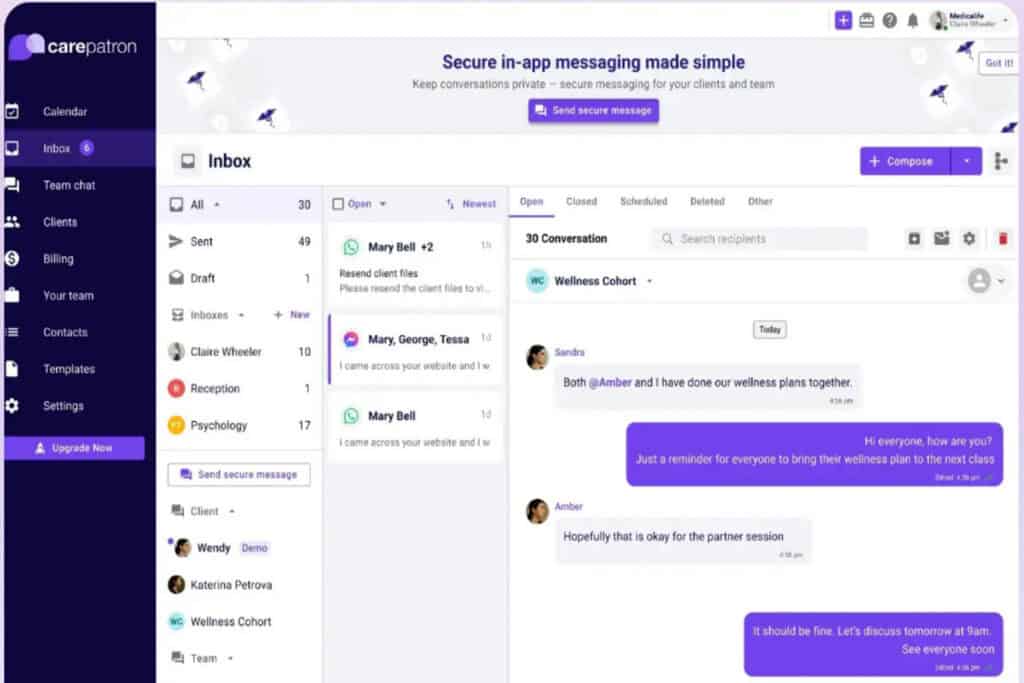
Carepatron is a cloud-based, HIPAA-compliant practice management system for solo clinicians and small healthcare teams. As a Pabau alternative, Carepatron is a strong fit for smaller practices that feel Pabau’s pricing is disproportionate to what they use.
Key Features
- Scheduling and Telehealth: HIPAA-secure video sessions, online booking, and automated reminders reduce no-shows.
- Billing and Payments: Built-in invoicing, online payments, payroll, and income reporting.
- Documentation Templates: Large shared template library for quick clinical setup.
Integrations
Carepatron integrates with Zoom, Google Meet, Stripe, and several EHR migration tools, including SimplePractice, TherapyNotes, and Cliniko.
Pros
- Generous free plan.
- Intuitive, modern interface.
- Strong telehealth tools.
- 24/7 live customer support.
Cons
- Limited analytics.
- No built-in marketing.
- Not designed for med spa workflows.
Good For
Solo and small multi-disciplinary practices that need an affordable solution.
3. Epic EMR
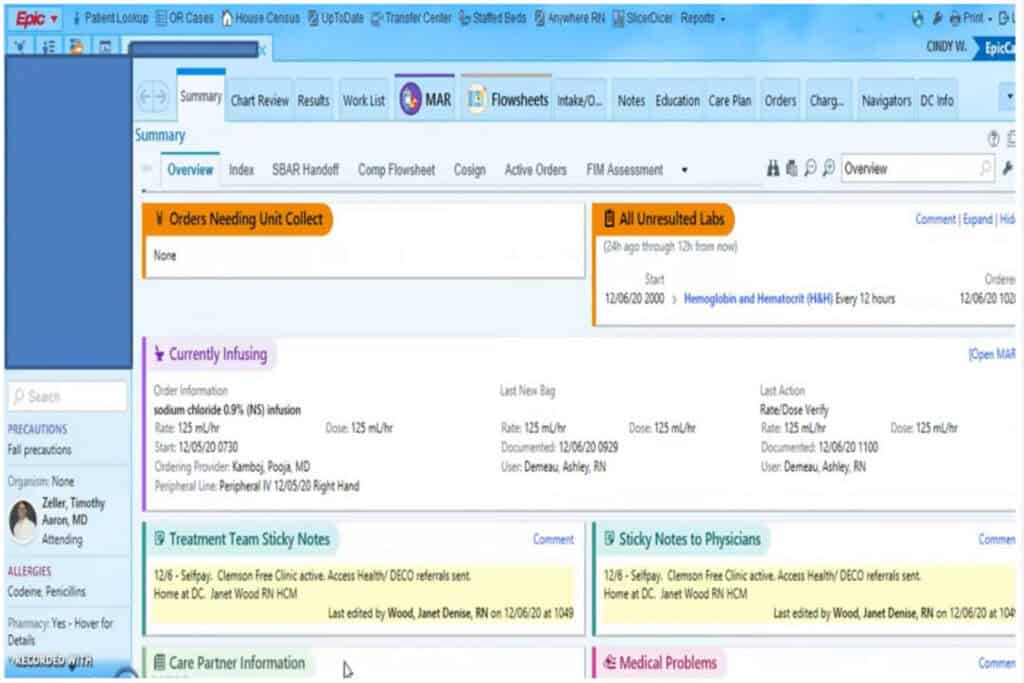
Epic is an enterprise EHR used by major hospitals and academic medical centers, offering deep clinical documentation, interoperability, and population health. Compared to Pabau, Epic delivers unmatched enterprise-scale clinical depth and data integration for large health systems.
Key Features
- Enterprise EHR: End-to-end patient records, specialty workflows, and comprehensive clinical documentation.
- Multi-location Analytics: Real-time dashboards, population health reporting, and enterprise KPI tracking for centralized management.
- Interoperability: Nationwide-certified data exchange across hospitals, labs, and health systems for greater efficiency.
Integrations
Epic integrates with hundreds of third-party clinical, billing, and analytics tools, including major lab systems, imaging platforms, and revenue cycle management software.
Pros
- Best-in-class clinical documentation.
- Excellent interoperability.
- Robust multi-location support.
- Trusted by major health systems.
Cons
- Prohibitively expensive.
- Complex, lengthy implementation.
- Not designed for cash-pay workflows.
Good For
Large hospital-affiliated aesthetic practices and multi-specialty groups.
4. Vagaro
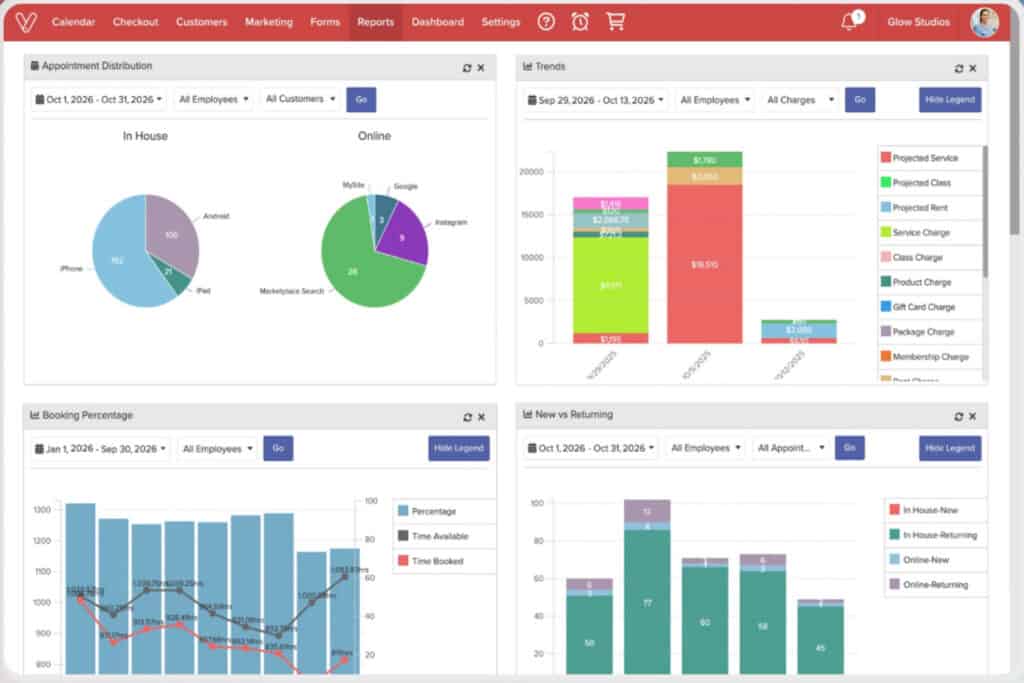
Vagaro is a salon and spa management platform with online booking, POS, scheduling, marketing tools, and a built-in client marketplace. It offers a lower entry cost than Pabau and prioritizes accessibility over clinical depth, making it better suited to beauty and wellness.
Key Features
- Online Booking: Marketplace listings and client self-booking tools drive new appointments.
- POS: Integrated point-of-sale with payment processing, memberships, and package sales.
- Mobile App: Full-featured iOS/Android app for managing your business on the go.
Integrations
Vagaro integrates with QuickBooks, Mailchimp, and Google Calendar, and recently added e-prescribing via ScriptSure.
Pros
- Affordable.
- Client marketplace.
- User-friendly mobile app.
- No long-term contracts.
Cons
- No labs, vitals, or advanced charting.
- No photo tools.
- Add-on fees accumulate quickly.
Good For
Budget-conscious small salons and day spas that don’t need clinical features.
5. Cliniko
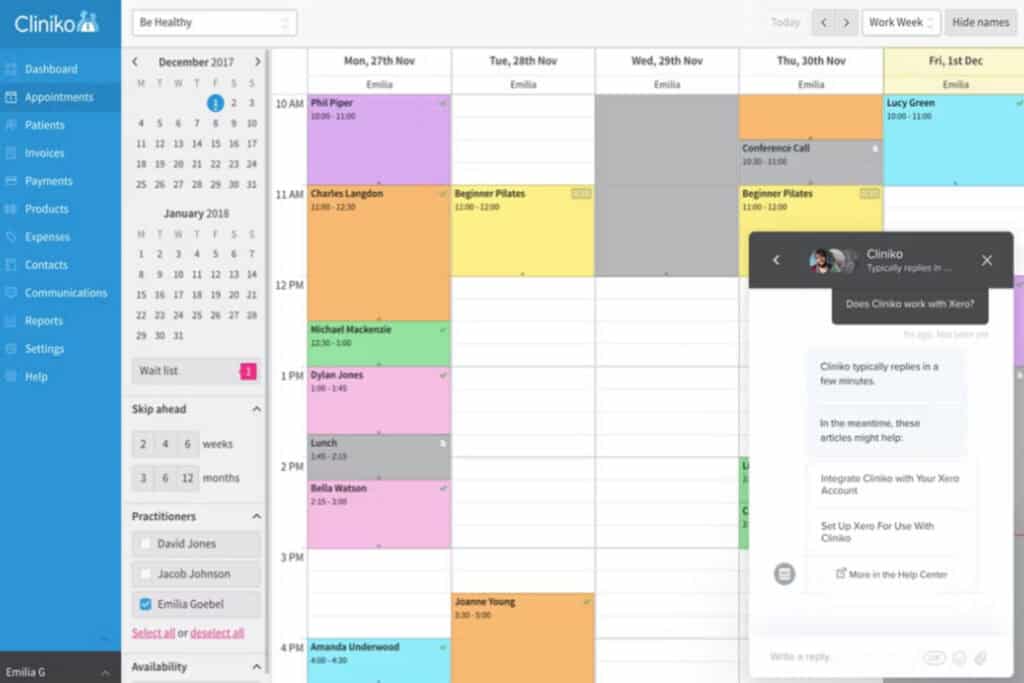
Cliniko is a streamlined practice management system focused on scheduling, notes, and invoicing. For practices seeking simplicity over Pabau’s feature-heavy approach, Cliniko stands out for usability, reliability, and responsive support.
Key Features
- Flexible Booking: Supports multi-practitioner support, recurring appointments, and automated reminders.
- Clinical Notes: Customizable treatment note templates that adapt to a wide range of allied health workflows.
- Invoicing and Billing: Simple, integrated billing with online payment support and exportable financial reports.
Integrations
Cliniko integrates with Xero, Mailchimp, Stripe, Physitrack, Medipass, and various telehealth tools.
Pros
- Intuitive interface.
- Reliable platform.
- Strong allied health focus.
- Responsive customer support.
Cons
- No built-in marketing tools.
- Limited photo management.
- Not suited for med spa clinical needs.
Good For
Small allied health practices prioritizing scheduling simplicity over advanced EMR tools.
6. Jane App
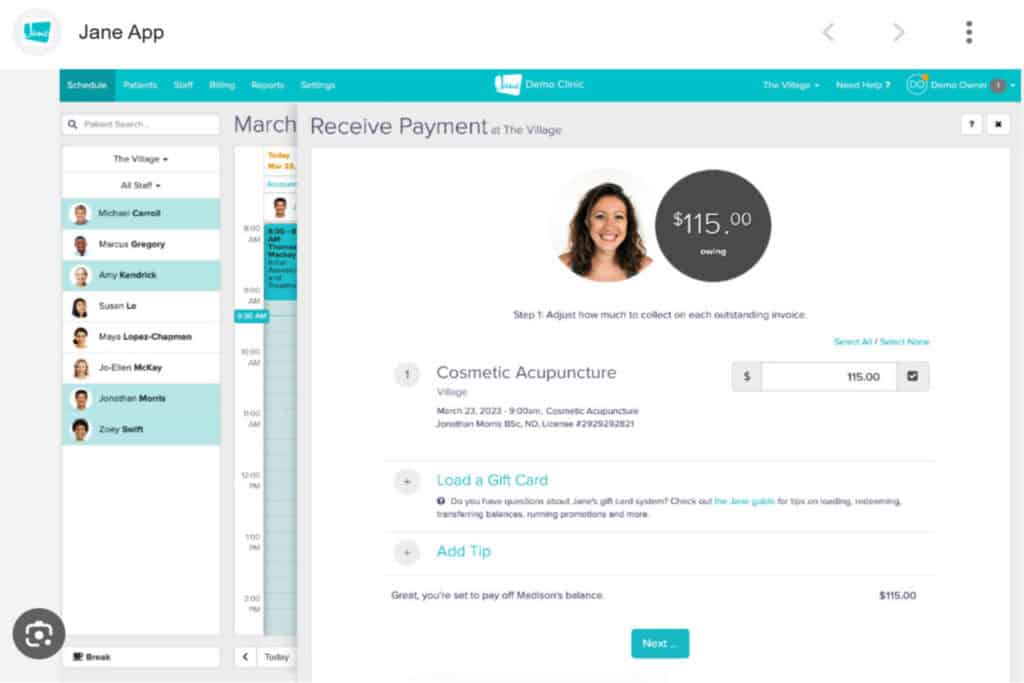
Jane App is a practice management platform serving health and wellness providers with scheduling, charting, billing, and telehealth. Compared to Pabau, it offers a smoother, more stable experience but lacks built-in lead nurturing, 2-way SMS, and specialized U.S. med spa tools.
Key Features
- AI Scribe: Turns conversations into SOAP notes automatically, saving significant documentation time.
- Client Portal: Clients can manage appointments, forms, and payments independently, reducing admin workload.
- Scheduling: Flexible multi-practitioner scheduling with Google Calendar sync (beta) and automated reminders.
Integrations
Jane integrates with Stripe, Google Calendar (beta), Physitrack, and Mailchimp for basic email marketing but lacks native 2-way SMS or social media tools.
Pros
- Client-friendly appointment scheduling.
- Excellent support.
- Easy onboarding.
- Clean, modern design.
Cons
- No native marketing tools.
- No inventory management or purchase reorders.
- Weak photo tools for aesthetics.
Good For
Solo and small practices that value simplicity over medical spa-specific clinical tools.
7. Aesthetic Record
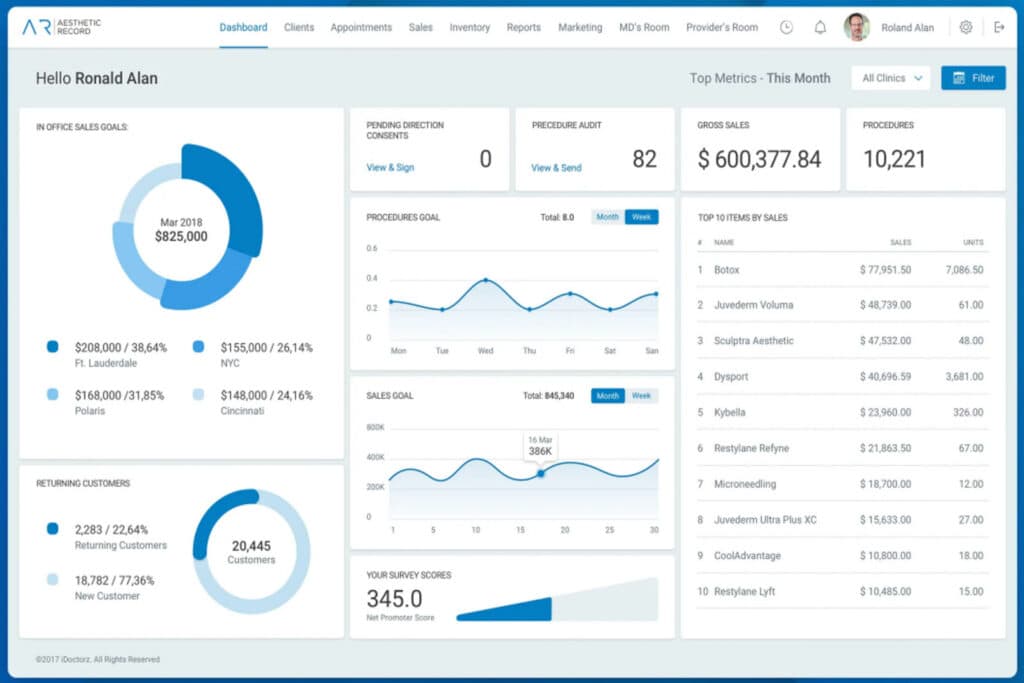
Aesthetic Record is built for aesthetic clinics, offering charting, scheduling, photos, inventory, and AI-powered documentation at a lower starting price. In contrast to Pabau, it provides aesthetics-specific workflows.
Key Features
- AI Scribe and Charting: AI-generated SOAP notes, predictive sections, and dot phrases speed documentation.
- Inventory Management: Item-level product tracking with integrated billing.
- Patient Portal: Branded portal for appointments, memberships, payments, and care instructions.
Integrations
Aesthetic Record uses a white-labeled CRM (HighLevel) and integrates with Stripe for payments. Marketing and 2-way SMS require paid add-ons.
Pros
- Low entry price.
- Built for aesthetics workflows.
- AI charting is included.
- Group buying program.
Cons
- Frequent crashes and glitches.
- Hidden add-on costs add up quickly.
- Limited reporting customization.
Good For
Budget-conscious med spas and solo injectors in their early business stages.
8. ModMed
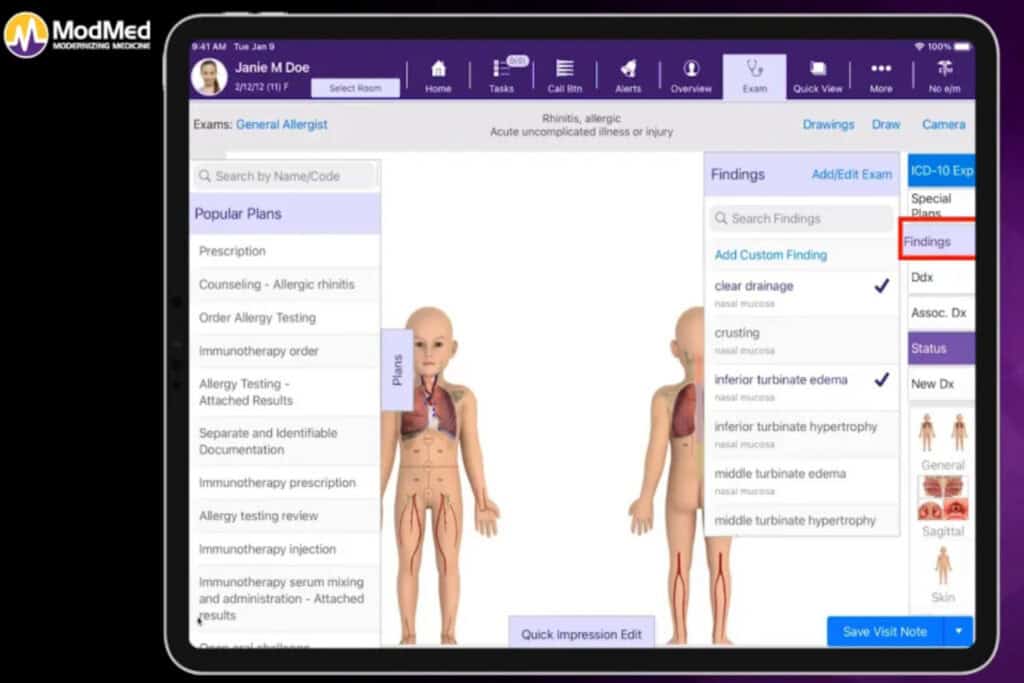
ModMed is a cloud-based EHR designed for specialty practices, especially dermatology and plastic surgery, combining documentation, billing, and analytics. It offers significantly deeper specialty-specific clinical tools and AI-driven documentation than Pabau.
Key Features
- Specialty EHR: Pre-built specialty-specific templates and workflows for dermatology and plastic surgery.
- AI Scribe: Voice-to-chart AI scribe automatically populates treatment notes during patient visits.
- Analytics and Reporting: Real-time dashboards and KPI tracking enable data-driven decisions.
Integrations
ModMed integrates with labs, imaging systems, revenue cycle management partners, and patient communication tools.
Pros
- Deep clinical tools.
- Excellent AI documentation.
- Strong analytics dashboards.
- Built for dermatology and plastic surgery.
Cons
- Expensive for smaller practices.
- Limited marketing capabilities.
- Not built for med spa operations.
Good For
Established dermatology and plastic surgery practices needing enterprise-grade clinical documentation.
9. Practice Better
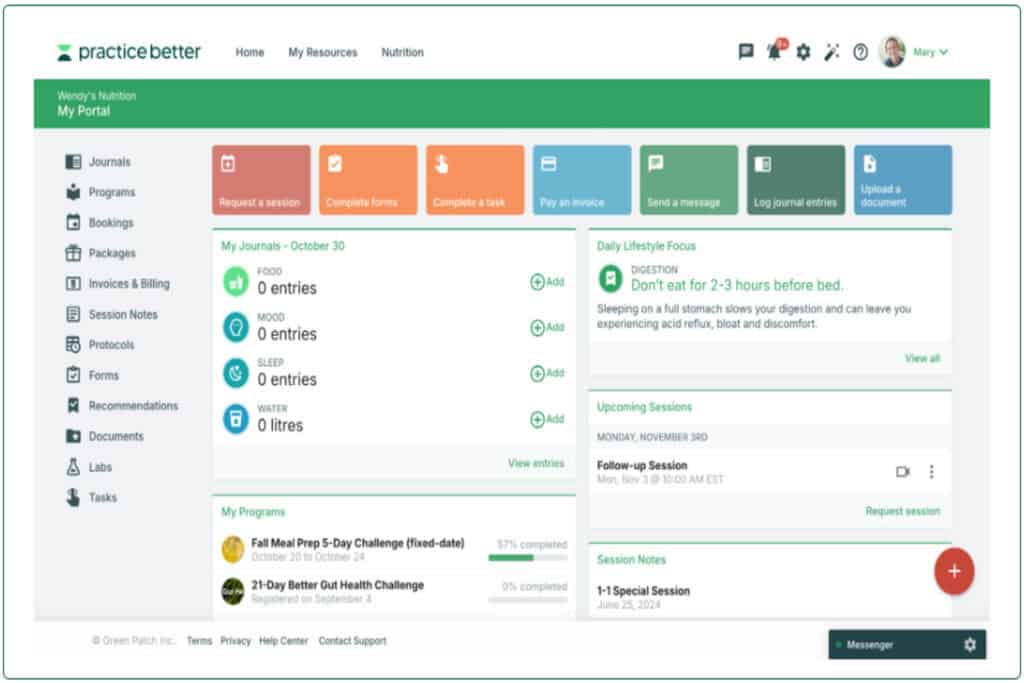
Practice Better is an all-in-one platform for health coaches and wellness practitioners, featuring care plans, client tracking, journaling, and billing. It suits practices that find Pabau overly complex and need purpose-built wellness engagement tools.
Key Features
- Care Plans and Nutrition Tracking: Personalized protocols with food logs, habit tracking, and progress monitoring.
- Group Programs: Built-in tools to run online coaching programs and courses.
- Client Portal: Branded access to forms, messaging, resources, and booking without using a separate app.
Integrations
Practice Better integrates with Stripe, Fullscript, Zoom, Google Calendar, and a range of wearable and tracking tools.
Pros
- Built for wellness practitioners.
- Strong nutrition and habit tools.
- Group coaching capabilities.
- Affordable price.
Cons
- No clinical EMR or prescribing tools.
- Not HIPAA-ready on base plans.
- Limited marketing capabilities.
Good For
Wellness and nutrition practices needing a client management, rather than a med spa operations suite.
10. Tebra
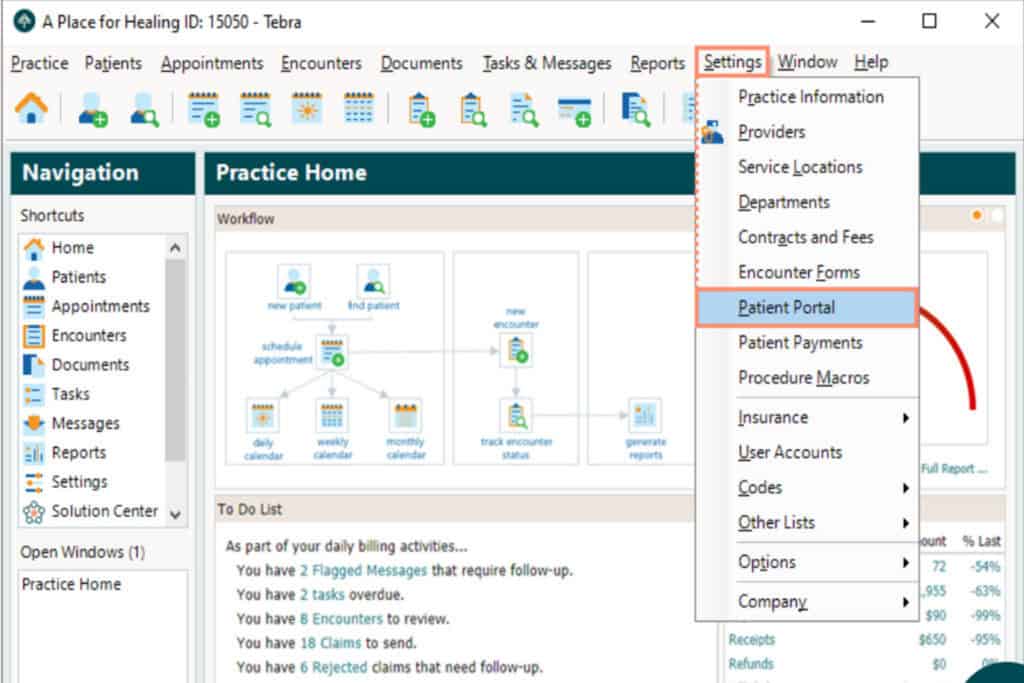
Tebra, created from the merger of Kareo and PatientPop, combines EHR, billing, and marketing for independent medical practices. Compared to Pabau, it offers stronger insurance billing and reputation management for practices focused on revenue and digital presence.
Key Features
- Billing: End-to-end claims management, insurance verification, and payment collection.
- EHR: HIPAA-compliant clinical documentation with customizable templates and telehealth.
- Marketing Tools: Reputation management, patient acquisition, and website tools to grow your digital footprint.
Integrations
Tebra connects with major insurance clearinghouses and payers, Google for scheduling, and a variety of patient communication and billing platforms.
Pros
- Strong CRM tools.
- Good for insurance-based practices.
- Solid online presence features.
- Trusted by independent practices.
Cons
- Not designed for aesthetic or cash-pay workflows.
- Limited clinical tools.
- Complex onboarding.
Good For
Independent primary care practices that prioritize insurance billing over aesthetic-specific workflows.
Which Pabau Replacement Is Right For You?
Most practices exploring Pabau alternatives want a platform that truly scales with them, not a downgrade. For med spas, aesthetic clinics, and wellness practices needing clinical-grade tools, AI automation, and built-in marketing, PatientNow stands out. It delivers AI-powered lead conversion and scheduling, advanced photo management, integrated payments, and real-time KPI reporting, all in one unified, HIPAA-compliant system. Clinics switching from Pabau report smoother workflows, deeper clinical documentation, higher patient retention, and stronger overall business performance.
So, ready to upgrade? Book a personalized demo today and see how seamless med spa management can feel.
Frequently Asked Questions
Got questions? Let’s answer them:
1. What is the best Pabau alternative for a med spa?
PatientNow is the top Pabau alternative for med spas. It is built exclusively for aesthetic practices and includes AI automation, clinical-grade EMR with injection tracking and weight-loss tools, and a full marketing suite, all in one platform.
2. Is there a free alternative to Pabau?
Carepatron offers a free plan that includes scheduling, telehealth, and a client portal. This makes it a viable option for emerging solo small practices that need core functionality at no cost. But it barely scratches the surface of complex clinical workflows for growing medspas.
3. What are the main limitations of Pabau?
Common reviewer complaints include recurring bugs following the Pabau 2 migration, expensive add-ons for marketing, and limited clinical depth for U.S. med spas. Some users also complain about clunky patient portal experience.
4. How does PatientNow compare to Pabau for aesthetic practices?
PatientNow offers significantly deeper clinical tools (injection tracking, e-prescribing, labs from 120+ vendors, and weight-loss progress tracking). It also offers a full built-in marketing suite, AI automation via Recura, and U.S.-based phone support. While Pabau either falls short or charges extra for all these.
5. Which Pabau alternative is best for small or solo practices?
Carepatron and Jane App are both strong alternatives for small and solo practices that want the bare essentials. But for growing practices with complex needs requiring deeper clinical workflows, PatientNow is the better option.